

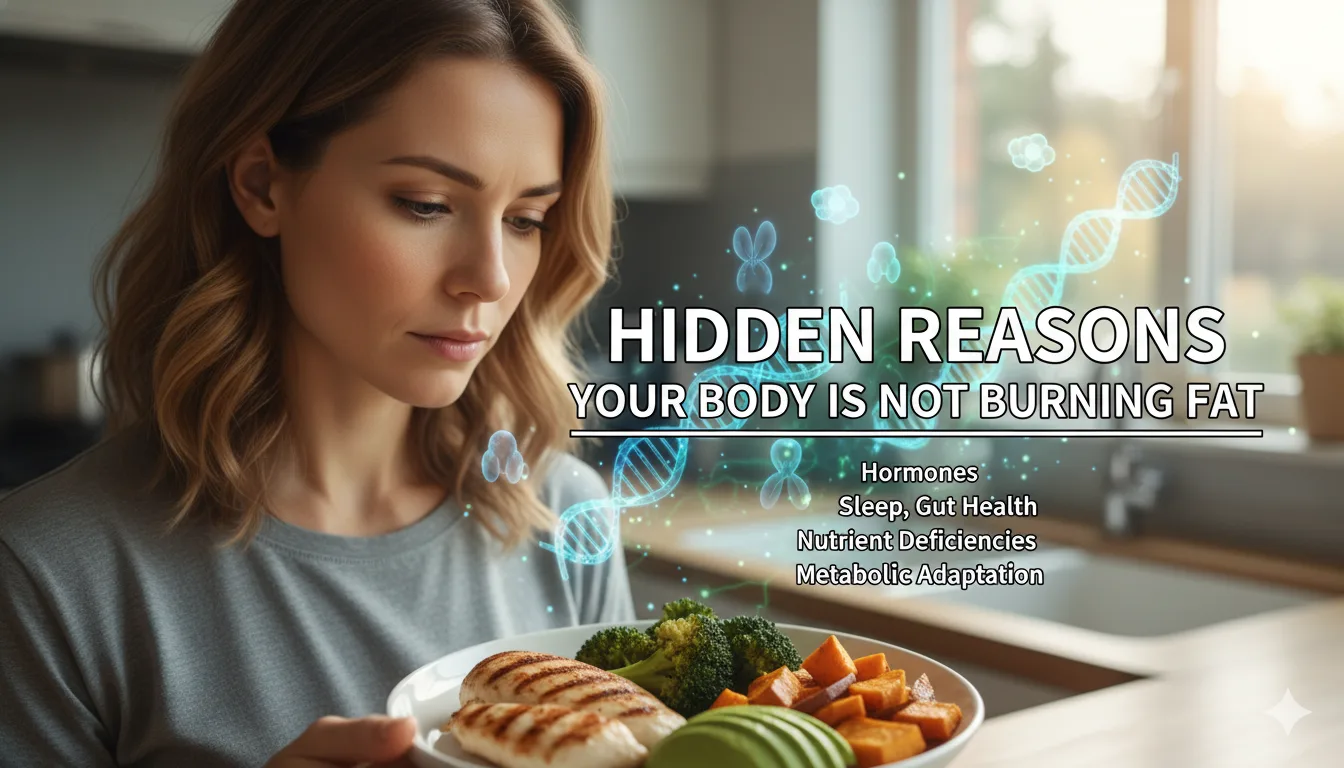
You’re eating “healthy,” reducing calories, walking daily, and maybe even sweating it out at the gym, yet your weight stays the same-or even increases. This can feel discouraging, confusing, and ultimately unfair.
The reality is that fat loss is not just about eating less and exercising more. Your body is a complex system, and sometimes when even one thing is slightly “out of whack,” it can subtly stop you from burning fat. Let’s look at the hidden causes of your body retaining fat and what you can do to fix them.
1. You’re Eating Too Little (Yes, Really)
This is one of the most common mistakes that people usually make by severely restricting calories. This can make you happy for short term as your body adapts to it quickly.
When you eat little for too long, it can result in:
- Slow metabolism
- The body enters survival mode
- Fat burning becomes inefficient
When the body enters survival mode, it starts conserving energy and clinging to stored fat instead of burning calories.
What helps:
Start eating balanced meals that are rich in protein, healthy fats, and fiber. A fit, healthy, and nourished body burns fat more efficiently than a starved one.
2. Chronic Stress Is Hijacking Your Fat Loss
Stress impacts your body in a very negative way, or should I call it a silent fat – loss killer? When you are stressed, your body releases cortisol, a hormone that is responsible for fat storage espicially around the belly area.
Even if you are eating healthy, but stressed, then you will likely experience:
- Increased cravings for sugar and refined carbs.
- Disrupt blood sugar balance.
- The body starts storing fat instead of burning it.
Cortisol level can be increased by any stress that will affect your body and mind, like work stress, emotional stress, lack of sleep, or even sometimes over-exercising, that left body completely tired and exhausted.
What helps:
Simple activities like stress management by deep breathing, walking, writing down your thoughts, light yoga, or simply taking rest without any guilt help relax your body.
3. Poor Sleep Is Slowing Your Metabolism
Sleep is very important for fat loss, in fact, for overall health. If the body is sleep deprived, it directly affects fat-burning hormones. This can result in more fat storage in the body.
When you don’t sleep enough:
- Ghrelin (hunger hormone) increases
- Leptin (fullness hormone) decreases
- Worsens insulin sensitivity
Because of this, the body holds on to more fat, makes you feel hungrier, and burns fewer calories-even if you’re eating the same amount.
What helps:
Ensure a proper sleep routine of 7-8 hours, stop using screens 40-45 minutes before bedtime, and maintain a calm, relaxing, and peaceful environment.
4. Your Protein Intake Is Too Low
If you are not taking enough protein, then your body may struggle to burn fat efficiently. Protein helps keep your energy levels stedy whole day, so that you don’t feel tired or drained.
Protein helps in:
- Boost metabolism
- Preserve lean muscle
- Lessen cravings
- Keeps you full longer
If you are eating more carbs in your meals and protein is minimal, it can slow down fat loss. Even after eating, you may still feel like your stomach is empty.
What helps:
Fill your plate with good protein sources like eggs, lentils, tofu or paneer, fish or chicken, Greek yogurt, or legumes according to your diet preferences.
5. Hormonal Imbalances Are Working Against You
Hormones are the main controllers of everything from hunger to fat storage. If your hormones are imbalanced,d then it will become harder for the body to lose fat.
Common hormonal issues include:
- Insulin resistance
- Thyroid imbalances
- PCOS or estrogen dominance
- Perimenopause-related changes
This doesn’t mean that the fat loss is impossible, but your approach needs to be smarter and gentler.
What helps:
Balanced meals, strength training, stress reduction, and consistent sleep can naturally support hormonal balance. If fat loss feels impossible despite effort, then it is recommended to seek medical guidance.
6. You’re Doing Too Much Cardio and Not Enough Strength Training
Cardio is very effective for calorie burning, but muscle building is what truly boosts the fat-burning process. If you are doing cardio sessions without any resistance training, then your flexibility may improve, but you may struggle to shed fat effectively.
- You may lose muscle instead of fat
- Metabolism can slow down over time
- Your body becomes more efficient (burns fewer calories)
What helps:
Add strength training 2-4 times per week. Muscle improves insulin sensitivity and increases resting calorie burn, even when you’re not working out.
7. Inflammation Is Blocking Fat Burning
Mild and constant inflammation can slow down your metabolism and influence how your body processes sugar, making it more difficult to burn fat if you have it. If you have inflammation, it may additionally impact how your body manages sugar.
Inflammation can be caused by:
- Highly processed foods
- Excess sugar
- Poor gut health
- Food sensitivities
- Constant stress
When there is inflammation in your body, it naturally prioritizes healing over fat burning.
What helps:
Eat whole, anti-inflammatory foods like vegetables, fruits, healthy fats, and spices such as turmeric and ginger, and stay properly hydrated.
8. The NEAT Factor (Why the Gym Alone Isn’t Enough)
NEAT (Non-Exercise Activity Thermogenesis) is the calories, or should I say energy, that your body burns through everyday movements like walking, standing, fidgeting, or doing chores. Even if you are doing gym workouts, a sedentary lifestyle can slow down fat loss.
Low NEAT can come from:
- Sitting for long periods
- Taking elevators instead of stairs
- Minimal movement at home
What helps:
- If possible, stand or take a small walk after sitting for too long.
- Make use of the stairs more
- During daily chore make sure to include more physical movement.
Final Thoughts
Losing fat does not happen through rapid solutions or overworking the human body. When you treat your body well by supporting hormone levels, ensuring good sleep, and making an effort to move, then your body will lose fat in a natural, healthy, long-term manner.
FAQ’s
1. Can hydration affect fat burning?
Hydration plays an important role in your weight loss as it enhances your metabolism and improves blood circulation.
2. Does gut health play a role in fat loss?
Imbalanced gut health affects digestion, inflammation, and even fat storage. Foods enriched with probiotics and fiber are very helpful in maintaining a healthy gut.
3. How does age affect fat burning?
As we age, our metabolism also slows down, and hormone levels change. This slows down fat loss even if you are doing exercise.
4. Can meal timing impact fat loss?
Meal timing affects your body’s ability to burn fat by influencing metabolism, hormones, and energy regulation with the body’s circadian rhythm. Eating at the same time every day and not missing meals might help balance hormones and speed up fat burning, especially for people who are sensitive to insulin.
5. Are cheat meals okay?
Cheat meals are okay, but only sometimes. Overindulgence in unhealthy snacking can spike blood sugar, increase cravings, and slow fat loss.
6. Can certain medications prevent fat loss?
A few medications, such as steroids, certain depression medications, or hormonal treatments, can change how effectively the body burns fat.


