


Keto Diet Workout Plan
While starting the keto diet, it is hard to follow a proper workout plan. It is a completely plant-based diet plan, and most people are worried about having little energy, weak exercise, or losing muscle. According to studies published by the National Institutes of Health (NIH), ketogenic diets increase fat oxidation during exercise, allowing the body to use fat as a primary fuel source instead of carbohydrates.
But if you do it right, it can be very helpful in weight loss and getting you in better shape overall. Research also shows that when protein intake is adequate, a ketogenic diet does not cause significant muscle loss during training. The most important thing while following a keto diet workout plan is to see how your body reacts to ketosis and choose a kind of activity accordingly.
How Keto Diet Affect Workout Performance?
On a typical diet, your body gets most of its energy from carbs (glucose). A keto diet typically limits carbohydrate intake to 20-50 grams per day, causing the body to transition from glucose to fat as its primary fuel source. This metabolic state is known as ketosis. Studies available on PubMed show that carbohydrate restriction below 50 grams per day significantly increases ketone production and fat oxidation.
During ketosis,
- The body burns both stored and ingested fat for energy.
- Ketones become the main fuel source.
- Insulin levels decrease, promoting fat loss.
However, this transition takes time. It normally takes 2 to 3 weeks for people to properly adjust to the keto diet. Clinical studies available on PubMed report that keto adaptation typically occurs within 2-4 weeks, during which exercise performance may temporarily decline. During this period, workouts may feel more difficult, and you may have less energy. This is natural and transitory.
What Happens When You Start Keto?
During the first few weeks of the ketogenic diet, a significant number of individuals experience symptoms of the keto flu. Signs may include:
- Tiredness while exercising
- Weakness in the muscles
- Headache
- Poor recovery
These problems are mostly caused by an imbalance of electrolytes (low levels of sodium, potassium, and magnesium), not because keto is bad for you. During this time, drinking a lot of water and getting enough electrolytes will really help you work out better.
Important
Tip: Don’t do high-intensity workouts at first. Give your body time to get used to it.
Benefits of Working Out in Ketosis
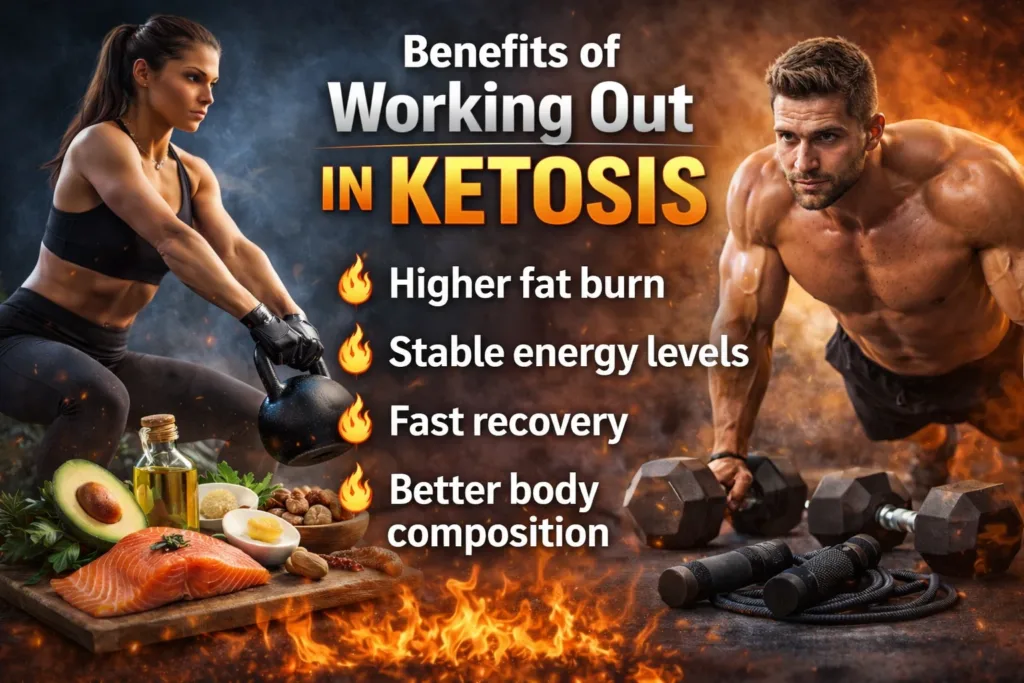
Keto can provide various workout advantages once your body gets completely adjusted to keto:
- Higher fat burn: Those who are adjusted to a keto diet have been shown to burn between 200 and 300 percent more fat than those who are not adjusted during exercise
- Stable energy levels: Burning fat as a source of energy provides longer-lasting energy for endurance activities
- Fast recovery: Reducing inflammation promotes better recovery for muscles
- Better body composition: Reducing fat while preserving lean mass will help improve overall health and fitness for everyone.
Best Exercises on a Keto Diet
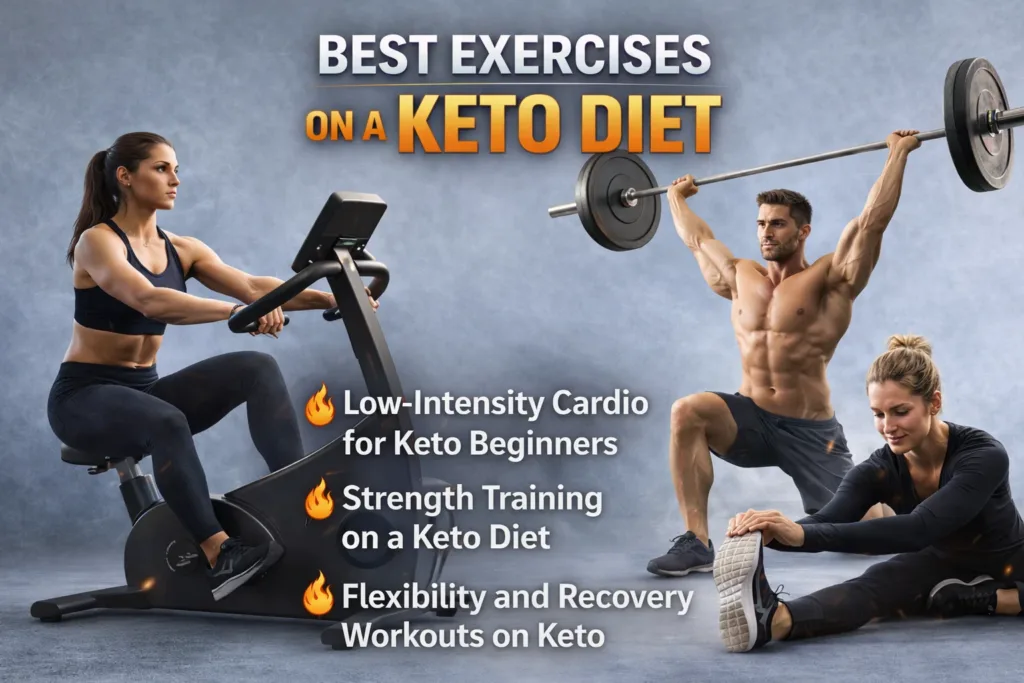
1. Low-Intensity Cardio for Keto Beginners
As a keto diet, it mainly relies on fat as a source of fuel. Low-intensity Steady State (LISS) cardio is an excellent choice while on the ketogenic diet.
Some good examples of LISS Cardio include:
- 30 – 60 minutes of walking
- Biking at an easy pace
- Swimming
- Hiking
- Rowing lightly
Keep your target heart rate between 40 and 60% of your maximum heart rate (MHR) for besting results in fat burning.
2. Strength Training on a Keto Diet
You do not need carbs to build or maintain muscle. Strength training on keto should focus on:
- Use moderate amounts of weight.
- Keep repetitions between 10-15.
- Limit rest time during training to 60-90 seconds.
These methods will allow the body to maintain muscle mass with minimal reliance on glucose for energy. You can include the following strength-building exercises:
- Squats
- Lunges
- Deadlifts
- Pushups
- Rows
- Shoulder presses
3. Flexibility and Recovery Workouts on Keto
Doing exercises that make you more flexible and improve your balance can help you avoid crashes and heal faster.
You can try:
- Yoga
- Pilates
- Stretching routines
- Mobility exercises
A day of rest or an active recuperation day would be perfect for enjoying these.
7-Day Keto Workout Plan for Beginners
Day 1 – Lower Body + Cardio
- Squats: 3 × 15
- Lunges: 3 × 10 per leg
- Glute bridges: 3 × 15
- 20 minutes of brisk walking
Day 2 – Upper Body Workout
- Push-ups: 3 × 15
- Dumbbell rows: 3 × 15
- Shoulder press: 3 × 15
- 15-20 minutes cycling
Day 3 – Active Recovery Day
- Yoga or stretching (30 minutes)
- Light walking
Day 4 – Full Body Strength Training
- Deadlifts: 3 × 12
- Step-ups: 3 × 10 per leg
- Plank hold: 3 × 40 seconds
- 20 minutes of low-intensity cardio
Day 5 – Upper Body + Core
- Bench press or push-ups: 3 × 12
- Bent-over rows: 3 × 15
- Russian twists: 3 × 20
- 15 minutes walking
Day 6 – Rest and Recovery
- Gentle stretching
- Hydration and muscle recovery
Day 7 – Long Cardio Session
- 40-60 minutes walking, cycling, or swimming
Nutrition Tips to Support Keto Workouts

When it comes to adopting a ketogenic diet, eating is just as important as exercise.
Keto Macronutrient Ratio
- Fat: 70-75%
- Protein: 20-25%
- Carbs: 5-10%
Pre-Workout Nutrition on Keto
- If it feels good, train when you’re fasting.
- If you need to, have a little snack with fat in it, like nuts or avocado.
- Put some salt or electrolytes in your water.
- Before you work out, drink adequate water.
- Stay away from foods that are high in sugar or carbs.
- Don’t drink fake pre-workout drinks.
- Begin your training at a slow speed.
Post-Workout Nutrition on Keto
- Eat protein (eggs, chicken, fish)
- Include healthy fats (avocado, olive oil, nuts)
- Drink plenty of water
Replenish electrolytes if needed - Eat within 1-2 hours after training
Common Keto Workout Mistakes to Avoid
Initially, working out is tough if you are following a keto diet. Avoid such mistakes:
- Starting HIIT too early
- Ignoring electrolytes
- Eating too little protein
- Overtraining during adaptation
- Expecting instant results
Final takeaway
A keto diet workout plan is not centered around extreme workouts or rapid results but focuses on smart training that considers the body’s ability to adapt and chooses exercises that correspond with the energy source. Be consistent, give your body time to adjust, and let fat be your major source of energy.
Faq’s
1. Should I work out fasted or after eating on keto?
On keto, try fasted workouts for easy sessions, but eat a keto-friendly meal before intense workouts to keep your energy up.
2. How do I prevent muscle loss while following keto and exercising?
To keep your muscles healthy and strong on keto, make sure to get enough protein, lift weights regularly, rest properly, and use BCCAs, creatine, and electrolytes if required.
3. How many carbs, if any, should I eat around my workouts on keto?
A ketogenic, or keto, diet limits carbohydrate intake to at most 50 grams per day, and carbs are usually avoided before and after exercise. If you are doing high high-intensity workout, then you can take 15-30 g of fast carbs (like dextrose) about 30 minutes before training if your energy feels low.
4. What’s the best time to exercise on a keto diet?
The best time to exercise is in the morning when you are empty somach as your body uses fat to fuel your body. This will help in faster weight loss.
5. How do I stay hydrated and keep electrolytes balanced on keto?
To stay hydrated on the keto diet, drink 3-4 liters of water every day, add a pinch of sea salt, obtain potassium from foods like avocados and spinach, and get more magnesium when you need it.


