

Most of us quickly blame weight gain on eating habits or not working out enough. Very rarely do we pause and think about sleep. You may be eating the same foods and following the same daily routine – yet the scale slowly starts going up. The reason might not be your diet at all, but the quiet hours of sleep your body has been missing.
Sleep is more than just resting. It resets hormones that make you hungry, restores your metabolism, and decides whether to burn calories or store them as fat. Unfortunately, not getting enough sleep or having sleep patterns that are unpredictable messes up these processes, making cravings stronger, meals less satisfying, and fat accumulation more likely.
Let’s take a closer look at what truly happens inside your body when sleep is disrupted – explained in simple, clear scientific terms.
What Happens in the Body When You Don’t Sleep Enough?
When you regularly sleep less than 6-7 hours, your body shifts into mild stress, instead of full recovery. This disturbs the natural functioning of the body and the key system that controls appetite, stress, and fat metabolism.
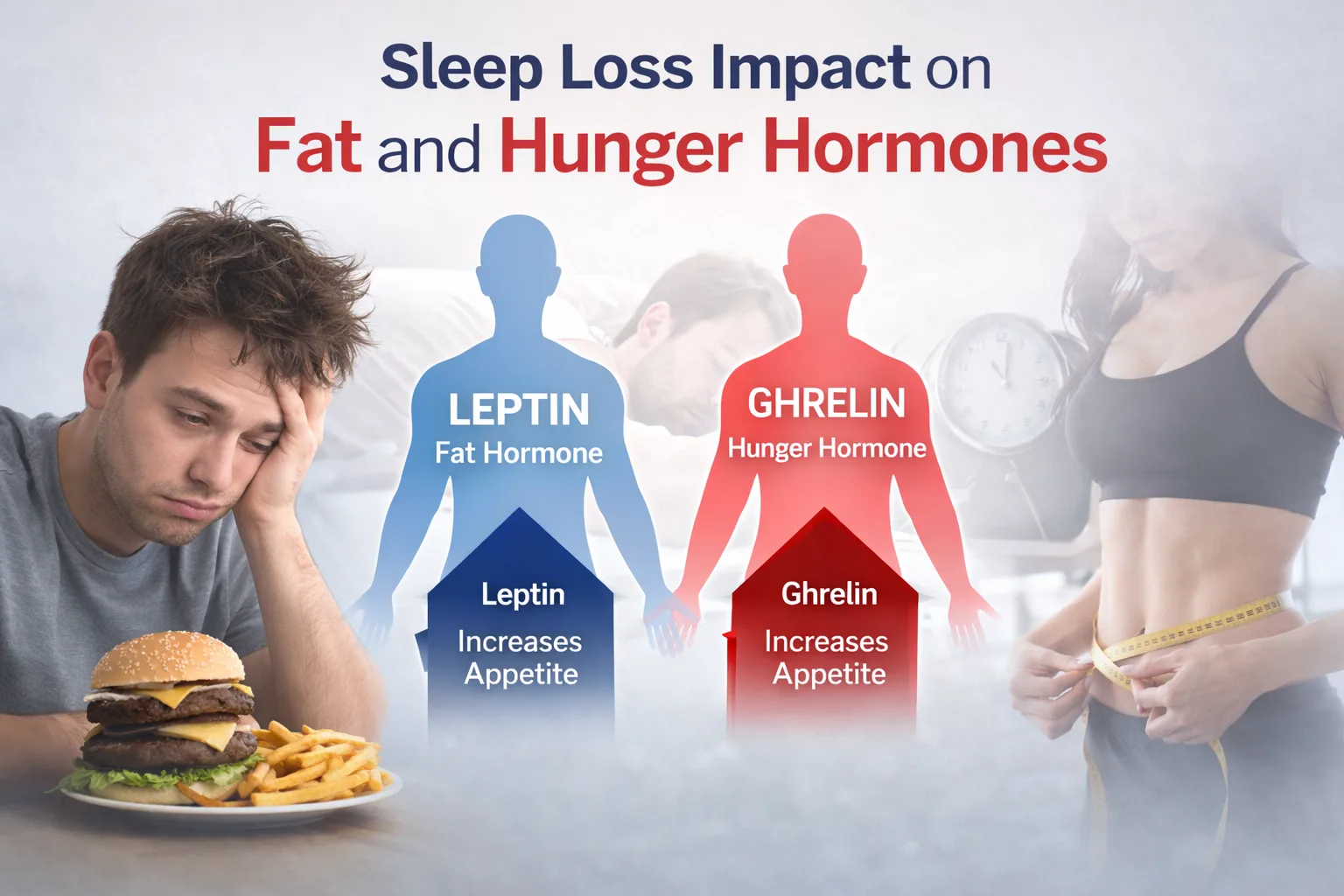
Levels of Ghrelin rise, making you feel hungrier, while Leptin drops, reducing fullness. At the same time, Cortisol increases, encouraging fat storage – especially around the abdomen.
Research from the University of Chicago shows that sleep restriction reduces fat loss and increases muscle loss during dieting. So poor sleep doesn’t just increase appetite – it makes fat loss harder, even if your calories stay the same.
How Does Sleep Affect Hunger Hormones?
Two major hormones control hunger and fullness:
1. Ghrelin – The Hunger Hormone
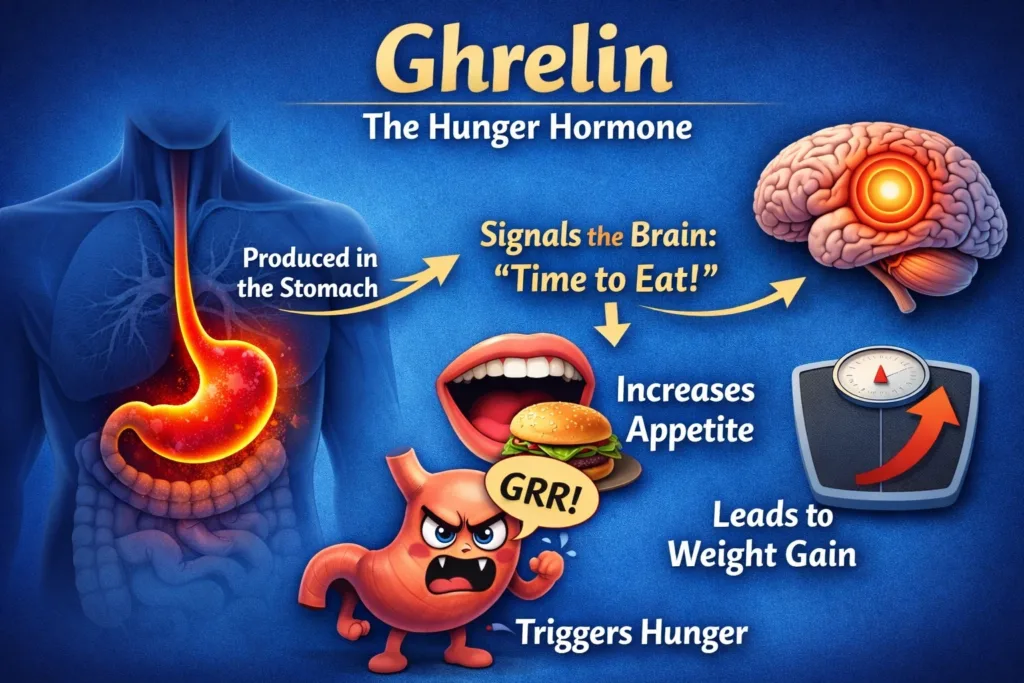
Ghrelin is the hormone that tells you you’re hungry. Your stomach mostly releases it, and it sends a simple message to your brain: “It’s time to eat.”
This hormone goes up more than usual when you don’t get enough sleep. That’s why you could feel hungry sooner the next day, think about food more regularly, or want sugary and high-carb snacks even if you’ve just eaten.
Studies have shown that not getting enough sleep can elevate ghrelin levels by 15 to 20 percent. This helps explain why people tend to eat more and snack more when they stay up late.
2. Leptin – The Fullness Hormone
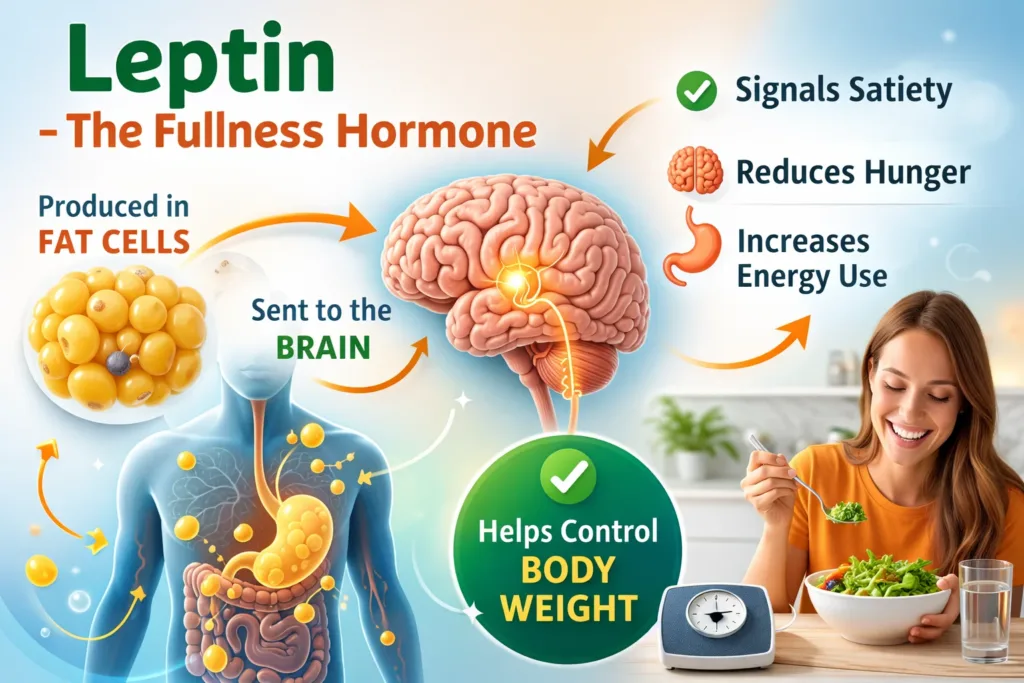
Leptin is the hormone that makes you feel full after eating. Your fat cells release it, which informs your brain that you’ve had enough to eat.
Leptin levels drop when you don’t get enough sleep. So, even after eating, you don’t feel as full as you did before. You could want a little more food or something more, but not because you’re greedy. It’s because your body hasn’t properly told you that it’s full.
At the same time, symptoms of hunger are already very strong. Your body is telling you to eat more, but it’s also telling you to stop eating less. Over time, this imbalance makes it feel like you’re overeating without even thinking about it; it’s more about how your body is reacting to not getting enough sleep.
Why Do You Crave Sugar After Poor Sleep?
Not getting enough sleep doesn’t just make you tired; it also changes how your brain reacts to food.
Researchers at the University of California, Berkeley, found that when people don’t get enough sleep, the parts of their brains that deal with pleasure and reward become more active. At the same time, the prefrontal cortex, which is in charge of making decisions and directing oneself, becomes less active.
This change makes calorie-dense foods appear more appetising and more difficult to resist. You’re more likely to eat when you’re upset, you have trouble controlling how much you eat, and you want things more. It’s not only about self-control; your brain is responding differently as a result of sleep deprivation.
What Is the Role of Cortisol in Fat Gain?
Cortisol is the hormone your body releases when you’re under stress. In small amounts, it’s normal and even helpful. But it’s not meant to stay high all the time.
When you don’t get enough sleep, cortisol levels don’t settle down the way they should. Your body stays slightly on edge, as if it’s dealing with ongoing stress. This can raise your blood sugar levels and push your body to release more insulin. Instead of using energy smoothly, your body starts storing more of it – and much of that storage happens around the belly.
Over time, constantly high cortisol is linked to an increase in deeper abdominal fat that surrounds the organs. That’s one reason people who regularly sleep five hours or less often notice stubborn belly fat, even when their eating habits haven’t changed much.
Does Poor Sleep Slow Fat Burning?
Yes, sleep has a powerful effect on how your body uses sugar and burns fat.
When you don’t sleep enough, your body doesn’t respond to insulin as well as it should. Sugar stays in the bloodstream longer, and instead of being used for energy, more of it gets stored – often as fat. At the same time, your body becomes less efficient at breaking down stored fat for fuel.
A study published in Annals of Internal Medicine showed something striking: people who slept only 5.5 hours while dieting lost about 55% less body fat than those who slept 8.5 hours, even though both groups ate the same number of calories.
In other words, sleep can decide what kind of weight you lose. With proper rest, your body is more likely to burn fat. Without enough sleep, it tends to hold on to fat and lose more muscle instead.
How Much Sleep Is Needed for Fat Loss?
For most adults, the body functions best with about 7-9 hours of good-quality sleep each night. It’s not just about the number of hours, but also about going to bed and waking up at roughly the same time and allowing your body to move through deep, uninterrupted sleep cycles.
When sleep regularly drops below six hours, the effects begin to show – not just in energy levels, but in weight and metabolism too. The National Sleep Foundation reports that consistently sleeping less than six hours is linked to a higher risk of obesity. Over time, those missing hours can quietly influence appetite, cravings, and fat storage.
Can One Night of Poor Sleep Cause Weight Gain?
One bad night of sleep won’t suddenly add body fat. But you will likely feel the effects the very next day.
You may wake up feeling hungrier than usual. You might snack more, crave sugary or high-calorie foods, and end up eating 300-500 extra calories without even planning to. At the same time, your energy levels drop, which can make workouts feel harder and reduce your overall activity.
Your body can heal if this happens every once in a while. But when you don’t get enough sleep every night, those minor alterations build up. Repeatedly not getting enough sleep over time will mess with your hunger and stress hormones, which makes it far more likely that you will gain weight.
How Does Sleep Affect Belly Fat Specifically?
When you don’t sleep properly night after night, your body slowly starts holding on to fat instead of burning it. Stress levels stay slightly high, and Cortisol remains elevated, which makes it easier for the body to store extra energy – especially around the waist.
At the same time, your body doesn’t handle sugar as smoothly as it should. Instead of using it for energy, more of it ends up being stored as fat. And much of that fat settles deep in the belly area.
This deeper belly fat surrounds important organs and is closely linked to problems like heart disease and type 2 diabetes. Over time, consistently short sleep can quietly lead to stubborn weight gain around the midsection, even if your eating habits haven’t changed much.
How to Improve Sleep for Better Fat Loss?
For better sleep, you can do some simple things, like:
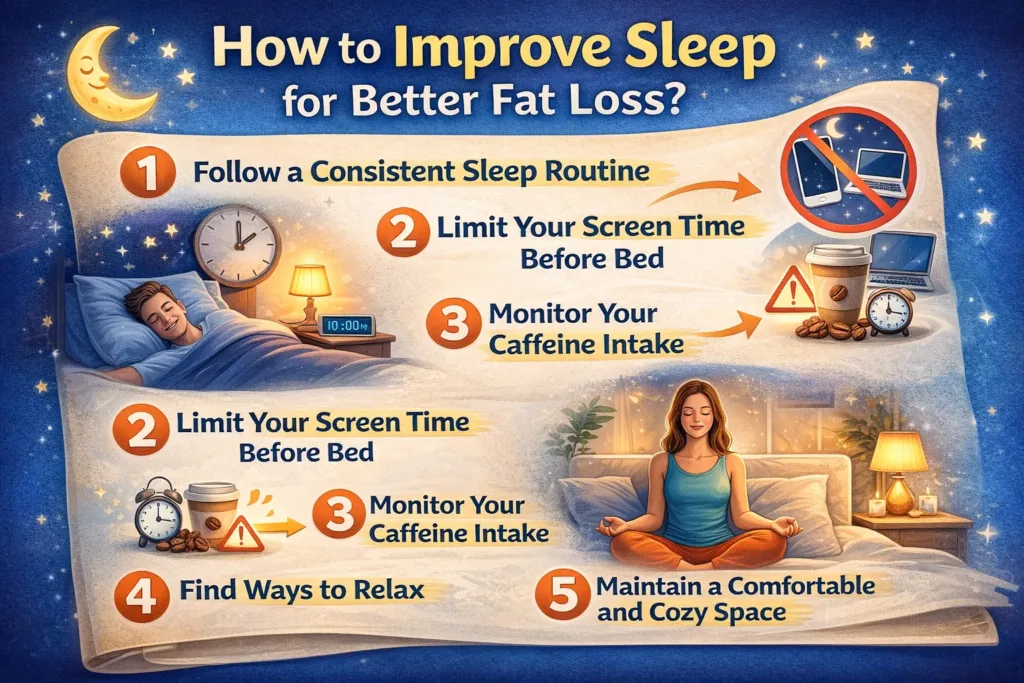
1. Follow a Consistent Sleep Routine
Make a habit of going to bed and waking up at the same time every day, even on weekends. A steady routine helps your body to understand when it’s time to rest that makes falling asleep and waking up feel easier.
2. Limit Your Screen Time Before Bed
At least an hour before going to bed, make sure to turn off your TV, laptop, and phone to relax your mind. The light from the screens can signal your mind into false thinking that it is still daytime, which can keep you awake.
3. Monitor Your Caffeine Intake
Avoid coffee, tea, or energy drinks in the afternoon and evening. Caffeine can stay in your system for hours and can disrupt your sleep routine, making it harder to fall for you to asleep.
4. Find Ways to Relax
If your mind is active, you might toss and turn. Before bed, practice some simple activities like deep breathing or stretching. They will relax your body and mind.
5. Maintain a Comfortable and Cozy Space
Try to maintain a room temperature between 18 and 22 degree celsius. A calm, pleasant setting helps you relax your body and mind, which makes it easier to fall asleep and stay asleep all night.
Final Takeaway
At the end of the day, sleep is very important for weight loss and overall good health. It doesn’t matter how healthy you are eating if you will not fix your sleep routine. A good sleep allows your body to recover and naturally control hunger, burn fat, and keep energy steady.
A healthy diet and the most intense workout will not make any difference if your body is unable to rest properly. In the journey toward a healthier body, rest isn’t a luxury – it’s a necessity.
Frequently Asked Questions
1. Why do I crave junk food after poor sleep?
When you don’t get enough sleep, the neurotransmitters that tell you when to eat get messed up. Leptin, the fullness hormone, goes down, and ghrelin, the hunger hormone, rises up. This makes signals that tell you you’re hungry greater and signals that tell you you’re full weaker. The brain’s reward centers, including the amygdala, also get more active, which makes people desire to consume more sweet, fatty, and high-calorie foods. When you’re sleepy, you’re also more receptive to food cues, which makes these urges greater.
2. Is oversleeping good for fat loss?
Oversleeping can be done occasionally, but regular sleeping more than 9 hours per night is generally not beneficial for fat loss and can result in weight gain. Extended sleep more than usual can slow down body movement, resulting in more laziness and a slow metabolism. While 7-8 hours of quality sleep is important for balancing appetite hormones such as ghrelin and leptin, sleeping longer than needed does not replace a proper diet or regular exercise.
3. How quickly does sleep affect metabolism?
Sleep could have an immediate influence on metabolism. Your hormone levels can fluctuate even after only one night of not getting enough sleep. Leptin (the fullness hormone) goes down, while cortisol (the stress hormone) and ghrelin (the hunger hormone) go up. These changes can make it difficult to lose weight, raise your blood sugar, and make you hungry the next day.
4. Can naps replace nighttime sleep?
You can feel more awake and less fatigued after a short nap, but it won’t replace a full night’s sleep. Naps can make you feel better, but they don’t give your body the full rest it needs as sleep at night does. Taking a nap won’t help you sleep better; it will just make you feel better. Your hormones, metabolism, and overall health can still be affected if you take naps instead of getting enough sleep.
5. Does poor sleep affect belly fat specifically?
Lack of sleep is bad for your health and may make your belly fat grow. Not getting enough sleep raises the level of cortisol, the stress hormone. This creates fat in the stomach. Getting little or bad sleep regularly raises visceral fat, which is the fat that surrounds organs. This fat raises the risk of diabetes and heart disease.


