

In 2026, Americans are switching to a more balanced approach to eating. They are adding more plant-based foods like vegetables, beans, nuts, and whole grains to their daily meals. More and more people are going from a non-vegetarian to a full vegetarian approach.
This approach is also supported by health experts, who are advising individuals to reduce their consumption of meat-heavy meals and prioritize more natural, nutritious foods.
And the shift in diet change is not another fad; in fact, it is a reflection of understanding about smarter food choices.
The concept of switching from a meat-based diet to a plant-based diet is fairly straightforward; replace animal protein sources with whole-grain-based proteins, legumes, and fresh fruits and vegetables.
What Is the Trending Diet in 2026?
This diet is generally known as a plant-based or plant-forward diet. It is gaining more attention because of its health benefits, such as supporting heart health, helping with weight management, and lowering the risk of long-term health problems.
The purpose of a plant-based diet is to limit the amount of processed foods we consume and increase the intake of whole foods each day. You do not need to give up meat entirely; however, this approach encourages building everyday meals around simple, real foods that are easy to prepare and include in your routine.
When creating meals using a plant-based diet, there are a few key things to focus on:
- Beans, lentils, and peas
- Nuts and seeds
- Whole grains, fruits, and vegetables
- Limited amounts of red and processed meat
- Fewer packaged foods
Plant-based eating is supported by health professionals because it helps people maintain a healthier lifestyle and supports long-term well-being.
Why Americans Are Switching to a Plant-Based Diet?
As people become more conscious about their health, many are switching to this diet because of its benefits:
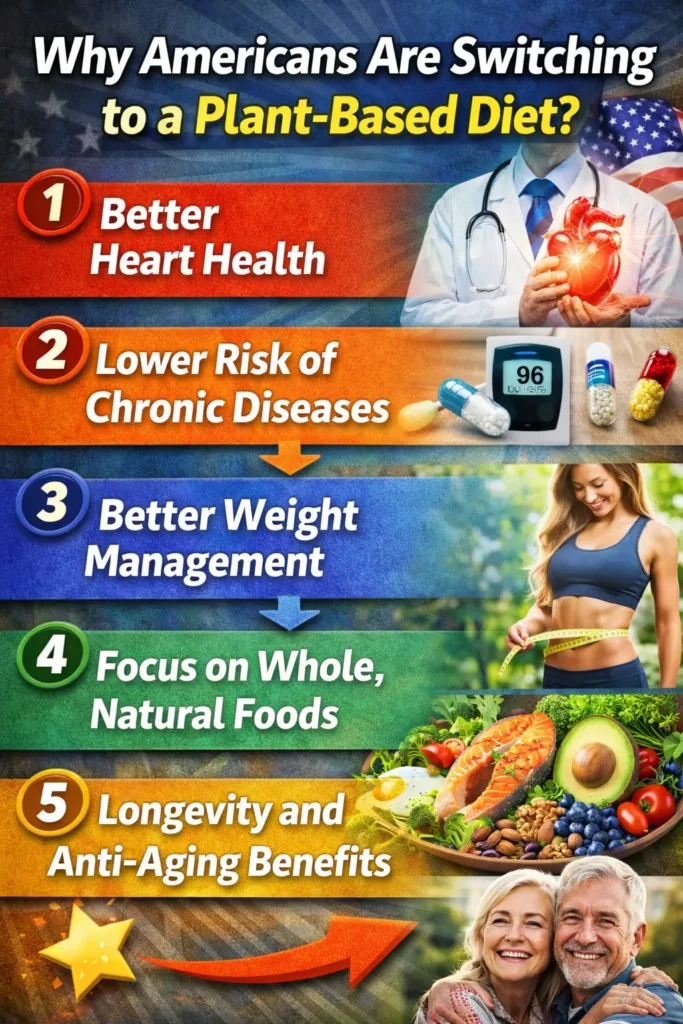
Image reference Ai
1. Better Heart Health
The consumption of a mainly plant-based diet, which contains high amounts of fiber and healthy fats, can lead to a 5-10% naturally lower cholesterol in the body. This can support normal (healthy) blood pressure and, in turn, lower the risk of heart-related illness by 20-25%.
2. Lower Risk of Chronic Diseases
Eating more plant-based foods is good for your health in general. It lowers the risk of type 2 diabetes, helps you keep your weight in check, and keeps your metabolism healthy. Experts say that this diet lowers the risk of chronic disease and helps people stay active and feel better over time.
3. Better Weight Management
Plant-based foods have fewer calories and more fiber, which makes you feel full for longer. This can naturally lower your calorie consumption by 10-20% and remove 100-200 calories from each meal, making it easier to keep your weight consistent.
4. Focus on Whole, Natural Foods
Many Americans are becoming more conscious of ultra-processed foods, which are found in 50-60% of their total diets. Examples of these include sugary drinks, processed meats, and packaged snacks that they eat regularly. These types of foods increase the chances of developing heart disease, as well as weight gain.
5. Longevity and Anti-Aging Benefits
Research indicates that individuals who incorporate a greater quantity of plant-based foods into their daily diet may experience an extension of lifespan by around 1.5 to 3 years, accompanied by a reduced susceptibility to chronic diseases and a more favorable aging process over time.
What Makes Up the 2026 Diet?
1. Legumes as a Protein Source
Many foods, like beans and lentils, are high in protein, rich in fiber, and good for overall health. These foods make good alternatives for meat in the American diet and are easy to make.
2. Nuts and Seeds
Nuts and seeds (like almonds and walnuts) provide significant amounts of good fats and antioxidants. These types of nutrients will promote proper circulation, lower cholesterol levels, and reduce stress on both the heart and blood vessels. All of these factors contribute to maintaining good cardiovascular health long-term.
3. Whole Grains Over Refined Carbs
More and more people are opting for brown rice, oats, and whole wheat over white bread or rice. These foods help in keeping blood sugar levels steady throughout the day as they are light and easily digestible.
4. Fruits and Vegetables
Eating a variety of colorful fruits and vegetables gives your body the vitamins it needs, helps keep your immune system strong, and supports your body in fighting off common illnesses by reducing inflammation and keeping it well nourished.
What Americans Are Avoiding in 2026?
By 2026, many Americans will be more conscious of their eating habits, specifically identifying foods that might affect their health in the long run and gradually cutting back on them. This new trend of eating is not just about adding healthier foods to your diet; it also means making better choices every day. Specifically, cutting back on:
- Red meat (especially processed meats, like sausage and deli meats)
- Sugary food and beverages (soda, candy, sweetened drinks, etc.)
- Excessive salt (found in both packaged food and fast food)
- Ultra-processed packaged foods (highly additive-laden)
By cutting back on these foods, you can reduce the strain on your body over time. Lower intake of meat and sugar can improve heart function and help keep blood sugar levels steady; as a result, it can also reduce internal stress that may lead to fatigue and other health problems.
Sample Daily Meal Plan (Plant-Forward Diet)
| Meal | Food |
| Breakfast | Oatmeal topped with almonds, chia seeds, and fresh berries |
| Lunch | Lentil salad with mixed vegetables and chickpeas |
| Snack | A handful of mixed nuts with fruits |
| Dinner | Quinoa served with roasted vegetables and chickpeas |
| Optional | Greek yogurt or plant-based yogurt |
How to Start a Plant-Based Diet?
As most of the American diet is meat-based, it is very normal to ask how to start a plant-based diet. The simplest way to add it to your routine is to start small and make changes that are easy to follow. The best part is that you don’t have to completely change your diet at once. With gradual changes, your eating habits begin to improve, and your body gets time to adjust to the new diet. You can start with:
- Replace meat with beans, lentils, or legumes a couple of times each week.
- Increase the number of servings of vegetables you eat daily by at least one
- Use a whole grain (brown rice, oats, whole wheat flour) instead of a refined grain.
- Always have nuts or fresh fruit on hand for those times you want to grab a packaged snack
By making small changes in your meals, you start noticing a real difference, making you feel more relaxed, more energetic, with better digestion, easier weight management, and improvement in overall well-being.
Conclusion
In 2026, there has been a shift in how Americans are viewing their food. They are finding it easier to take a more practical and healthy approach to eating. Switching to a plant-based diet is becoming more common, and more people are making simple and realistic changes in their daily meal plans. Including more natural and whole foods promotes better digestion, stable energy levels, and long-term well-being.
Frequently Asked Questions
1. Do I need to give up meat completely while following a plant-based diet?
Eating plant based foods does not imply giving up meat completely. This diet mainly focuses on more whole foods and less meat and animal products. A small amount of meat can be eaten, but fruits, vegetables, beans, nuts, and grains should be provided in meals.
2. Can I get enough protein from plant-based foods?
A plant based diet is full of fiber and healthy fats; if planned carefully, it can fulfill daily protein intake. Tofu, beans, lentils, chickpeas, nuts, seeds, and whole grains are good sources of protein. By including these foods in your daily diet, you can ensure that your body gets all the essential amino acids it needs.
3. Is this diet good for weight loss?
Yes, a plant-based diet supports weight loss naturally and sustainably. According to the research, people may lose 4-5 kg (8-10 pounds) over several months without strict calorie counting. High fiber foods are lower in calories, keep you satiated for long, reduce cravings, and naturally lower overall calorie intake.
4. How fast will I see results?
As soon as your body makes adjustments, you start seeing minor improvements in just a few weeks. Enhanced digestion, reduced bloating, less sugar fluctuation, and more consistent energy levels. With regular healthy choices, you will typically see more significant changes in both your weight and overall health within a few months, based on your daily routine and consistency level.
5. Is a plant-based diet suitable for everyone?
A properly planned plant-based diet usually works well for individuals, depending on their needs and preferences. A focus on variety in the diet will allow the individual to consume all of the necessary nutrients, such as protein, vitamin B12, iron, calcium, and healthy fats. So that they can have an energy-balanced lifestyle and improved overall health.