

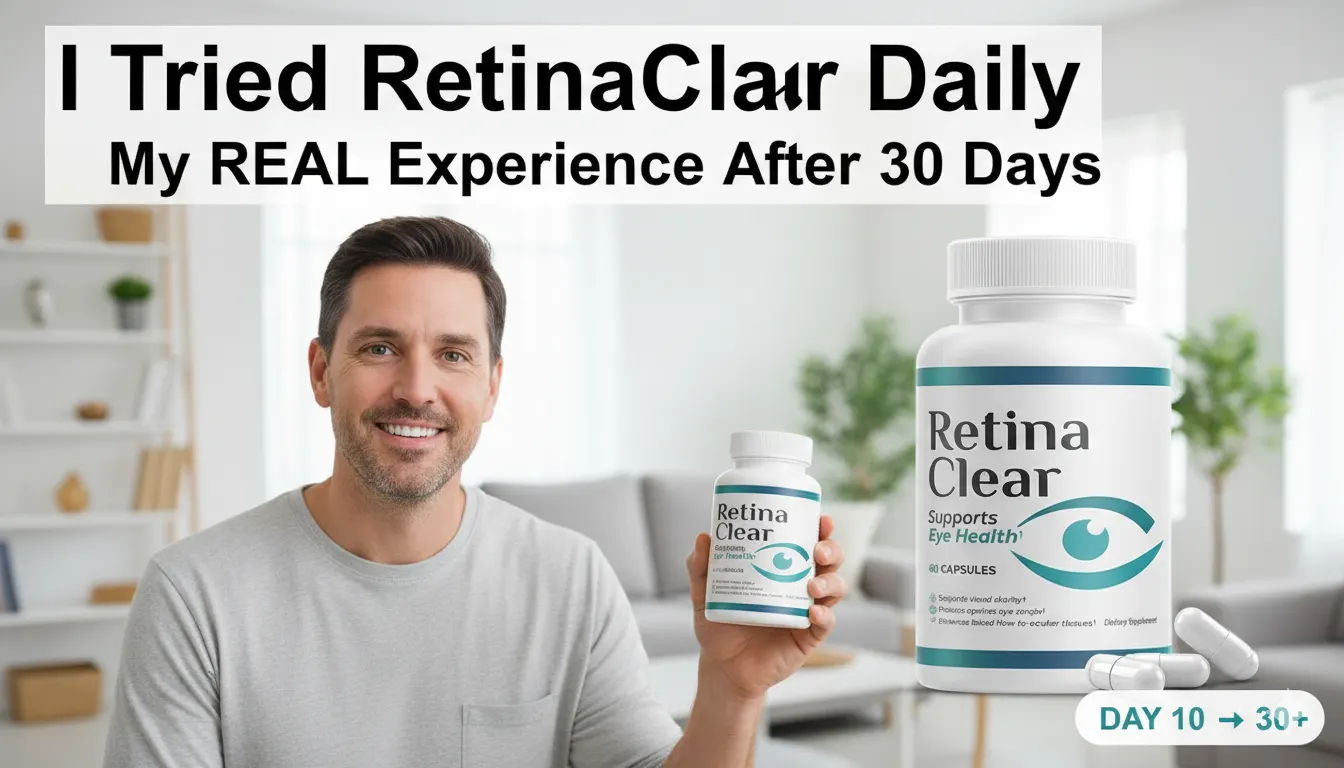
Introduction: Why I Decided to Try Retina Clear
I want to start this Retina Clear review with complete honesty. I didn’t start using RetinaClear because of a sudden eye emergency or dramatic vision loss. My problem was more gradual and relatable — eye strain from long screen time, occasional blurry vision, dryness, and headaches after working late hours. Like many people, I spend several hours a day on a laptop and phone, and over time I could feel my eyes getting tired much faster than before.
I came across Retina Clear while searching for supplements that support eye health naturally. What caught my attention was that it wasn’t marketed as a miracle cure for eyesight, but rather as a daily eye-support supplement. That felt more realistic to me. Instead of expecting overnight changes, I decided to use Retina Clear consistently for 30 days and observe what actually happened.
This blog is my personal experience — no hype, no exaggerated claims, just what I genuinely noticed.
What Is RetinaClear?
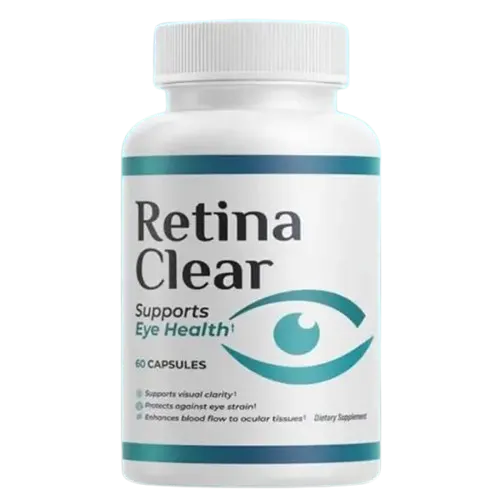
Retina Clear is a dietary supplement designed to support overall eye health and visual function. According to the product description, it focuses on nourishing the eyes at a cellular level rather than forcing immediate vision changes.
Retina Clear claims to support:
- Eye comfort and reduced strain
- Visual clarity
- Protection against oxidative stress
- Long-term eye health
What I liked is that RetinaClear does not claim to replace glasses or fix serious eye conditions instantly. It positions itself as a supportive supplement, not a medical treatment.
Ingredients Overview (Simple and Practical)
I’m not an eye specialist, so I’ll keep this simple. Retina Clear contains nutrients commonly associated with eye health, including antioxidants and compounds known to support retinal function.
From my research, these ingredients are often used to protect eyes from screen-related strain and age-related stress. Nothing felt extreme or experimental. Most ingredients are commonly found in eye-support supplements.
Importantly, Retina Clear does not rely on stimulants or harsh additives.
How I Used RetinaClear (My Daily Routine)
I followed the instructions on the label and took Retina Clear once daily with water, usually after breakfast. I didn’t change my screen habits drastically, although I did try to take short breaks when possible.
During the 30-day period:
- My work schedule stayed the same
- Screen time remained high
- I did not use other eye supplements
This made it easier to understand what changes were likely due to RetinaClear.
My Week-by-Week Experience With RetinaClear
Week 1: Getting Started (No Immediate Changes)
During the first week, I didn’t notice any major changes. My vision felt the same, and eye strain was still present by evening. However, I didn’t experience any side effects like nausea or headaches.
At this stage, Retina Clear felt gentle and easy to take, but not dramatic.
Week 2: Slight Reduction in Eye Strain
In the second week, I started noticing that my eyes felt slightly less tired at the end of the day. The burning sensation after long screen hours reduced a bit. My vision clarity was mostly the same, but overall eye comfort improved.
These were subtle changes, but noticeable if you pay attention.
Week 3: Better Comfort and Focus
Week three is where Retina Clear started to feel more effective. I noticed fewer headaches related to screen use. My eyes felt more relaxed, especially in the evenings. Reading text on screens felt easier, and I didn’t squint as much.
Again, no dramatic vision improvement — just better comfort.
Week 4: Realistic Results After 30 Days
By the end of 30 days, my eyes felt more resilient. Long workdays didn’t exhaust my eyes the way they used to. Dryness reduced, and overall comfort improved.
My eyesight prescription didn’t change, but day-to-day visual strain definitely improved.
Buy Retina Clear Only On Official Store
My Results After 30 Days (Honest Summary)
What Improved:
- Reduced eye strain
- Less dryness
- Fewer screen-related headaches
- Better eye comfort
What Didn’t Change:
- No sudden eyesight correction
- No replacement for glasses
Comparison: RetinaClear vs Typical Eye Health Supplements
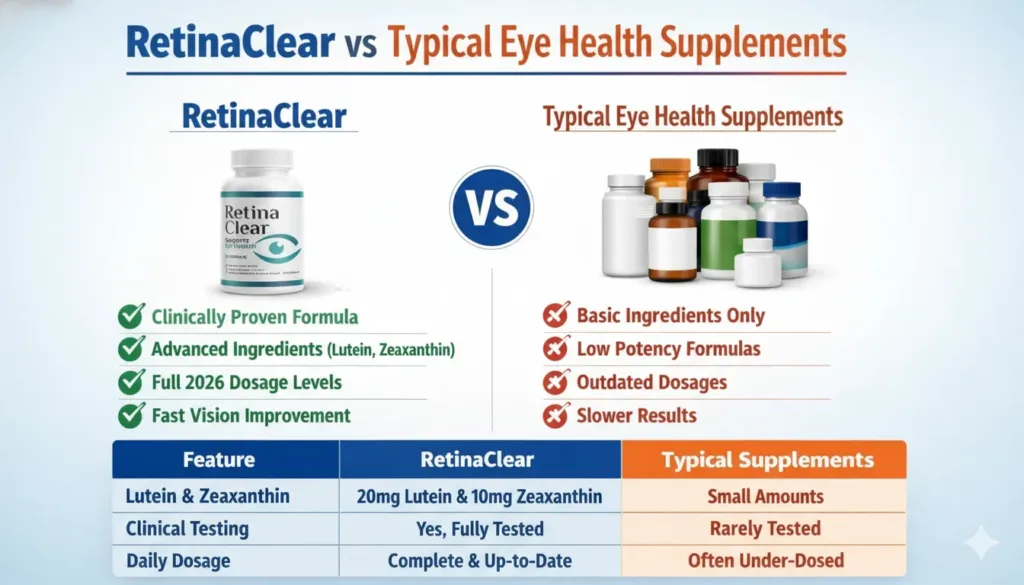
I’ve tried basic eye vitamins before. Most felt generic and didn’t produce noticeable changes.
RetinaClear felt more targeted toward modern screen-related eye problems. Instead of promising sharper vision instantly, it focused on reducing stress and discomfort. Compared to generic multivitamins, RetinaClear felt more specialized.
Common Mistakes People Make While Using Retina Clear
1. Expecting Perfect Vision
RetinaClear is not meant to fix eyesight overnight.
2. Being Inconsistent
Skipping days reduces benefits.
3. Ignoring Screen Habits Completely
Basic eye care still matters.
4. Mixing Multiple Eye Supplements
This can make it harder to track results.
Frequently Asked Questions (FAQ)
Q1: Can RetinaClear improve eyesight naturally?
It supports eye health and comfort, but it’s not a cure for vision problems.
Q2: How long does Retina Clear take to work?
Subtle comfort improvements appeared after 2–3 weeks for me.
Q3: Are there any side effects?
I didn’t experience any side effects.
Q4: Is Retina Clear safe for long-term use?
It felt safe during my use, but breaks are always sensible.
Q5: Who should use RetinaClear?
People with eye strain, dryness, or long screen exposure may benefit.
Pros and Cons of RetinaClear
Pros
- Gentle and stimulant-free
- Supports eye comfort
- Easy daily routine
- No noticeable side effects
Cons
- Results are subtle
- Not a medical treatment
- Requires consistency
Long-Term Expectations: What Happens Beyond 30 Days
Although this review focuses on my first 30 days with RetinaClear, it’s important to talk about long-term expectations. Supplements that support eye health usually work slowly. Based on my experience and research, continued use may help maintain eye comfort and protect against daily strain, especially for people with high screen exposure.
However, RetinaClear should be seen as part of an overall eye-care routine, not a replacement for regular eye checkups, proper lighting, screen breaks, or corrective lenses when needed.
Who RetinaClear Is Best For (And Who It’s Not)
RetinaClear May Be a Good Choice If:
- You spend long hours on screens
- You experience eye fatigue, dryness, or discomfort
- You want gentle, daily eye support
- You prefer non-stimulant supplements
RetinaClear May Not Be Ideal If:
- You expect eyesight correction
- You have serious eye conditions requiring medical treatment
- You want instant, dramatic results
Lifestyle Tips That Helped Alongside RetinaClear
While using RetinaClear, I noticed better results when I combined it with simple habits:
- Following the 20-20-20 rule (looking away from screens regularly)
- Staying hydrated
- Ensuring adequate sleep
- Reducing late-night screen exposure
These small habits didn’t replace RetinaClear, but they complemented it well.
Final Verdict: Is RetinaClear Worth Trying?
Would I recommend RetinaClear? Yes — but with realistic expectations. If your goal is to reduce daily eye strain, dryness, and discomfort from screen use, RetinaClear can be a helpful addition to your routine.
It won’t fix eyesight overnight or replace glasses, but it does what it claims in a subtle and supportive way. For me, the improvement in comfort alone made it worthwhile.
Disclaimer
This review is based on my personal experience. Results may vary from person to person. This content is for informational purposes only and should not be considered medical advice.


