

If you’ve ever searched online for a weight loss diet plan, you’ve probably noticed a pattern. Most plans promise dramatic results in a very short time. They often require cutting entire food groups, drinking only liquids, or following rules that feel impossible to maintain in real life.
The truth is, sustainable weight loss doesn’t come from extremes. It comes from small, consistent changes that fit into your daily routine. This 7-day weight loss diet plan is designed with that idea in mind. It focuses on balance, realistic portions, and foods that support your body instead of stressing it.
This plan is not about starving yourself. It is about learning how to eat in a way that helps your body release excess weight naturally while keeping your energy levels stable throughout the day.
How This 7-Day Weight Loss Diet Plan Works
This diet plan is built around a few core principles. First, it reduces added sugars and highly processed foods, which are common causes of weight gain. Second, it increases protein and fiber, helping you feel full longer and reducing unnecessary snacking. Third, it supports stable blood sugar levels, which plays a major role in appetite control.
You will eat three main meals each day with one or two light snacks. Portions are reasonable, not extreme. There is no calorie counting required, and no expensive supplements are needed. The goal is to create habits that you can continue even after the seven days are over.
General Guidelines to Follow All Week
Before starting, keep these simple rules in mind. Drink plenty of water throughout the day, aiming for at least eight glasses. Avoid sugary drinks, including soda and sweetened coffee beverages. Try to eat slowly and pay attention to hunger and fullness cues. Include some form of light movement each day, even if it is just walking.
Sleep also matters more than most people realize. Try to get at least seven hours of sleep each night, as poor sleep can increase cravings and slow progress.
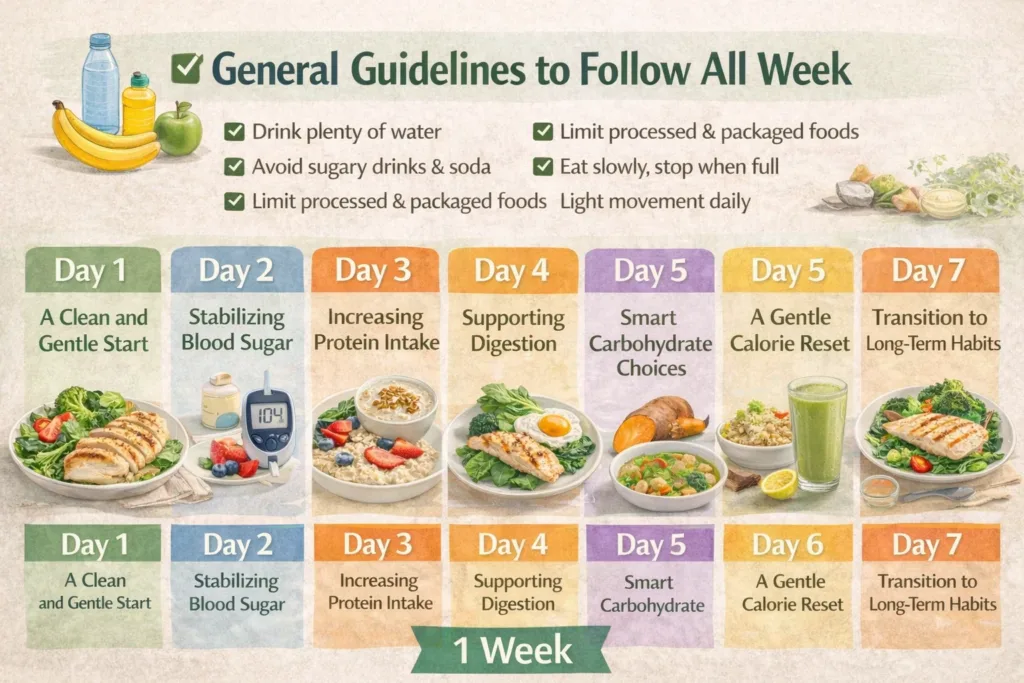
Day 1: A Clean and Gentle Start
The first day is about reducing bloating and easing your body into the plan. Many people consume excess salt and processed foods without realizing it, which leads to water retention.
For breakfast, have a bowl of oatmeal made with water or unsweetened almond milk, topped with fresh berries or sliced apple. Lunch can be a grilled chicken or tofu salad with mixed greens, olive oil, and lemon juice. For a snack, choose a small handful of nuts. Dinner should be steamed vegetables with baked fish or lentils.
This day helps your digestion reset and prepares your body for the rest of the week.
Day 2: Stabilizing Blood Sugar
On day two, the focus shifts to blood sugar balance. Stable blood sugar helps reduce cravings and prevents energy crashes.
Start the day with two boiled eggs and a slice of whole-grain toast. Lunch can include a small portion of brown rice, vegetables, and lean protein. For a snack, choose plain Greek yogurt. Dinner should be a light vegetable soup with roasted vegetables on the side.
You may notice fewer cravings by the evening, which is a positive sign.
Day 3: Increasing Protein Intake
Protein plays a key role in weight loss because it helps preserve muscle and keeps you feeling full longer. Day three emphasizes higher protein intake spread throughout the day.
Breakfast can be a protein smoothie made with Greek yogurt, berries, and a handful of spinach. Lunch might be a turkey or chickpea wrap with whole wheat bread and fresh vegetables. For a snack, enjoy an apple with natural peanut butter. Dinner should include grilled chicken or beans with steamed green vegetables.
This day often brings improved energy and reduced hunger.
Day 4: Supporting Digestion
By day four, your body may feel lighter. This day focuses on digestion and comfort.
For breakfast, scrambled eggs with vegetables work well. Lunch can be a quinoa bowl with mixed vegetables and olive oil. A piece of fruit makes a good snack. Dinner should be a clear vegetable soup with a small portion of protein.
Avoid heavy sauces and fried foods today to keep digestion smooth.
Day 5: Smart Carbohydrate Choices
Carbohydrates are often misunderstood. The goal is not to eliminate them but to choose the right types and portions.
Breakfast may include overnight oats with chia seeds. Lunch can be a baked sweet potato with grilled fish or tofu. For a snack, choose nuts or seeds. Dinner should be stir-fried vegetables with lean protein.
This approach provides energy while minimizing fat storage.
Day 6: A Gentle Calorie Reset
Day six slightly lowers overall calorie intake without extreme restriction. This encourages the body to tap into stored energy.
Start with a green smoothie containing protein. Lunch should be a large salad with vegetables, protein, and healthy fats. Snack on cottage cheese or yogurt. Dinner should be light, such as steamed vegetables or soup.
Keep portions modest and focus on hydration.
Day 7: Transition to Long-Term Habits
The final day is about balance and sustainability. It prepares you to continue healthy habits beyond the week.
Breakfast can be eggs or oatmeal. Lunch should be a balanced plate with protein, vegetables, and carbohydrates. Snack on fruit or nuts if needed. Dinner can be your favorite healthy meal, avoiding heavily processed foods.
This day reinforces that weight loss does not require constant restriction.
What Results Can You Expect
Most people experience reduced bloating, improved digestion, and a weight loss of two to five pounds during the week. Some of this is water weight, but fat loss also begins when habits are consistent.
Energy levels often improve, and cravings tend to decrease.
Common Mistakes to Avoid
Skipping meals, cutting carbs completely, and expecting instant results are common mistakes. Drinking hidden sugars and ignoring sleep can also slow progress. Weight loss is a gradual process that rewards consistency.
Can You Repeat This Plan
This plan can be repeated or adjusted weekly. For best results, combine it with regular movement and adequate sleep.
Frequently Asked Questions (FAQs)
1. Can I really lose weight in just 7 days?
Yes, many people notice weight loss within 7 days, especially reduced bloating and water weight. Fat loss also begins when you follow balanced meals, control portions, and stay consistent. Results vary depending on metabolism, activity level, and starting weight.
2. How much weight can I lose in 7 days safely?
A safe and realistic range is 2–5 pounds in one week. Rapid weight loss promises are often unhealthy and not sustainable. This plan focuses on gradual, healthy progress.
3. Do I need to exercise while following this diet plan?
Exercise is not mandatory, but light activity like walking for 20–30 minutes daily can improve results. Even gentle movement supports digestion, metabolism, and overall weight loss.
4. Can beginners follow this 7-day weight loss diet plan?
Yes. This plan is beginner-friendly and does not require calorie counting, supplements, or extreme food restrictions. It focuses on simple, everyday foods that are easy to prepare.
5. Is this diet plan safe for men and women?
Yes, this plan is suitable for both men and women. Portion sizes may be adjusted based on individual calorie needs, height, weight, and activity level.
6. Can I repeat this 7-day diet plan?
Yes. You can repeat this plan or use it as a foundation for long-term healthy eating. Many people follow it for 2–3 weeks with slight variations to avoid boredom.
7. Will I feel hungry on this diet?
You may feel mild hunger during the first few days as your body adjusts, but adequate protein, fiber, and healthy fats help control appetite. Drinking enough water also reduces unnecessary hunger.
8. Are carbohydrates completely eliminated in this plan?
No. Carbohydrates are included in smart portions, such as whole grains, fruits, and vegetables. The focus is on reducing refined and processed carbs, not eliminating carbs entirely.
9. Can I drink coffee or tea during these 7 days?
Yes. Black coffee and unsweetened tea are allowed. Avoid adding sugar, flavored syrups, or high-calorie creamers, as they can slow progress.
10. Is this plan suitable for people with medical conditions?
If you have diabetes, thyroid issues, heart conditions, or are pregnant, consult a healthcare professional before starting any diet plan. This guide is for general informational purposes.
Final Thoughts
This 7-day weight loss diet plan is not a quick fix. It is a foundation for healthier eating and sustainable weight management. By focusing on balance, realistic portions, and consistency, you give your body the support it needs to release excess weight naturally.
Disclaimer
This content is for informational purposes only and does not replace professional medical advice. Consult a healthcare provider before starting any diet plan.
Refrance: Mayoclinic


