


If you’ve ever struggled to stay focused during a busy workday, you know how frustrating it can be. You sit down with a clear list of things to accomplish, but a few hours later, you realize you’ve spent too much time switching between tasks, checking notifications, and losing your train of thought.
That was one of the reasons I decided to try MindWake for 30 days.
I wanted to find out whether it could fit into my daily routine and whether I would notice any difference in areas such as focus, mental clarity, alertness, and productivity.
I wasn’t expecting a miracle.
Instead, I wanted to take a more realistic approach: use it consistently, pay attention to how I felt, and compare my experience with what scientific research says about commonly used cognitive-support ingredients.
Important: This is a personal-experience-style review, not a clinical study. Individual results can vary, and scientific evidence for an individual ingredient does not automatically prove that a finished product such as MindWake will produce the same results.
Why I Decided to Try MindWake
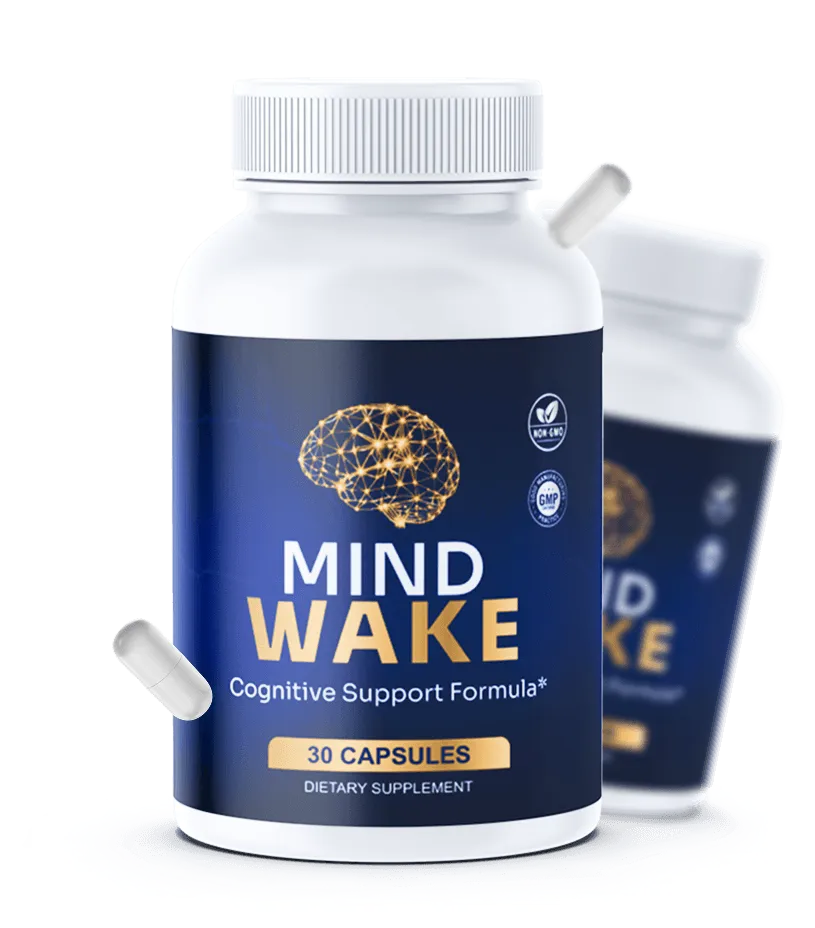
My main reason for trying MindWake was focus.
There were days when I could concentrate for hours, while on other days I found myself constantly distracted. I wanted to see whether adding a consistent supplement routine could make a noticeable difference.
Before starting, I decided to track a few things:
- How easily I could concentrate
- Whether I felt mentally clear
- My daytime alertness
- How productive I felt
- Whether I noticed any unwanted effects
- Whether the routine was convenient enough to maintain
I also tried not to make major changes to my lifestyle during the experiment.
That meant keeping my sleep schedule reasonably consistent, drinking enough water, and avoiding the temptation to completely change my diet or exercise routine.
My 30-Day MindWake Experience
Week 1: Getting Into a Routine
The first week was mostly about consistency.
I didn’t experience a dramatic transformation within the first few days. Instead, I was paying attention to how MindWake fit into my normal routine.
One thing I quickly realized was how often I was getting distracted without even noticing it.
I would start working on one task, check something unrelated, return to the original task, and then repeat the process.
So during the first week, I focused more on developing better habits than looking for dramatic results.
Week 2: Paying More Attention to Focus
During the second week, I started paying closer attention to my concentration.
I noticed that I was becoming more deliberate about completing one task before moving to another.
There were still distractions, of course.
I didn’t suddenly become immune to social media, emails, phone notifications, or unexpected interruptions.
But I felt that having a consistent routine made me more conscious of how I was spending my time.
At this stage, I still didn’t want to make a strong judgment.
A few good days aren’t enough to determine whether a supplement is actually responsible for a change.
Week 3: My Routine Felt More Natural
By week three, taking MindWake had become part of my daily routine.
This was also when I started looking at my overall productivity rather than individual days.
Some days were naturally better than others.
I realized that sleep, stress, workload, hydration, nutrition, and exercise could all influence how focused I felt.
That made me more cautious about attributing every positive change directly to MindWake.
Instead, I looked at it as one part of a larger routine.
Week 4: Looking at the Bigger Picture
By the final week, I had enough experience to step back and evaluate the entire month.
Rather than asking whether MindWake had completely transformed my productivity, I asked a more realistic question:
Did I notice enough of a difference to make the 30-day experiment worthwhile?
My answer was yes, although my experience was more subtle than dramatic.
I noticed that I was paying more attention to my focus habits and how I structured my workday.
But I wouldn’t describe MindWake as a magic solution.
Order MindWake Online – Current Price, Discounts & Official Website
What I Noticed After 30 Days
1. I Became More Conscious of My Focus
Focus was the biggest reason I started the experiment.
Throughout the month, I became much more aware of when I was losing concentration.
Instead of automatically jumping from one task to another, I started making an effort to finish important tasks before moving on.
That behavioral change alone made a difference to my productivity.
2. Mental Clarity Felt More Important Than Energy
Before starting, I assumed energy would be the biggest thing I noticed.
Instead, I became more interested in mental clarity.
There were days when I felt more organized and able to work through my tasks without feeling quite as scattered.
However, I wouldn’t say that MindWake was solely responsible.
There are simply too many variables involved in how a person feels from one day to another.
3. Productivity Improved When I Reduced Distractions
One of my biggest takeaways had nothing to do with supplements.
I realized that eliminating distractions was just as important as trying to improve focus.
Turning off unnecessary notifications, keeping fewer browser tabs open, and working on one important task at a time helped me get more done.
MindWake became part of that routine rather than a replacement for it.
4. I Didn’t Experience a Dramatic Overnight Change
This is probably worth emphasizing.
I didn’t wake up on day three suddenly feeling like I had unlimited concentration.
My experience was gradual and difficult to separate from my lifestyle habits.
That’s why I think anyone considering a supplement should keep expectations realistic.
The Science Behind Ingredients Used for Cognitive Support
One thing I wanted to understand during my 30-day experience was what the ingredients in MindWake are actually supposed to do. The formula contains Ginkgo Biloba, Phosphatidylserine, N-Acetyl L-Carnitine HCl, Bacopa Monnieri, L-Glutamine, and Alpha GPC.
Here’s what scientific research says about each one.
1. Ginkgo Biloba (Ginkgo biloba)

Ginkgo biloba is one of the most widely studied botanical ingredients associated with cognitive health.
Researchers have investigated standardized Ginkgo extracts for their potential effects on memory, attention and cognitive function. However, results have been mixed, particularly among healthy adults, so it would be an overstatement to say that Ginkgo automatically improves memory.
Scientific name: Ginkgo biloba
Common name: Ginkgo
Research areas: Memory, attention and cognitive function
For me, this was interesting because I was specifically looking at whether MindWake could support my ability to stay mentally engaged during longer work sessions.
2. Phosphatidylserine

Phosphatidylserine is a naturally occurring phospholipid found in cell membranes, including those in the brain.
It has been studied for its potential role in cognitive function, memory and age-related cognitive changes. Some research suggests potential benefits, but the evidence is not strong enough to guarantee a particular outcome for everyone.
Ingredient: Phosphatidylserine
Research areas: Memory, cognition and brain-cell function
One reason I found this ingredient interesting was that my goal wasn’t simply to feel more energetic. I was more interested in whether I could feel mentally organized and focused.
3. N-Acetyl L-Carnitine HCl

N-Acetyl L-Carnitine is a form of acetyl-L-carnitine, a compound related to the amino acid L-carnitine.
Acetyl-L-carnitine has been investigated in research involving neurological function, aging and cognitive performance. However, research findings vary depending on the population studied and the specific outcome being measured.
Ingredient: N-Acetyl L-Carnitine HCl
Related compound: Acetyl-L-carnitine
Research areas: Cognitive function, neurological health and cellular energy metabolism
I found this particularly interesting because maintaining mental energy was one of the things I was paying attention to during my 30-day experiment.
4. Bacopa Monnieri (Bacopa monnieri)

Bacopa monnieri, commonly known as Brahmi, has a long history of traditional use and has also been studied in modern clinical research.
A systematic review of randomized controlled human trials found evidence suggesting that Bacopa may have beneficial effects on certain aspects of memory, particularly delayed recall. However, the researchers also highlighted limitations in the available evidence.
Another meta-analysis found potential improvements in some measures of cognition and attention following supplementation with Bacopa extracts, although additional high-quality research is still needed.
Scientific name: Bacopa monnieri
Common name: Brahmi
Research areas: Memory, learning and attention
One important point is that many studies examine standardized Bacopa extracts over several weeks. Therefore, the results shouldn’t automatically be applied to every supplement containing Bacopa.
5. L-Glutamine

L-glutamine is an amino acid naturally produced by the body and also obtained through food.
It plays roles in nitrogen metabolism and serves as a substrate for several metabolic processes. Glutamine is also involved in the nervous system, although that doesn’t mean taking additional glutamine necessarily produces noticeable improvements in memory or focus in healthy people.
Ingredient: L-Glutamine
Research areas: Amino-acid metabolism, cellular function and nervous-system biology
I didn’t consider this ingredient a reason to expect an immediate cognitive boost. Instead, I viewed it as part of the overall formulation.
6. Alpha GPC

Alpha GPC, also known as L-alpha glycerylphosphorylcholine, is a choline-containing compound.
Choline is important for normal neurological function and is involved in the production of acetylcholine, a neurotransmitter involved in memory and learning.
Alpha GPC has been investigated for cognitive and neurological applications, although research outcomes vary and more evidence is needed to establish how effective supplementation is for healthy individuals.
Scientific name: L-alpha glycerylphosphorylcholine
Common name: Alpha GPC
Research areas: Choline metabolism, memory and cognitive function
This ingredient was particularly interesting to me because I was looking at MindWake from a focus-and-productivity perspective rather than simply looking for an energy boost.
What Does the Science Actually Mean for MindWake?
This is where I think it’s important to separate scientific research from personal experience.
Research on an individual ingredient doesn’t automatically prove that the complete MindWake formula will produce the same results.
The amount of each ingredient, extract standardization, formulation, duration of use and individual differences can all affect outcomes.
For example, Bacopa research has generally involved specific extracts and supplementation periods lasting several weeks.
So, while I found the science behind MindWake’s ingredients interesting, I wouldn’t say that my 30-day experience proves that the supplement caused every change I noticed.
My Personal Experience vs. Scientific Evidence
After 30 days, I felt that I had a better understanding of how MindWake fit into my daily routine.
I noticed that I was paying more attention to my concentration and becoming more intentional about completing tasks without constantly switching between them.
But there were other factors involved too.
My sleep, workload, stress levels, diet, hydration and daily habits could all influence how productive I felt.
That’s why I think it’s more accurate to say:
My experience was personal, while the scientific research provides context—not a guarantee of results.
What I Liked About My MindWake Experiment
After completing the 30 days, there were several things I liked about the experience.
Consistency
Having something that I incorporated into my daily routine encouraged me to be more consistent overall.
Greater Awareness of My Habits
I became more aware of the connection between sleep, stress, distractions and productivity.
More Realistic Expectations
The experiment taught me not to expect one supplement to solve every productivity problem.
A Structured 30-Day Test
Giving myself an entire month made it easier to evaluate my experience than simply trying something for two or three days.
What I Didn’t Like
The biggest limitation was that I couldn’t scientifically determine exactly what caused any changes I noticed.
For example, if I had a particularly productive day, it could have been because:
- I slept better
- I had fewer distractions
- My workload was lighter
- I was less stressed
- I was simply having a good day
This is one of the biggest differences between a personal review and a controlled clinical trial.
A personal experience can tell you what one person noticed.
It cannot establish that everyone will experience the same thing.
Would I Try MindWake Again?
After 30 days, I wouldn’t describe MindWake as a miracle product.
But I also wouldn’t judge it based on whether it produced an instant transformation.
For me, the more useful question was whether it could comfortably fit into a broader routine focused on productivity and mental performance.
If you’re considering MindWake, I’d recommend first checking its current ingredient list, serving size, manufacturer information and product directions.
And if you’re taking medications, have a medical condition, are pregnant or breastfeeding, or simply aren’t sure whether a particular ingredient is appropriate for you, speak with a qualified healthcare professional before using it.
My Final Thoughts After 30 Days
So, what did I notice after trying MindWake for 30 days?
The changes were subtle rather than dramatic.
I became more conscious of my focus, improved how I structured my work sessions, and started paying closer attention to the lifestyle factors that influence my productivity.
The scientific research surrounding individual ingredients such as Bacopa monnieri and L-theanine is interesting, but it shouldn’t be confused with clinical evidence proving that MindWake itself will deliver a particular outcome.
My biggest takeaway was actually quite simple:
A supplement can potentially be one part of a focus routine, but it shouldn’t replace the fundamentals—good sleep, proper nutrition, hydration, exercise, stress management and healthy work habits.
After 30 days, that’s the approach I’m sticking with.
Scientific References
- Pase MP, Kean J, Sarris J, et al. The cognitive-enhancing effects of Bacopa monnieri: a systematic review of randomized, controlled human clinical trials. Journal of Alternative and Complementary Medicine. 2012.
- Kongkeaw C, et al. Meta-analysis of randomized controlled trials on cognitive effects of Bacopa monnieri extract. Journal of Ethnopharmacology. 2014.
- Einöther SJ, Martens VEG, Rycroft JA, De Bruin EA. L-theanine and caffeine improve task switching but not intersensory attention or subjective alertness. Appetite. 2010.


