

Diabetes often develops quietly. Many people live with high blood sugar for months or even years without realizing it. By the time clear symptoms appear, the condition may already be affecting the body.
That’s why recognizing the early symptoms of diabetes is so important. Early detection can help prevent serious complications and, in many cases, allow the condition to be managed more effectively through lifestyle changes and medical care.
This article explains the early warning signs of diabetes, why they happen, and when you should consider getting tested.
Medical disclaimer: This content is for informational purposes only and does not replace professional medical advice.
What Is Diabetes? (Quick Overview)
Diabetes is a condition where the body struggles to regulate blood sugar (glucose) levels. This happens when:
- The body doesn’t produce enough insulin, or
- The body can’t use insulin effectively (insulin resistance)
Over time, high blood sugar can damage the heart, kidneys, eyes, nerves, and blood vessels.
Why Early Symptoms of Diabetes Are Often Missed
One reason diabetes is so dangerous is that its early symptoms are easy to ignore. They can feel like normal tiredness, stress, aging, or dehydration.
Many people assume:
- “I’m just tired from work”
- “I drink more water because it’s hot”
- “My vision is blurry because of screens”
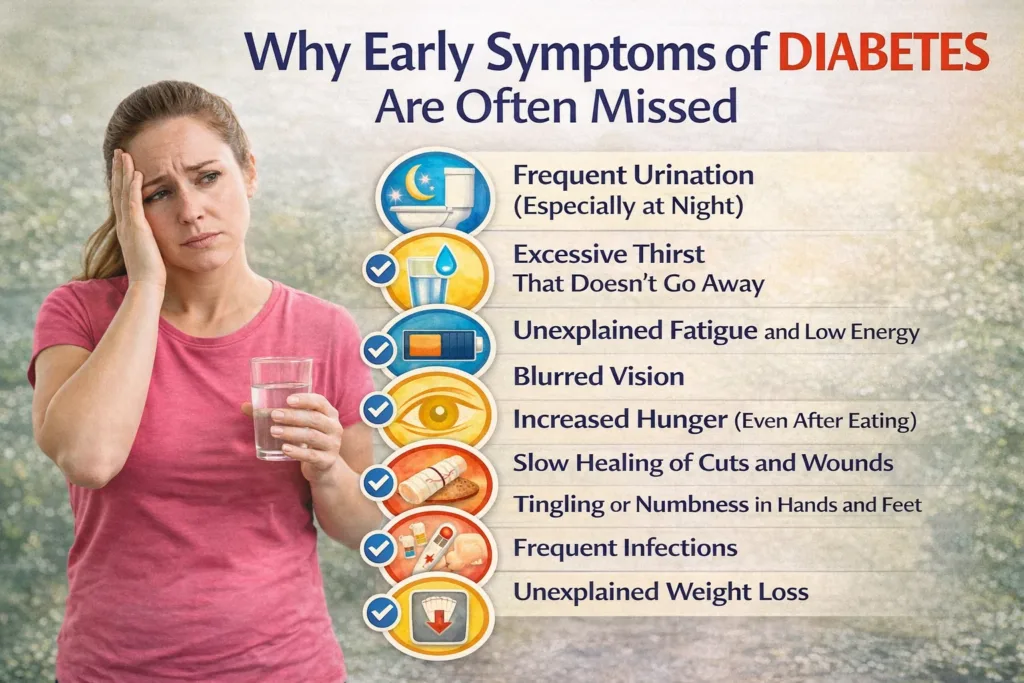
Unfortunately, these can be early signs of rising blood sugar.
1. Frequent Urination (Especially at Night)
One of the most common early symptoms of diabetes is frequent urination.
When blood sugar levels are high, the kidneys work harder to remove excess glucose through urine. This leads to:
- More trips to the bathroom
- Waking up multiple times at night to urinate
If you notice a sudden change in urination habits, it’s worth paying attention.
2. Excessive Thirst That Doesn’t Go Away
Frequent urination causes fluid loss, which leads to dehydration. As a result, the body signals intense thirst.
If you find yourself:
- Drinking more water than usual
- Still feeling thirsty after drinking
- Craving cold or sugary drinks
It could be an early indicator of high blood sugar.
3. Unexplained Fatigue and Low Energy
Feeling tired all the time is another early symptom many people overlook.
When glucose cannot enter the body’s cells properly, your muscles and brain don’t get enough energy. This leads to:
- Constant tiredness
- Weakness
- Difficulty concentrating
Fatigue caused by diabetes often doesn’t improve with rest alone.
4. Blurred Vision
High blood sugar can cause fluid shifts in the eyes, affecting the shape of the lens. This can lead to:
- Blurry or fluctuating vision
- Difficulty focusing
- Eye strain
In early stages, vision may come and go, which is why many people ignore it.
5. Increased Hunger (Even After Eating)
If you feel hungry shortly after meals, it may be because glucose isn’t entering your cells properly.
This can cause:
- Frequent hunger
- Cravings for carbs or sweets
- Feeling unsatisfied after meals
This symptom is especially common in early type 2 diabetes.
6. Slow Healing of Cuts and Wounds
High blood sugar affects circulation and immune function. As a result:
- Cuts heal slowly
- Minor wounds may become infected
- Bruises take longer to fade
If small injuries are taking unusually long to heal, it could be a warning sign.
7. Tingling or Numbness in Hands and Feet
Early nerve damage, known as diabetic neuropathy, can begin even before diabetes is diagnosed.
Symptoms may include:
- Tingling sensations
- Numbness
- Burning or pins-and-needles feeling
These sensations often start in the feet or hands.
8. Frequent Infections
People with high blood sugar may experience:
- Frequent skin infections
- Gum infections
- Urinary tract infections
- Yeast infections
Excess glucose creates an environment where bacteria and fungi thrive.
9. Unexplained Weight Loss (More Common in Type 1 Diabetes)
Sudden weight loss without trying can be an early symptom, particularly in type 1 diabetes.
When the body can’t use glucose for energy, it starts breaking down fat and muscle instead.
Early Symptoms of Diabetes in Men and Women
In Men:
- Erectile dysfunction
- Reduced muscle strength
- Low energy
In Women:
- Recurrent yeast infections
- Irregular periods
- Increased fatigue
While many symptoms overlap, hormonal differences can affect how diabetes appears.
Who Is at Higher Risk of Developing Diabetes?
You may be at higher risk if you:
- Are overweight or obese
- Have a family history of diabetes
- Have a sedentary lifestyle
- Eat a diet high in processed foods
- Have high blood pressure or cholesterol
- Are over age 35
Knowing your risk can help you take action earlier.
When Should You Get Tested for Diabetes?
You should consider a blood sugar test if:
- You experience multiple symptoms listed above
- Symptoms persist for weeks
- You have risk factors for diabetes
Common tests include:
- Fasting blood glucose
- HbA1c test
- Oral glucose tolerance test
Early testing can make a major difference.
Can Early Diabetes Be Managed or Reversed?
In many cases, especially with prediabetes and early type 2 diabetes, lifestyle changes can significantly improve blood sugar levels.
These may include:
- Healthy eating
- Regular physical activity
- Weight management
- Stress reduction
- Better sleep habits
Medical guidance is essential, but early action matters.
FAQs
What are the very first signs of diabetes?
Frequent urination, excessive thirst, fatigue, and blurred vision are often the earliest noticeable signs.
Can diabetes symptoms appear suddenly?
Type 1 diabetes symptoms can appear suddenly. Type 2 diabetes symptoms usually develop gradually.
Are early diabetes symptoms different for men and women?
Most symptoms are similar, but women may experience more yeast infections, while men may notice sexual health issues.
Can I have diabetes without symptoms?
Yes. Many people have diabetes or prediabetes without noticeable symptoms, which is why regular testing is important.
Should I see a doctor if I have one symptom?
One symptom alone may not indicate diabetes, but multiple or persistent symptoms should be evaluated by a healthcare professional.
Final Thoughts
Diabetes doesn’t always announce itself loudly. The early symptoms are often subtle, easy to dismiss, and mistaken for everyday issues.
Listening to your body, recognizing early warning signs, and getting tested when something feels off can protect your long-term health.
Early awareness leads to early action—and that can make all the difference.
Blog Refrence Url: https://www.mayoclinic.org/


