

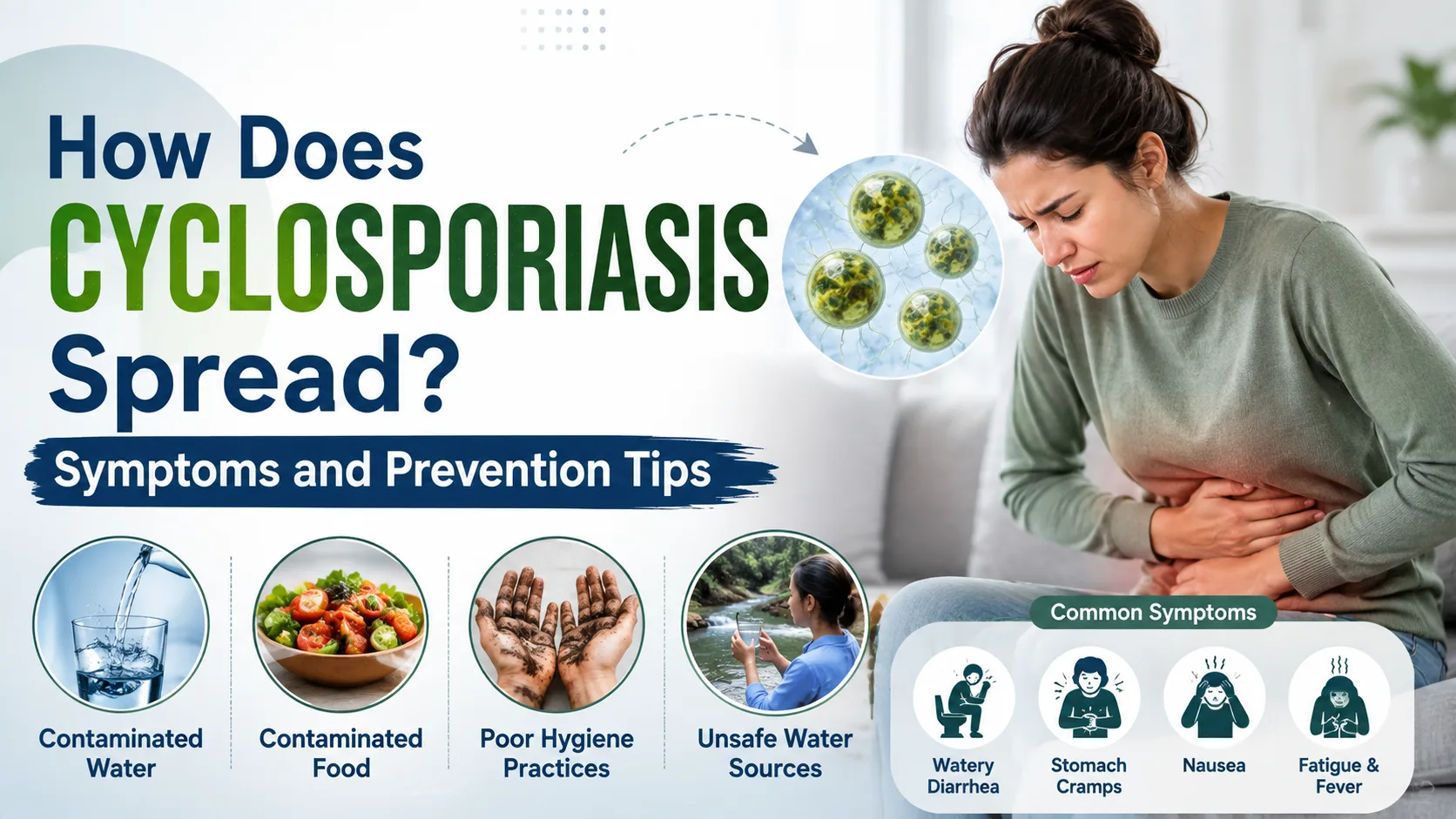
Cyclosporiasis is a foodborne intestinal infection caused by a microscopic parasite called Cyclospora cayetanensis. Although it is less familiar than infections such as salmonella or norovirus, cyclosporiasis can cause persistent digestive symptoms, particularly watery diarrhoea, abdominal discomfort, fatigue, and weight loss.
Understanding how Cyclospora spreads is important because the infection is primarily associated with contaminated food and water. Fresh fruits and vegetables have been linked to outbreaks, and infection can also occur after travelling to areas where the parasite is commonly found.
What Is Cyclosporiasis?
Cyclosporiasis is an intestinal illness caused by the parasite Cyclospora cayetanensis. The parasite infects the small intestine and is acquired when a person accidentally consumes food or water contaminated with infectious Cyclospora oocysts.
The infection occurs in humans, and infected people can release the parasite in their stool. However, Cyclospora has an unusual life cycle: freshly passed parasites generally need time in the environment before they become infectious to another person. This is one reason direct person-to-person transmission is considered unlikely.
How Does Cyclosporiasis Spread?
The main route of transmission is the ingestion of food or water contaminated with Cyclospora.
The general transmission cycle is:
- An infected person passes Cyclospora in their stool.
- Human waste contaminates the environment, water, or food.
- The parasite undergoes changes in the environment and becomes infectious.
- Contaminated produce or water is consumed by another person.
- The parasite infects the intestine and can cause cyclosporiasis.
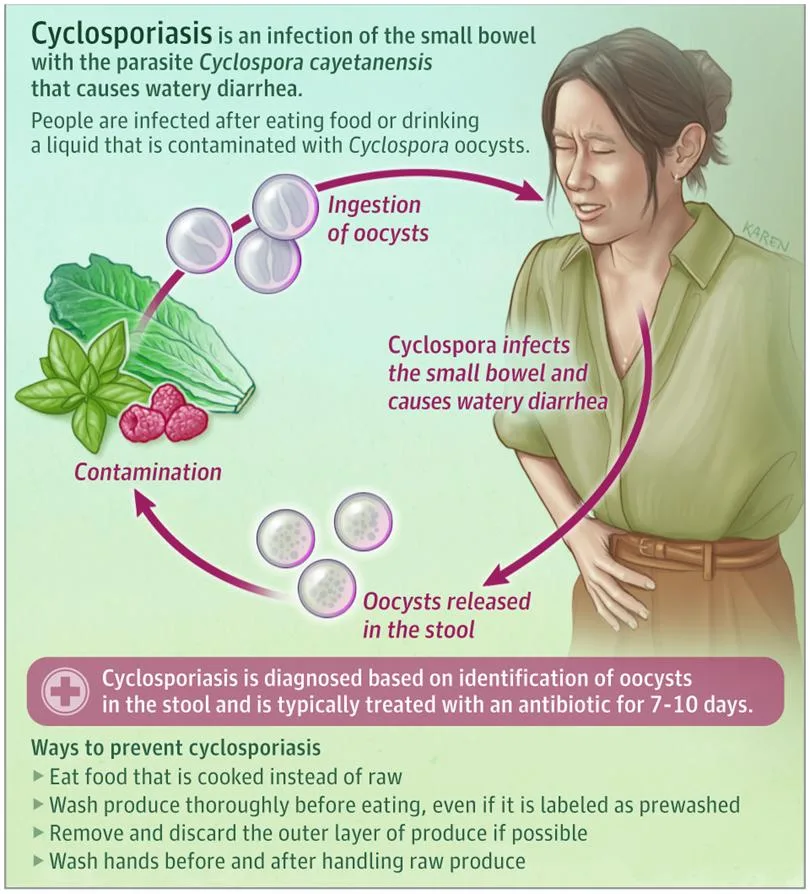
Because the parasite requires time outside the body to become infectious, simply being around someone with cyclosporiasis does not usually result in immediate person-to-person transmission.
Can Contaminated Food Cause Cyclosporiasis?
Yes. Fresh produce has been associated with cyclosporiasis outbreaks. Reported foods linked to outbreaks have included leafy greens, herbs, raspberries, basil, cilantro, parsley, broccoli, cabbage, snow peas, sugar snap peas, and other fresh produce.
Contamination can happen at different points in the food chain, including during growing, harvesting, handling, processing, transportation, preparation, or serving.
Contaminated irrigation or agricultural water and inadequate hygiene can also contribute to contamination of fresh produce.
While many people worry about food poisoning from their morning healthy fast food breakfast, it’s important to remember that fresh produce can also be a significant transmission vector.
Can You Get It From Drinking Water?
Yes. Drinking water contaminated with Cyclospora can cause infection. Water can also contribute indirectly when contaminated water is used to grow, wash, or handle fresh produce.
For this reason, access to safe drinking water and proper sanitation are important parts of preventing cyclosporiasis.
Is Cyclosporiasis Contagious From Person to Person?
Direct transmission from one person to another is considered unlikely.
This is an important difference between cyclosporiasis and some other gastrointestinal infections. Cyclospora passed in freshly infected stool generally needs time under suitable environmental conditions before it can infect another person.
Nevertheless, good hand hygiene and sanitation remain important because infected individuals can contaminate food, surfaces, or the environment through faecal contamination.
Common Risk Factors
Anyone can develop cyclosporiasis if they consume contaminated food or water. Risk can increase when a person:
- Travels to an area where cyclosporiasis is commonly found
- Eats contaminated fresh produce
- Drinks untreated or contaminated water
- Consumes food prepared under poor sanitation conditions
- Handles contaminated food or surfaces without proper hand hygiene
Even when choosing a healthy fast food breakfast, you should remain vigilant about the potential for food poisoning if proper sanitation isn’t followed.
Even seemingly healthy breakfast choices from fast food outlets can carry risks if proper sanitation isn’t followed, potentially leading to food poisoning.
Certain people may experience more serious illness or complications, particularly if they become significantly dehydrated or have a weakened immune system.
Symptoms of Cyclosporiasis
Symptoms can vary from person to person. Some infected individuals may have no noticeable symptoms.
The most characteristic symptom is watery diarrhoea, which can occur frequently and may be severe.
Other possible symptoms include:
- Frequent watery bowel movements
- Stomach cramps or abdominal pain
- Bloating
- Increased gas
- Nausea
- Vomiting
- Loss of appetite
- Weight loss
- Fatigue
- Headache
- Body aches
- Low-grade fever
- Flu-like feelings
Symptoms usually develop about a week after infection, although the incubation period can vary. The FDA notes that the time between infection and illness is commonly around one week and may range from approximately 2 to 14 days or longer.
Why Can Symptoms Come Back?
One characteristic of cyclosporiasis is that symptoms may improve temporarily and then return. This relapse can make the infection seem as though it has disappeared before coming back.
Without appropriate treatment, illness may continue for days or weeks and can sometimes last a month or longer.
Can Cyclosporiasis Cause Dehydration?
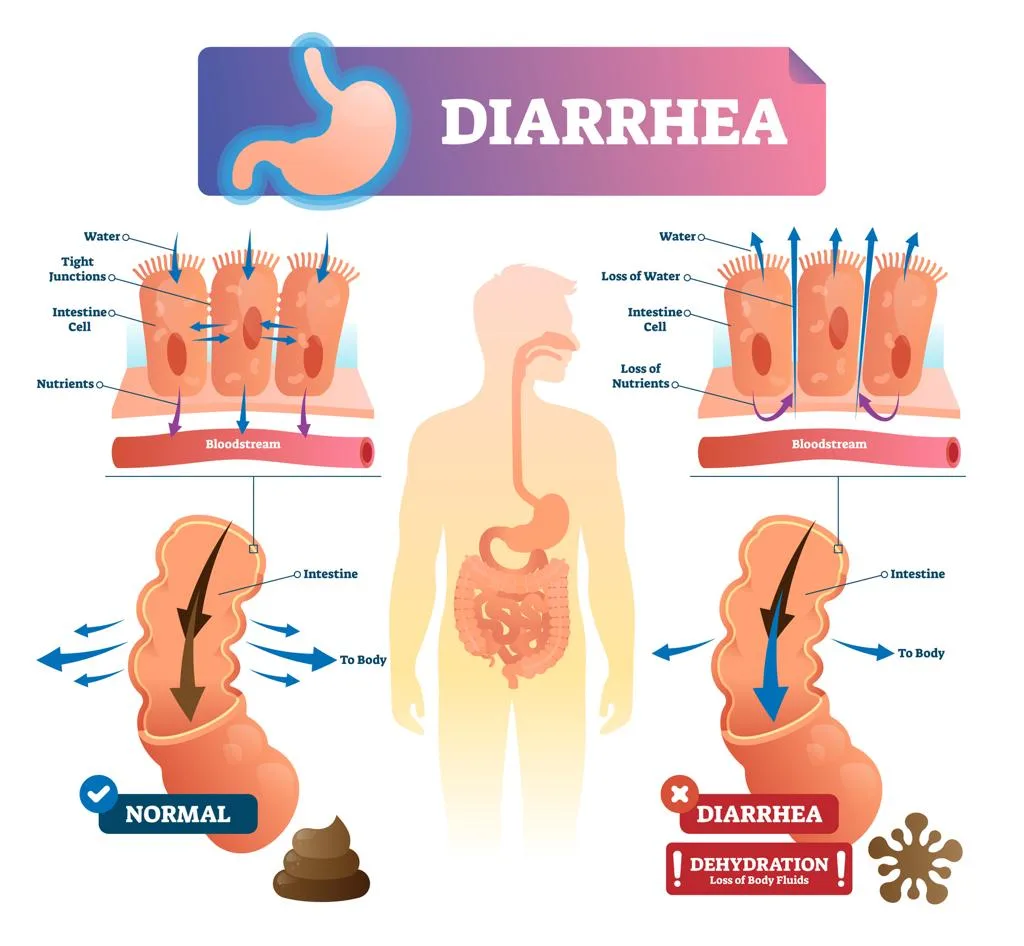
Yes. Persistent diarrhea can cause substantial loss of water and electrolytes.
Signs that may indicate dehydration include:
- Excessive thirst
- Dry mouth
- Reduced urination
- Dark-colored urine
- Weakness
- Dizziness
- Unusual tiredness
Persistent diarrhea, significant dehydration, severe symptoms, or symptoms that do not improve should be evaluated by a healthcare professional.
Diagnosis, Treatment and Prevention
How Is Cyclosporiasis Diagnosed?
Cyclosporiasis cannot reliably be diagnosed based only on symptoms because watery diarrhea and abdominal symptoms can occur with many different intestinal infections.
Healthcare professionals may request a stool sample for laboratory testing. Specialized testing may be necessary to identify Cyclospora, and multiple stool specimens may sometimes be requested because the parasite may not be detected in every sample.
If you have persistent diarrhea, particularly after traveling or eating food associated with a known outbreak, tell your healthcare provider. This information can help determine which tests may be appropriate.
How Is Cyclosporiasis Treated?
Cyclosporiasis is treatable with prescription medication.
The commonly recommended treatment is the antibiotic combination trimethoprim-sulfamethoxazole (TMP-SMX). A healthcare professional should determine whether this treatment is appropriate for an individual based on their medical history, medications, allergies, and other factors.
Because persistent diarrhea can cause dehydration, maintaining adequate fluid intake is also important. People with severe symptoms or significant dehydration may require medical attention.
Do not self-treat a suspected Cyclospora infection with leftover antibiotics. Proper diagnosis and treatment should be discussed with a qualified healthcare professional.
How Many People Have Died From Cyclospora?
Cyclosporiasis is generally not considered a life-threatening infection. Most people recover with appropriate medical care, although the illness can cause prolonged watery diarrhea, dehydration, weight loss, and other gastrointestinal symptoms. The CDC describes cyclosporiasis as an intestinal illness that is usually not life-threatening.
However, severe complications can occasionally occur, particularly when prolonged diarrhea leads to significant dehydration or when an affected person has other health vulnerabilities.
Deaths During the 2026 U.S. Outbreak
The 2026 U.S. cyclosporiasis outbreak has been unusually large. CDC surveillance data available through July 20, 2026, recorded 4,173 confirmed domestically acquired cases, 308 hospitalizations, and 0 reported deaths in that surveillance dataset. CDC also reported 767 travel-associated cases and no deaths in that group.
More recent reporting from August 2026, however, has identified two deaths in Michigan associated with the ongoing outbreak. Because outbreak investigations and case reporting are continuing, these figures can change as health authorities receive and verify additional information.
It is therefore important to distinguish between the number of confirmed cases and the number of deaths. Although thousands of people can become infected during a large outbreak, death from cyclosporiasis remains uncommon.
Why Can Cyclosporiasis Become Serious?
The primary concern is often the effect of persistent diarrhea rather than the parasite directly causing a fatal illness. Frequent watery bowel movements can cause the body to lose substantial amounts of fluid and electrolytes.
People should seek medical attention if they experience persistent diarrhea, severe weakness, dizziness, reduced urination, signs of dehydration, significant weight loss, or symptoms that continue to worsen.
Early diagnosis and appropriate treatment can help reduce the duration and severity of illness. Anyone who suspects cyclosporiasis should consult a healthcare professional rather than attempting to diagnose or treat the infection independently.
Key Takeaway
Cyclosporiasis is usually treatable and rarely fatal, but serious illness can occur. The number of reported deaths can also change as investigations into large outbreaks continue. For the most accurate information, readers should check updates from public-health authorities such as the CDC and FDA rather than relying on an outdated death count.
How Can Cyclosporiasis Be Prevented?
There is no single step that guarantees protection, but several food-safety and hygiene practices can reduce the risk.
1. Wash Fresh Produce Thoroughly
Rinse fresh fruits and vegetables under clean running water before eating or preparing them.
Washing can reduce contamination, but it cannot guarantee removal of Cyclospora. The FDA specifically notes that routine washing may not reliably eliminate the parasite.
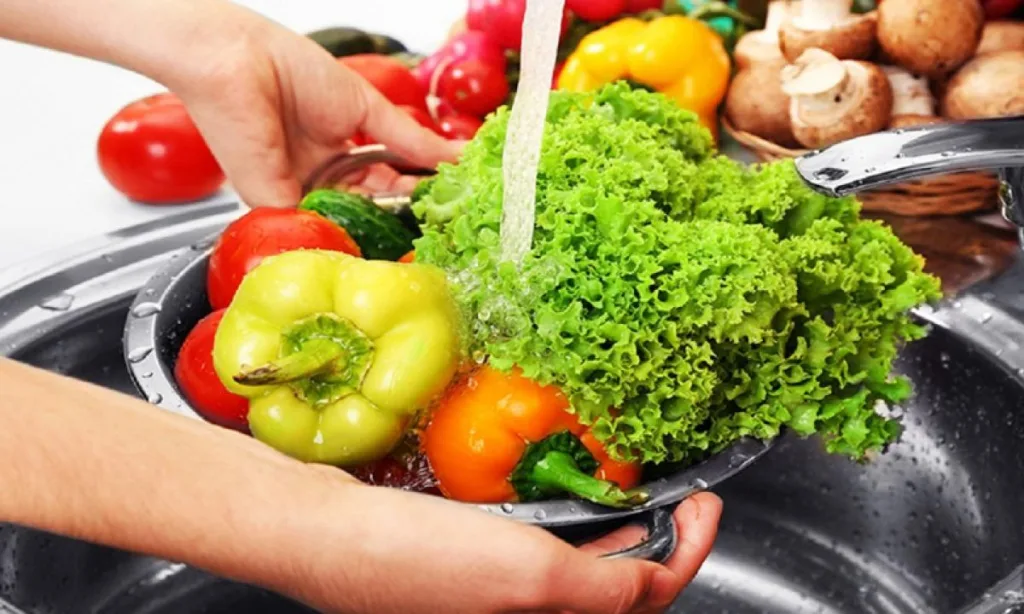
For firm produce, a clean produce brush can be used when appropriate.
2. Do Not Wash Produce With Soap or Bleach
Using household soap or bleach directly on fruits and vegetables is not recommended.
Instead, rinse produce thoroughly under clean running water and follow appropriate food-safety practices.
3. Cook Produce When Appropriate
Cooking can provide additional protection because Cyclospora does not survive sufficiently high temperatures. The FDA identifies cooking produce to at least 158°F (70°C) as the safest option when the produce can appropriately be cooked.
4. Wash Your Hands Properly
Wash your hands with soap and running water for at least 20 seconds:
- Before preparing food
- Before eating
- After using the bathroom
- After changing diapers
- After handling potentially contaminated materials
- After preparing raw foods
Good hand hygiene is especially important because the parasite originates from human fecal contamination.
5. Prevent Cross-Contamination
Keep cutting boards, knives, countertops, utensils, and other food-contact surfaces clean.
If contaminated produce comes into contact with kitchen surfaces, clean those areas properly before preparing other food.
6. Be Careful With Outbreak-Associated Foods
When public-health authorities announce a Cyclospora outbreak linked to a specific food, consumers should follow the official advice.
Do not assume that a food is safe simply because it looks fresh or clean. Cyclospora is microscopic and cannot be identified by appearance.
7. Pay Attention When Traveling
People traveling to areas where cyclosporiasis is common should take extra precautions with food and drinking water.
Choose safe drinking water and be cautious with raw fruits and vegetables when their preparation or washing conditions are uncertain.
8. Food Handlers Should Stay Home When Sick
People experiencing diarrhea or vomiting should avoid preparing food for other people when possible.
This is particularly important in restaurants, food-service operations, and households where many people may consume the same food.
What Foods Have Been Associated With Cyclosporiasis?
Different outbreaks have been associated with different types of fresh produce. Reported examples include:
- Leafy greens
- Raspberries
- Cilantro
- Basil
- Parsley
- Cabbage
- Broccoli
- Snow peas
- Sugar snap peas
- Other fresh fruits and vegetables
This does not mean that these foods are always unsafe. Food-safety investigations identify particular contaminated products, suppliers, locations, or time periods. Consumers should follow current outbreak notices from public-health authorities rather than avoiding an entire food category unnecessarily.
When Should You See a Doctor?
Consider contacting a healthcare professional if you develop persistent watery diarrhea, especially when symptoms are accompanied by:
- Significant weight loss
- Severe abdominal discomfort
- Persistent vomiting
- Signs of dehydration
- Symptoms lasting several days
- Recent international travel
- Possible exposure to a known foodborne outbreak
- A weakened immune system
Prompt medical evaluation is particularly important when diarrhea is persistent because cyclosporiasis can last for weeks without appropriate treatment.
Final Thoughts
Cyclosporiasis is an intestinal infection caused by Cyclospora cayetanensis. It is primarily acquired by consuming food or water contaminated with the parasite. Fresh produce has been associated with multiple outbreaks, while direct person-to-person transmission is considered unlikely because the parasite needs time outside the body before becoming infectious.
The most common symptom is watery diarrhea, but abdominal cramps, bloating, nausea, fatigue, loss of appetite, weight loss, and other symptoms can also occur. Symptoms may disappear and return, and untreated illness can sometimes persist for a month or longer.
Prevention focuses on safe food and water practices, thorough handwashing, reducing cross-contamination, carefully washing produce, following public-health outbreak announcements, and cooking appropriate foods thoroughly.
If you suspect cyclosporiasis, especially when diarrhea is persistent or severe, speak with a healthcare professional. Laboratory testing can help distinguish Cyclospora from other causes of gastrointestinal illness, and appropriate prescription treatment is available.
Practicing good food safety, whether you are preparing a meal at home or grabbing a healthy fast food breakfast, is the best way to prevent food poisoning.
scientific/medical reference Websites
- CDC (Centers for Disease Control and Prevention) — symptoms, transmission, prevention, diagnosis and treatment. CDC – Cyclosporiasis
- FDA (U.S. Food & Drug Administration) — Cyclospora, food contamination, fresh produce and outbreak information. FDA – Cyclospora
- FDA – Cyclosporiasis and Fresh Produce — scientific information about transmission, food safety, sanitation and produce contamination. FDA – Cyclosporiasis and Fresh Produce
- FDA – Cyclosporiasis and Fresh Produce — scientific information about transmission, food safety, sanitation and produce contamination. FDA – Cyclosporiasis and Fresh Produce


