

If you’ve ever had a blood test come back with “high glucose” or “prediabetes,” you’re not alone.
In the United States, millions of adults are dealing with rising blood sugar levels—often without obvious symptoms. For some, it’s caught early. For others, it shows up after years of fatigue, weight gain, or frequent thirst.
The encouraging part?
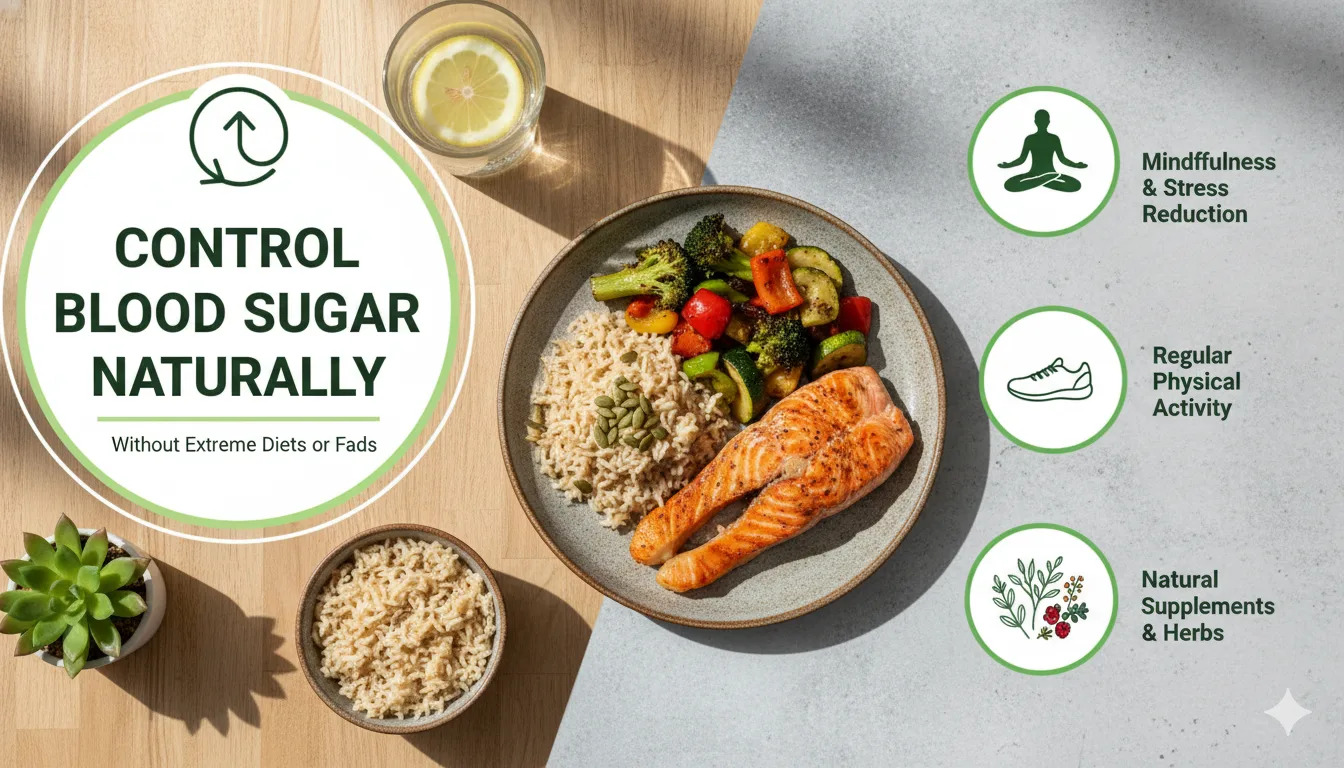
For many people, blood sugar can be improved naturally, especially in the early stages, by making practical, sustainable changes—not extreme diets or quick fixes.
This guide explains how to control blood sugar naturally, using habits that real people can actually stick to.
Medical note: This article is for educational purposes. If you are on diabetes medication or insulin, talk to your healthcare provider before making changes.
What Blood Sugar Really Means
Blood sugar, or blood glucose, is the amount of sugar circulating in your bloodstream. Your body gets this sugar mostly from carbohydrates—bread, rice, fruit, grains, and sweets.
Insulin, a hormone made by the pancreas, helps move glucose from your blood into your cells, where it’s used for energy.
Problems start when:
- Your body doesn’t make enough insulin, or
- Your cells stop responding properly to insulin (insulin resistance)
When that happens, sugar stays in the blood instead of entering the cells—leading to chronically high blood sugar.
Early Signs of High Blood Sugar Many People Ignore
High blood sugar doesn’t always cause pain at first. That’s why it often goes unnoticed.
Common early signs include:
- Feeling tired even after sleeping well
- Frequent urination
- Increased thirst
- Sugar cravings
- Blurry vision
- Slow healing cuts
- Brain fog or poor concentration
If these symptoms sound familiar, a simple blood test can provide clarity.
Can Blood Sugar Be Controlled Naturally?
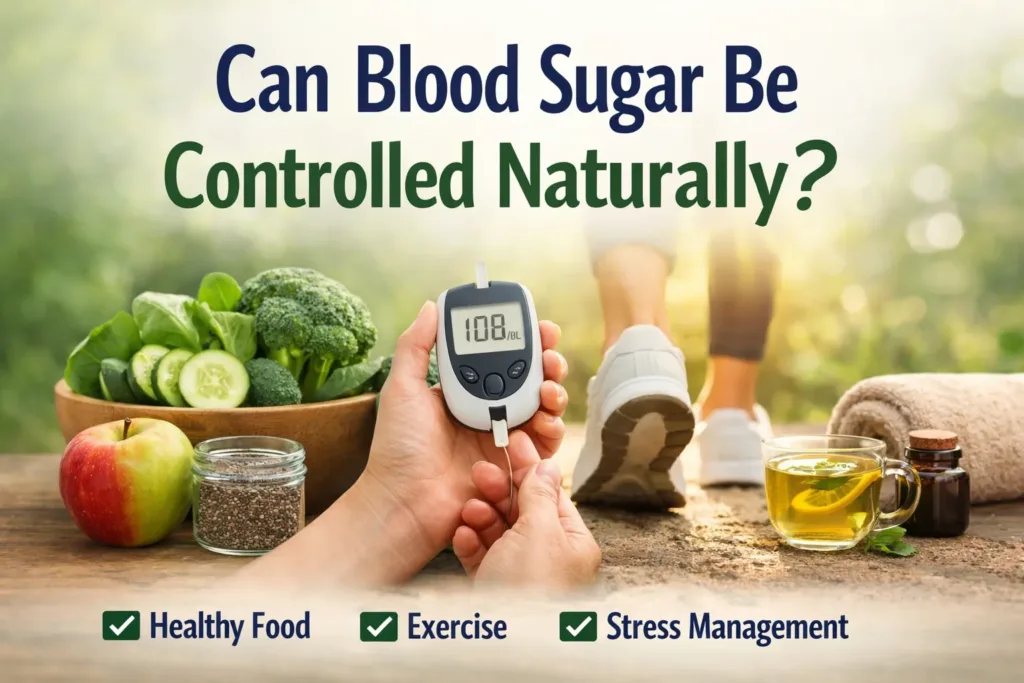
For many people, yes—especially if they have:
- Prediabetes
- Early type 2 diabetes
- Insulin resistance
Natural control focuses on:
- Improving insulin sensitivity
- Reducing blood sugar spikes
- Supporting metabolic health over time
It’s not about replacing medical care, but working with your body instead of against it.
1. Focus on Foods That Keep Blood Sugar Stable
Food choices have the biggest day-to-day impact on this.
Foods That Help Control Blood Sugar
Non-starchy vegetables
- Spinach
- Broccoli
- Cauliflower
- Zucchini
- Bell peppers
These are high in fiber and low in carbohydrates, which helps slow glucose absorption.
Lean protein
- Eggs
- Chicken
- Turkey
- Fish
- Greek yogurt
Protein helps prevent blood sugar spikes after meals.
Healthy fats
- Olive oil
- Avocados
- Nuts and seeds
Fats slow digestion and improve insulin response when eaten in moderation.
Low-glycemic fruits
- Berries
- Apples
- Pears
Whole fruit is better than juice because fiber matters.
Foods That Often Raise Blood Sugar Quickly
You don’t have to eliminate these forever, but limiting them makes a big difference:
- Sugary drinks and soda
- Fruit juice
- White bread and pastries
- Sweetened breakfast cereals
- Packaged snacks
These foods digest quickly and cause sharp glucose spikes.
2. Eat in a Way That Supports Blood Sugar (Not Just “Healthy”)
Even healthy foods can raise Blood Glucose if eaten the wrong way.
Simple Eating Habits That Help
- Eat at consistent times
- Avoid skipping meals
- Pair carbs with protein or fat
- Stop eating when you’re comfortably full
Large meals or long gaps between meals often lead to spikes later.
3. Move Your Body — You Don’t Need the Gym
Exercise helps your muscles use glucose without needing as much insulin.
The most effective forms are:
- Brisk walking
- Light strength training
- Cycling
- Swimming
- Yoga
Even a 10–15 minute walk after meals can lower post-meal blood sugar.
Consistency matters more than intensity.
4. Weight Loss (If Needed) Improves Insulin Sensitivity
Extra body fat, especially around the abdomen, increases insulin resistance.
Research shows that losing just 5–10% of body weight can:
- Lower fasting Blood Glucose
- Improve insulin sensitivity
- Reduce diabetes risk
This doesn’t require extreme dieting. Slow, steady changes work better long term.
5. Stress Has a Bigger Impact Than Most People Realize
Chronic stress increases cortisol, a hormone that raises Blood Glucose—even if your diet is clean.
Ways to lower stress naturally:
- Daily walks
- Deep breathing
- Meditation or prayer
- Limiting constant screen time
- Setting boundaries around work
Managing stress isn’t optional for blood sugar control—it’s essential.
6. Sleep Quality Directly Affects Blood Sugar
Poor sleep disrupts insulin function and increases cravings.
People who sleep less than 6 hours regularly tend to have:
- Higher fasting glucose
- Increased insulin resistance
- More difficulty losing weight
Aim for:
- 7–8 hours per night
- A consistent sleep schedule
- No screens at least 30 minutes before bed
7. Natural Drinks That May Support Blood Sugar
No drink can “cure” high blood sugar, but some may help when used wisely.
Helpful options include:
- Water (hydration matters more than people think)
- Green tea
- Cinnamon-infused water
- Apple cider vinegar (diluted, before meals)
Avoid sweetened beverages—even “natural” ones.
8. Gut Health Plays a Quiet but Important Role
Your gut bacteria influence inflammation and insulin sensitivity.
Support gut health by:
- Eating fiber-rich foods
- Including fermented foods like yogurt or kefir
- Avoiding unnecessary antibiotics
A healthier gut often means better metabolic control.
9. Track Your Blood Sugar (Without Obsessing)
Monitoring helps you understand what works for your body.
Useful markers:
- Fasting blood glucose
- Post-meal blood sugar
- HbA1c (every 3–6 months)
Tracking patterns—not perfection—is the goal.
Common Mistakes That Slow Progress
Many people struggle because they:
- Rely only on medication
- Drink fruit juice instead of eating fruit
- Follow extreme diets they can’t maintain
- Ignore sleep and stress
- Expect instant results
Natural blood sugar control is about daily habits, not shortcuts.
How Long Does It Take to See Improvement?
This depends on lifestyle, age, and starting blood sugar levels.
Many people notice:
- Better energy within 2–3 weeks
- Lower fasting glucose in 1–2 months
- Improved HbA1c in 3 months
Small changes, done consistently, compound over time.
When Medical Care Is Essential
Natural strategies are helpful, but medical guidance is critical if:
- Blood sugar remains very high
- Symptoms worsen
- You are on insulin or multiple medications
- You have diabetes-related complications
Lifestyle changes and medical care often work best together.
Final Thoughts
Controlling blood sugar naturally isn’t about being perfect. It’s about making realistic changes you can live with.
By focusing on:
- Better food choices
- Regular movement
- Quality sleep
- Stress management
many people are able to improve blood sugar, feel better, and protect their long-term health.
Start where you are. Improve one habit at a time.
Disclaimer
This article is for informational purposes only and does not substitute professional medical advice. Always consult a licensed healthcare provider before making health-related changes.
Refrence: Healthline


