

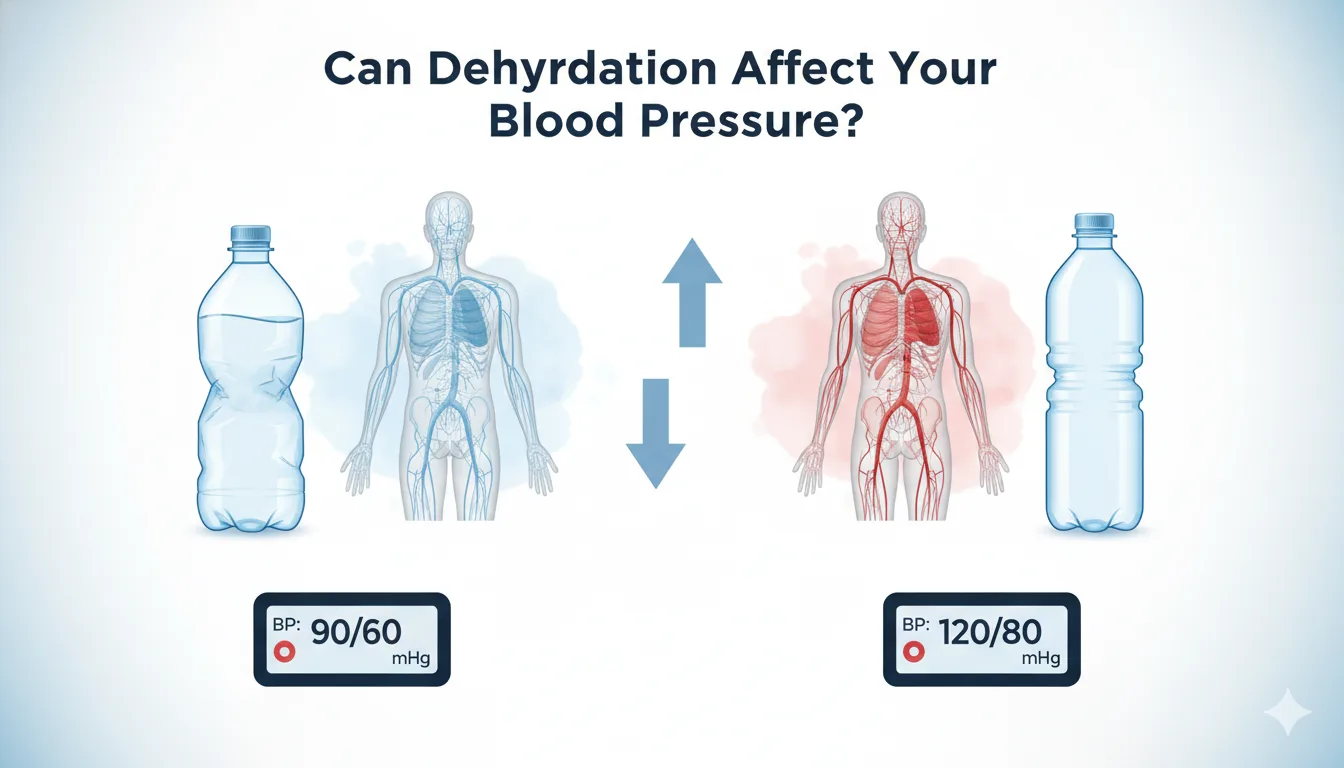
When you lose more fluids than you take in, your body begins to lose essential minerals and vitamins, leaving it dehydrated. To keep your blood pressure regular, boost circulation, and keep your electrolytes at healthy levels, your body needs a certain amount of water.
A lot of people don’t know that dehydration can cause low blood pressure, yet this is more prevalent than most people think. Dehydration can lead to dizziness, fainting, weakness, or even shock if it isn’t taken care of.
Understanding how hydration affects blood pressure and being able to see signs early on will all help you rehydrate faster, avoid problems, and keep your blood pressure steady.
How Dehydration Can Lower Your Blood Pressure?
Your body is about 55-60% water, and that water is incredibly important for maintaining all of your body’s systems working properly. Water is in your muscles, organs, tissues, and notably, your blood. Blood is mainly water, which makes it easy for it to flow through your veins and arteries and bring oxygen, nutrients, and hormones to the organs that need them.
When you’re dehydrated, your body doesn’t have enough water to keep your blood volume at a regular level. The pressure inside your blood vessels starts to go down when your blood doesn’t move around as much. This is why dehydration can make your blood pressure drop.
Causes of Dehydration
Dehydration can be caused by many reasons, leaving your body weak, such as:
- Not drinking enough water
- Heavy sweating from heat or exercise
- Vomiting or diarrhea
- Fever
- Certain medications (especially diuretics)
- Excessive caffeine or alcohol intake
- Kidney conditions
When your blood volume lowers, your heart, brain, and kidneys may not get the oxygen and nutrients they need. This might make you weary, confused, or faint.
How Dehydration Causes Low Blood Pressure?
1. Less blood volume
90% of your blood is made up of water. When you get dehydrated, your blood volume goes down, which means that less fluid flows through your blood vessels. This makes blood pressure go down on its own.
2. Less blood flow to the heart
When your body has less fluid, your blood volume drops, which lowers the pressure inside your blood vessels.
3. Not enough electrolytes
When you don’t drink enough water, your body loses electrolytes like salt and potassium, which help keep the right amount of fluid in your body. The body can’t hold onto water or elevate blood pressure without electrolytes.
4. Narrowing of blood vessels
When the body is dehydrated, it attempts to retain water through the process of narrowing blood vessels. This will keep blood pressure steady momentarily, but the prolonged constriction of blood vessels can interfere with the systems in the body that regulate blood pressure, resulting in unexpected drops.
5. Reduced blood flow to other organs
When the body experiences dehydration, you will have more blood flow diverted to more critical organs and less blood flow to the muscles, which is why you feel hot. With this imbalance, pressure drops occur in other regions, which can subsequently lead to weakness or dizziness.
Other Possible Causes of Low Blood Pressure
Although dehydration is a major cause, low blood pressure can also occur due to:
- Certain medications (diuretics, beta-blockers)
- Heart conditions
- Thyroid or adrenal gland problems
- Blood loss
- Severe infections
- Vitamin B12 or folate deficiency
Signs of Low Blood Pressure Caused by Dehydration
- Dizziness or lightheadedness
- Blurred vision
- Fainting episodes
- Weakness or constant tiredness
- Rapid or irregular heartbeat
- Dry mouth and intense thirst
- Dark yellow urine or very little urination
- Cool, clammy skin
- Headache
- Trouble concentrating
Signs of Dehydration-Related Low Blood Pressure in Children
- Dry lips and tongue
- Sunken eyes
- No tears when crying
- Unusual sleepiness or irritability
- Fewer wet diapers (babies)
- Cool hands and feet
- Fast breathing
- Rapid heartbeat
Can Dehydration Cause High Blood Pressure Too?
Yes, dehydration can occasionally make blood pressure go up for a short time. When you lose fluids and your blood pressure goes down, your body tries to fix it by releasing a hormone called vasopressin. This hormone helps the body keep water, but it also makes blood vessels tighter, which can raise blood pressure.
This can make symptoms worse for persons who already have high blood pressure. Keeping yourself well-hydrated can help stop these rapid changes.
Who Is Most at Risk of Dehydration?
- Older adults (reduced thirst and lower fluid reserves)
- Athletes or people who sweat heavily
- Individuals working in high heat or humid environments
- People taking diuretics, laxatives, or blood pressure medications
- Individuals with diabetes, kidney disease, or adrenal disorders
- Anyone experiencing vomiting, diarrhea, or fever
- People who do not drink enough fluids throughout the day
Preventing and Managing Low Blood Pressure from Dehydration
- You can lower the risk by drinking water all day long
- Drinking more fluids when it’s hot or when you’re active
- Using electrolyte drinks after sweating or being sick
- Eating fruits, soups, and vegetables that keep you hydrated
- Keeping a healthy balance of salt
- Not drinking alcohol and only having a little caffeine
- Being aware of the first signs of dehydration
- Slowly getting up, especially after sitting or lying down
When Should You Get Medical Help?
You can usually treat dehydration or low blood pressure at home, but sometimes your body sends you warning signs that you shouldn’t ignore.
If you notice any of the following, contact a healthcare professional:
- Diarrhoea that lasts more than a day
- You are unable to drink anything or keep fluids in your stomach
- Your heart is beating faster than it usually does.
- You feel more tired, weak, or mentally “foggy” than usual
- You’re barely urinating, or your urine is very dark
- You see black, tar-like stool or any blood
These indicators mean that your body is losing more fluid than it can make up for on its own.
When Should You See A Doctor For Dehydration?
A low reading isn’t always bad, but if you have symptoms with low blood pressure, you need to see a doctor. If you are feeling:
- Feeling faint, dizzy, or unsteady
- Nausea or a “heavy” feeling in the stomach
- Tiredness that doesn’t improve with rest
- Vision is going blurry for a few seconds
- Trouble concentrating or thinking clearly
These signs could mean that your blood pressure is too low for your body to work well.
If any of the following symptoms show up, it’s best to get urgent medical help:
These signs could mean shock, which is a serious condition that could kill you:
- Skin that is pale, chilly, or sweaty
- Breathing that gets faster or shallower
- A heartbeat that is very fast or very weak
- Being very confused, not being able to stay awake, or being very lost
- Sudden collapse or passing out
These are serious signs that your blood pressure is very low and you should seek medical help immediately.
Diagnosing Dehydration-Related Low Blood Pressure
A doctor may do a number of checks and tests to see if dehydration is the cause of your low blood pressure. These include:
- Medical history: Questions about how much fluid you’ve been drinking lately, whether you’ve been vomiting, having diarrhoea, fever, sweating, or spending time in the heat.
- Physical examination: Assessing blood pressure in a lying and standing position, monitoring your heart rate, and looking for signs such as a dry mouth, dry skin, or dizziness.
- Blood tests: This is typically done to assess electrolytes (sodium/potassium), kidney function, and the viscosity of the blood due to volume depletion.
- Urine tests: To assess the color, concentration, and volume of your urine to determine if you are holding on to an adequate amount of water versus excessive urination.
- These tests are done to assess the cause of your low blood pressure while determining if the low blood pressure is due to dehydration or another underlying process.
Treatment For Low Blood Pressure Caused By Dehydration
Mild Dehydration
- Drink water or oral rehydration solutions.
- Eat healthy foods, including fruits, broth, and soups.
- Rest until you feel better.
Moderate to Severe Dehydration
- IV fluids for rapid rehydration
- Replacement of electrolytes
- Management of causes, like vomiting, diarrhea, infection, or medications.
Early treatment can help maintain blood pressure and prevent complications.
How Much Water Should You Drink Every Day?
One of the best ways to avoid low blood pressure caused by dehydration is to drink plenty of water. But not everyone needs the same amount of water every day. Various factors determine such as:
- Age
- Gender
- Body weight
- Level of activity
- Temperature and weather
- General health conditions
- Medications you are taking, especially diuretics
- Pregnant or nursing
Most adults should try to drink 8 to 10 glasses of fluid every day. If you sweat a lot, live in a hot place, or are getting over an illness, you might need more.
If you find it hard to drink plain water on a regular basis, you can stay hydrated with:
- Lemon, mint, or cucumber water
- Sparkling water without sugar
- Smoothies with fruits and vegetables that keep you hydrated
- Teas made with herbs and no caffeine
- Soups or broths with little salt
- Milk or milk substitutes that don’t have lactose
Fruits and vegetables, like oranges, watermelon, cucumbers, tomatoes, and lettuce, also add to the amount of fluids you drink each day.
Easy Ways to Stay Hydrated
- Drink whenever you are thirsty, as thirst is one of the first signs of dehydration.
- If you are exercising, out in hot weather, or ill (those with vomiting, diarrhea, or fever, etc.), drink more fluids.
- Carry a reusable water bottle to sip throughout the day.
- Replace sweetened drinks or drinks with caffeine or alcoholic beverages with water because all of these beverages could promote dehydration.
- Observe the color of your urine: light yellow in color means you are hydrated. Dark yellow means you need to drink more.
Final Thoughts
One of the most common causes of low blood pressure is dehydration, which is also one of the easiest to avoid. Your blood volume and pressure drop when your body doesn’t have enough fluid.
You can protect your health and prevent serious issues by staying well-hydrated, recognizing the warning signs early, and getting medical help when needed. If, after you have gotten hydrated, you still feel weak or feel like you have brain fog, you should see your doctor to be evaluated for other potential causes of low blood pressure.
FAQ’s
1. What are the symptoms of low blood pressure in women?
A woman with low blood pressure may feel dizzy or lightheaded while standing up. Sometimes having blurry vision, headaches, nausea, or weakness makes it hard to do normal things. Fatigue and trouble focusing are also common. In more serious cases, women may pass out or faint.
2. Can dehydration affect the heart?
Yes. When your body doesn’t have enough fluid, your heart has to pump the blood around more quickly. This can make your heart race and your blood pressure drop, which puts more stress on your heart.
3. How much water should I drink daily?
Most adults need 2 to 3 litres of fluids every day, but you may need more when it’s hot, when you work out, or when you’re sick.
4. Is salt helpful for dehydration-related low blood pressure?
Salt helps the body hold on to water, but you should be careful about how much you add, especially if you have heart or kidney problems.
5. Is it possible for kids to get low blood pressure from dehydration?
Yes. Whenever children have a fever, vomiting, or diarrhoea, a child’s body loses fluid rapidly, which may result in dehydration, low blood pressure, weakness, or dizziness.
6. Does dehydration cause yellow skin?
Dehydration can make your skin dull, dry, or off-color, but not yellow. Dehydrated people may have dark or sunken eyes. In severe cases, especially in hot weather, dehydration can lower blood pressure and make you too hot, which can be dangerous.


