

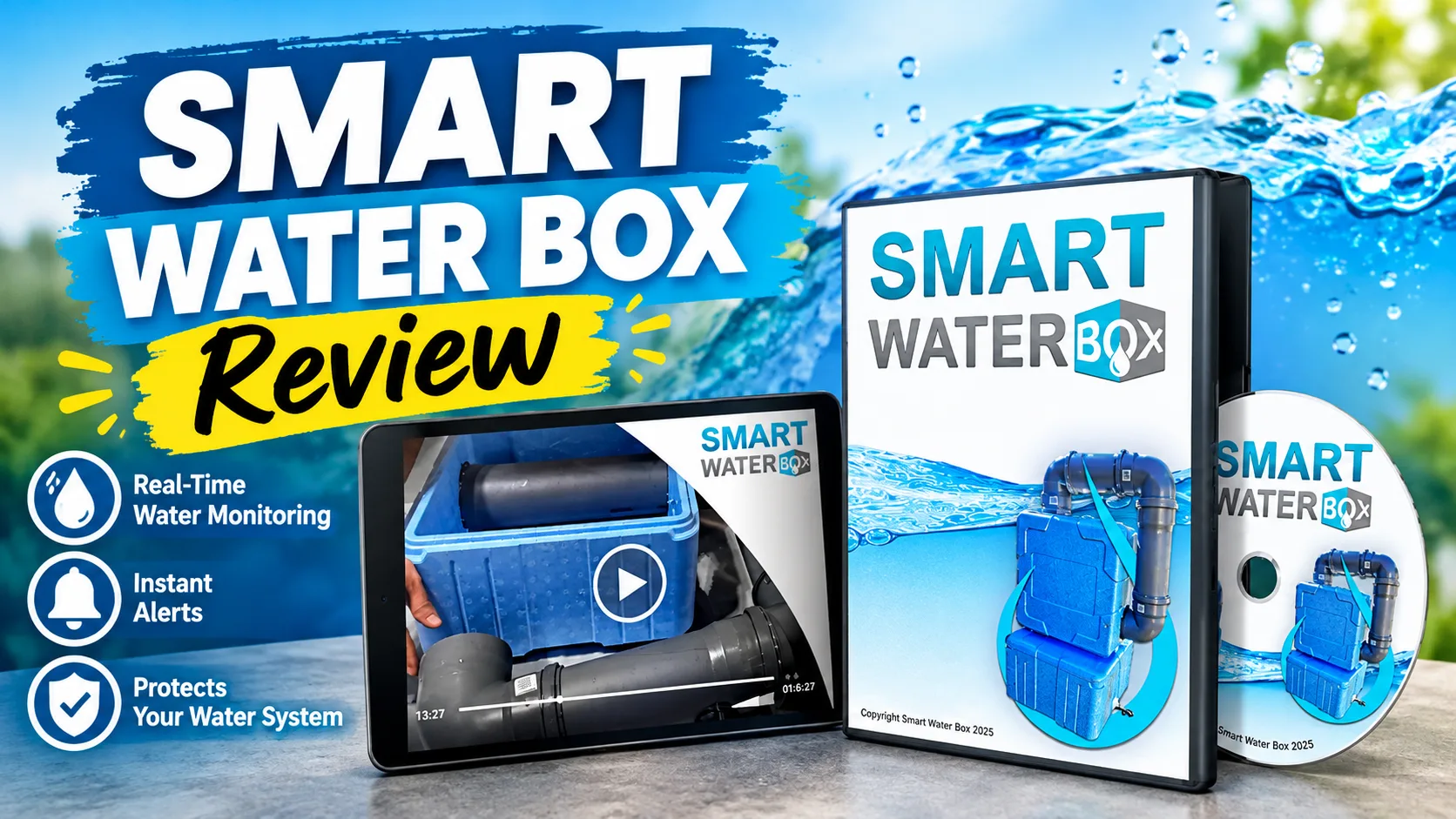
Access to clean drinking water is something most people take for granted—until a water shortage, infrastructure problem, remote location, or emergency makes it difficult to obtain. This has increased interest in alternative water-generation technologies that can work independently of traditional water supplies.
One product designed around this concept is Smart Water Box, an off-grid water-generation system that uses atmospheric water generation (AWG) technology to capture moisture from the air and turn it into water.
But how does Smart Water Box work, and what should you know before considering it?
In this Smart Water Box review, we look at how the system is described to work, its water-generation process, filtration approach, potential advantages, limitations, and who may find the concept useful.
What Is Smart Water Box?
Smart Water Box is presented as an off-grid water-generation system designed to produce drinking water from moisture present in the surrounding air.
Instead of depending on conventional plumbing, groundwater, or a municipal water connection, the system is designed around atmospheric water generation. According to the product website, the system draws air into the unit, extracts moisture, and then puts the collected water through multiple purification stages.
The concept is different from a conventional water filter.
A typical filter starts with an existing water supply and removes certain contaminants. Smart Water Box, on the other hand, is designed to begin with atmospheric moisture and then process the resulting water.
The website describes potential applications including:
- Homes
- Off-grid properties
- Rural locations
- Remote cabins
- Emergency preparedness
- Disaster-relief situations
- Areas with unreliable water infrastructure
How Does Smart Water Box Work?
The core technology behind Smart Water Box is Atmospheric Water Generation (AWG).
Air naturally contains water vapor. When humid air is cooled below its dew point, that water vapor can condense into liquid water. This is essentially the same basic phenomenon responsible for condensation on a cold surface.
Smart Water Box applies this principle in a controlled system.
1. Air Is Drawn Into the System
The process begins by bringing ambient air into the system.
The amount of moisture available depends heavily on environmental conditions such as temperature and humidity. This means atmospheric water-generation systems generally perform differently depending on the surrounding climate.
2. Moisture Is Condensed
The system uses cooling technology to lower the temperature of the incoming air.
When the air reaches the appropriate conditions, moisture in the air condenses into liquid water.
This collected water then moves through the purification stages described by the product website.
3. Water Goes Through Filtration
Smart Water Box describes a multi-stage purification approach.
The website mentions:
- Pre-filtration
- Activated carbon filtration
- UV sterilization
- Optional mineralization
Pre-filters are intended to capture larger particles, while activated carbon is commonly used in water-treatment systems to reduce certain odors and impurities.
The system also describes UV sterilization as part of its purification process.
4. Purified Water Is Stored
After the purification process, the resulting water is stored in a reservoir for access.
The product website also describes monitoring features designed to track factors such as humidity, water production, filter status, and system performance.
What Is Atmospheric Water Generation?
Atmospheric Water Generation may sound complicated, but the basic concept is relatively straightforward.
Think about what happens when you take a cold glass outside on a humid day. Water droplets can form on the outside of the glass because moisture in the surrounding air condenses on the colder surface.
AWG systems use a controlled version of this principle.
Instead of waiting for natural condensation, the system actively moves air through a controlled environment, cools it, collects the resulting water, and then processes that water.
The important point is that humidity is a key factor.
Smart Water Box’s own information acknowledges that performance can decrease in extremely dry conditions because there is less atmospheric moisture available to collect.
Smart Water Box Features
Based on the product information available on its website, several features stand out.
Off-Grid Operation
One of the main concepts behind Smart Water Box is independence from conventional water infrastructure.
The system is designed to operate without a traditional plumbing connection or direct dependence on municipal water supplies. The website also discusses electricity and solar-energy options depending on the configuration.
Multi-Stage Water Purification
The product information describes several purification stages, including pre-filtration, activated carbon, and UV sterilization.
This is intended to provide an additional purification process after atmospheric moisture has been condensed.
Smart Monitoring
Smart monitoring is another part of the product’s concept.
The website says that certain versions can monitor factors such as humidity levels, water production, filter status, and overall performance.
For users who want to understand how a system is performing, this type of monitoring can make maintenance easier.
Potential Solar Compatibility
The Smart Water Box website describes solar energy as an available power option for certain configurations.
This can be particularly interesting for people considering off-grid or emergency-preparedness applications.
However, users should verify the exact configuration and included components before purchasing because capabilities can depend on the specific setup.
Smart Water Box Benefits
1. Water Generation Without Traditional Plumbing
One of the biggest attractions is the possibility of generating water without relying directly on a conventional water connection.
This can be useful for people interested in off-grid living or emergency preparedness.
2. Reduced Dependence on Bottled Water
A system that can generate and purify water on-site may reduce the need to purchase and transport bottled water.
This could also help reduce the amount of plastic associated with bottled-water consumption.
3. Useful for Emergency Preparedness
Water availability can become a major concern during natural disasters, infrastructure failures, or other emergencies.
Because Smart Water Box is designed around atmospheric water generation rather than a conventional municipal connection, the concept may appeal to people building an emergency-preparedness setup.
4. Designed for Different Environments
The product website presents Smart Water Box as suitable for homes, farms, cabins, rural areas, and emergency situations.
The actual suitability, however, will depend on environmental conditions, humidity, available power, and the user’s water requirements.
5. Monitoring and Maintenance Information
The website describes monitoring features for humidity, production, filters, and system performance.
This can help users understand when maintenance may be required.
Smart Water Box Pros and Cons
Like any water-generation technology, Smart Water Box has potential advantages and limitations.
Pros
- Atmospheric water generation technology
- Designed for off-grid use
- Does not require a traditional water connection
- Multi-stage purification approach
- Carbon filtration and UV sterilization
- Monitoring features
- Potential solar-power compatibility
- Useful concept for emergency preparedness
- Can reduce dependence on bottled water
Cons
- Performance depends on atmospheric humidity
- Very dry environments may be less suitable
- The system requires an energy source
- Filters and components require maintenance
- Actual water production can vary according to environmental conditions
The product website specifically notes that performance can decrease in cold, dry conditions or environments with limited humidity.
Is Smart Water Box Easy to Use?
According to the product information, Smart Water Box is designed to be relatively straightforward to set up.
The described process involves placing the system in a suitable location, connecting the required power source, and allowing it to begin drawing in air.
The website also describes monitoring features for humidity, production, reservoir levels, and filter status. Routine maintenance includes checking filters, cleaning the reservoir, and replacing filter cartridges when necessary.
However, users should always follow the specific instructions supplied with the product rather than relying solely on a general online description.
How Much Does Smart Water Box Cost?
The Smart Water Box website currently displays a regular price of $149 and a promotional price of $39.69.
Because promotional pricing can change, buyers should verify the current price and exactly what is included before placing an order.
The website also states that the system comes with a 60-day money-back guarantee.
Is Smart Water Box Worth Considering?
Smart Water Box may be worth considering if your main interest is having an alternative approach to water generation, particularly for off-grid living, emergency preparedness, or locations where conventional water access is inconvenient.
The most important consideration is your environment.
Because atmospheric water generation depends on moisture in the air, people living in consistently dry climates should have realistic expectations about potential water production.
It’s also important to consider electricity requirements, maintenance, filter replacement, and the amount of water your household actually needs.
Final Smart Water Box Review
Smart Water Box takes an interesting approach to water independence by combining atmospheric water generation, condensation, filtration, UV treatment, and monitoring technology into an off-grid water-generation concept.
Its biggest potential advantage is that it is designed to obtain water from atmospheric moisture rather than relying exclusively on traditional water infrastructure.
At the same time, it is not a universal replacement for every water system. Environmental humidity, power availability, maintenance requirements, and actual water demand should all be considered before making a purchase.
For people interested in alternative water-generation technology, off-grid living, or emergency preparedness, Smart Water Box is a product worth researching further.
Important: Product capabilities, pricing, included components, and operating conditions should be verified on the official product page before purchasing.
Frequently Asked Questions
Does Smart Water Box make water from air?
Yes. The product is designed around Atmospheric Water Generation technology, which captures moisture from ambient air and condenses it into liquid water before purification.
Does Smart Water Box need plumbing?
According to the product website, the system is designed to operate without traditional plumbing or a municipal water connection.
Does humidity affect Smart Water Box?
Yes. Atmospheric water generation depends on moisture in the air, so environmental humidity can affect water production. The product website notes that performance may decrease in extremely dry conditions.
How is the water purified?
The website describes a multi-stage process involving pre-filtration, activated carbon, UV sterilization, and optional mineralization.
Does Smart Water Box have a money-back guarantee?
The product website states that purchases are covered by a 60-day money-back guarantee.
Where can I learn more about Smart Water Box?
The official Smart Water Box website provides additional product information, purchasing details, and the current offer.


