

If you have been searching for Visivra reviews in October 2026, you may be wondering whether this eye-health supplement is worth buying, what ingredients it contains, and whether its advertised benefits are supported by reliable evidence.
Visivra is marketed as a daily nutritional supplement for people interested in eye health, visual comfort, and screen-related eye fatigue. Its advertised formula includes lutein, zeaxanthin, bilberry extract, astaxanthin, zinc, and vitamin A. However, understanding the ingredients is only one part of evaluating a supplement. Buyers should also consider ingredient amounts, scientific evidence, safety information, pricing, and refund terms.
In this review, we examine the available product information and explain what potential buyers should verify before placing an order.
Quick verdict: Visivra may interest adults looking for nutritional support for eye health, but the available marketing information alone does not establish that the finished product improves eyesight or treats an eye condition. Verify the complete Supplement Facts label and purchase terms before deciding.
What Is Visivra?
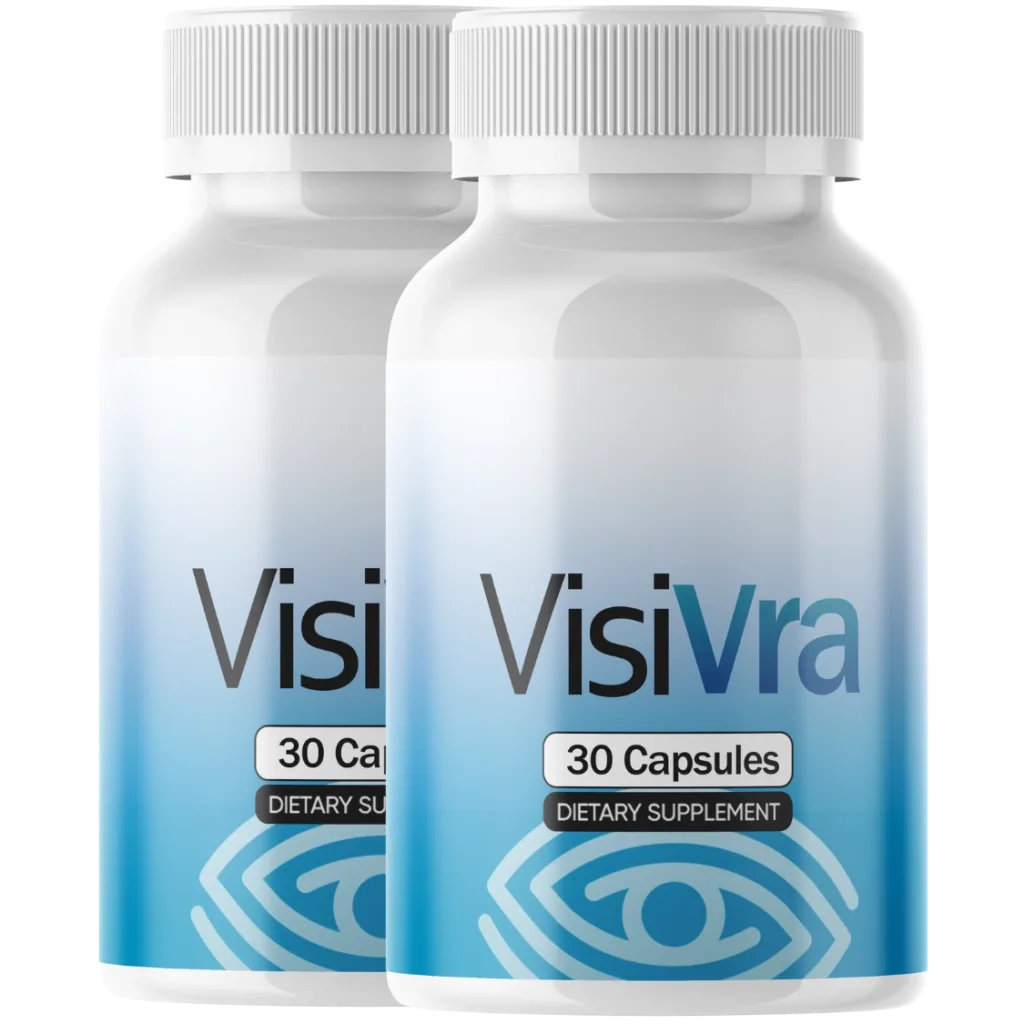
Visivra is marketed as a dietary supplement designed to support general eye wellness. Its promotional material emphasizes visual comfort, retinal nutrition, and the demands of spending long hours looking at digital screens.
The product is presented as a convenient daily capsule rather than a replacement for glasses, contact lenses, or professional eye care.
According to the product information reviewed, the formula features six named ingredients associated with eye nutrition and antioxidant activity. The actual quantities of these ingredients are important because research on a nutrient does not automatically prove that a commercial supplement containing it will produce the same results.
Before buying Visivra, consumers should distinguish between three things:
- Ingredient research: Studies investigating individual nutrients or specific combinations.
- Product claims: Benefits described on the seller’s website.
- Finished-product evidence: Reliable research demonstrating the effects of the exact supplement being sold.
These categories are not interchangeable. A careful review should consider all three rather than relying exclusively on promotional claims.
Visivra Ingredients: What’s Inside the Formula?
The product information identifies six principal ingredients. Here is a closer look at their established nutritional roles and the questions buyers should ask.
1. Lutein
Lutein is a carotenoid found in foods such as leafy green vegetables and certain other plant foods. It is also present in the macula, a region of the retina involved in central vision.
Lutein has been studied for its role in macular pigment and eye health. However, its presence in a supplement does not guarantee sharper eyesight or relief from screen-related discomfort.
What to check: Look for the amount of lutein per serving on the complete Supplement Facts panel.
2. Zeaxanthin
Zeaxanthin is another carotenoid found in the retina, particularly in the macular region. It is frequently studied alongside lutein in research on eye nutrition.
Some research has examined these nutrients as part of specific formulations for people with age-related macular degeneration. The findings should not be generalized to every eye-health supplement or every person.
What to check: Verify the zeaxanthin quantity and whether the seller provides evidence relevant to the exact formula.
3. Bilberry Extract
Bilberry is a berry containing anthocyanins, plant compounds with antioxidant properties. It is commonly included in supplements marketed for eye wellness.
Nevertheless, the traditional use of bilberry and laboratory findings do not establish that every bilberry supplement improves night vision, reduces eye strain, or treats vision problems.
What to check: Review the extract quantity, standardization information, and supporting human research.
4. Astaxanthin
Astaxanthin is a carotenoid with antioxidant activity. It has been investigated in several areas of human health, including certain aspects of visual comfort and eye fatigue.
The strength of the evidence depends on the population studied, dosage, study design, and outcome measured. Research involving a particular astaxanthin preparation does not automatically validate Visivra.
What to check: Confirm the quantity per capsule and whether the seller provides credible evidence for its specific claims.
5. Zinc
Zinc is an essential mineral involved in many biological processes, including functions related to the retina and normal vitamin A metabolism.
Certain eye-health research has examined zinc as part of specific nutritional formulations for people with age-related macular degeneration. Such formulations are not equivalent to every product containing zinc.
Excessive zinc intake can cause adverse effects and may interfere with copper absorption.
What to check: Check the zinc amount and account for zinc obtained from other supplements.
6. Vitamin A
Vitamin A is necessary for normal vision, particularly the processes that allow the eyes to function in low-light conditions. Deficiency can affect vision, but that does not mean additional vitamin A will improve eyesight in someone who already receives enough.
Excessive preformed vitamin A can be harmful, and certain people need to take particular care with supplementation.
What to check: Identify the form and amount of vitamin A, review other sources in your diet and supplements, and consult a qualified healthcare professional if you have relevant medical considerations.
Do Visivra Ingredients Have Scientific Support?
Some of Visivra’s named ingredients have been studied in eye-health research. The important question is whether that research supports the specific benefits advertised for this finished product.
One useful reference is the National Eye Institute’s Age-Related Eye Disease Studies, commonly known as AREDS and AREDS2. These studies investigated particular nutrient formulations in people with defined stages of age-related macular degeneration.
Their findings should not be interpreted as proof that any eye supplement can restore lost vision, prevent every eye disease, or eliminate the need for corrective lenses.
For example, evidence concerning a specific AREDS2 formulation does not establish that Visivra contains equivalent ingredient amounts or produces equivalent outcomes.
Before accepting a scientific claim, ask:
- Was the research conducted in humans?
- Did it investigate the same ingredient, formulation, and dosage?
- Were the participants similar to the intended users?
- Was the measured benefit clinically meaningful?
- Has the exact finished product been independently studied?
A transparent manufacturer should make it possible to evaluate the formula rather than asking customers to rely on scientific terminology alone.
Visivra Benefits: What Can Buyers Reasonably Expect?
Visivra is marketed for general eye wellness and visual comfort. However, potential benefits should be considered in light of the evidence available for the specific formula.
Nutritional support for eye health
Lutein, zeaxanthin, zinc, and vitamin A have recognized roles in normal eye function or have been investigated in eye-health research. Whether a supplement provides meaningful additional support depends on its composition and the individual’s nutritional needs.
Support for screen-related eye comfort
Digital eye discomfort can be associated with prolonged close-up work, reduced blinking, glare, dry eyes, and unsuitable screen positioning.
Although Visivra’s marketing emphasizes screen-related comfort, the available product descriptions do not by themselves establish that the finished supplement reliably reduces digital eye strain.
Practical steps such as taking regular breaks, adjusting screen brightness, reducing glare, and addressing dry-eye symptoms may be useful. The American Academy of Ophthalmology discusses the importance of screen habits and eye comfort.
Support for normal retinal function
The retina requires adequate nutrition to function normally. However, nutritional support should not be confused with treatment for a diagnosed retinal condition.
People experiencing persistent blurry vision, worsening eyesight, flashes, new floaters, or other concerning symptoms should seek appropriate eye-care advice rather than relying on a supplement.
Visivra Price in October 2026
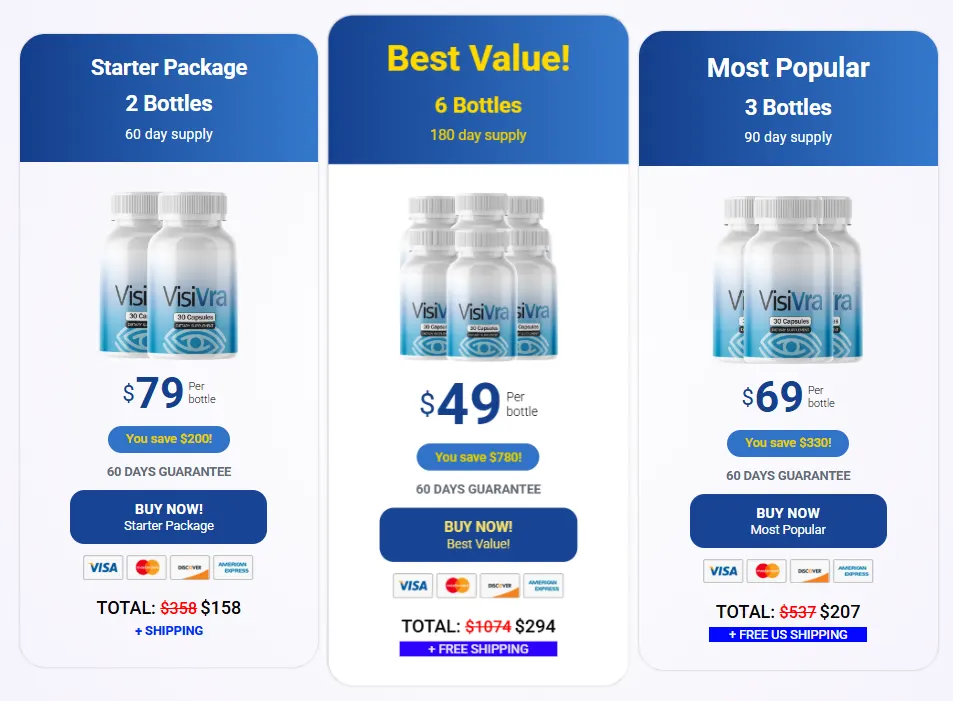
The seller’s website displays multiple package options. Prices can change, so the checkout page should be treated as the final reference before purchasing.
The following figures are taken from the product offer reviewed and are not independently verified checkout quotes.
| Package | Advertised total | Approximate cost per bottle |
|---|---|---|
| 2 bottles | $158 | $79 |
| 3 bottles | $207 | $69 |
| 6 bottles | $294 | $49 |
Shipping conditions vary by package. The seller advertises free US shipping on certain larger orders, while other offers may have additional charges.
Before ordering, confirm the final total, number of capsules, servings per bottle, shipping cost, applicable taxes, and whether any additional purchase is being offered.
A lower price per bottle is not automatically the best financial decision. Buying a larger package means committing more money before you know whether the product suits your needs.
Is Visivra Worth Buying?
Whether Visivra is worth buying depends on the quality of its documentation, your reason for considering an eye-health supplement, and the price you are willing to pay.
Potential advantages
- The advertised formula identifies several recognizable eye-nutrition ingredients.
- A daily capsule format may be convenient for people who prefer supplements.
- The seller advertises a money-back guarantee, which buyers can review before ordering.
- The ingredient list provides a starting point for checking the product against published research.
Potential concerns
- The product descriptions alone do not establish the effectiveness of the finished formula.
- Exact ingredient amounts should be confirmed using the complete product label.
- Marketing testimonials do not substitute for controlled clinical research.
- Multi-bottle packages require a larger upfront payment.
- Refund conditions, shipping costs, and the identity of the seller should be verified before purchase.
My research-based assessment
Based on the available product information, Visivra should be approached as an optional nutritional supplement rather than a proven solution for vision problems.
The named ingredients have relevant nutritional or research backgrounds, but that does not establish that this particular product will improve eyesight or reduce screen fatigue.
I would not recommend purchasing it solely because of claims about clearer vision, testimonials, or discounted multi-bottle packages. A complete label, transparent seller information, and a clear understanding of the return policy are more useful decision-making tools.
This is a review of published product information, not a personal-use test or an independent laboratory assessment.
Visivra Safety and Possible Side Effects
Dietary supplements can cause adverse effects, and the risk depends on the ingredients, their quantities, existing health conditions, and other products a person takes.
Potential considerations include:
- Digestive discomfort: Some supplements can cause nausea or stomach upset.
- Excessive vitamin A: High intake of certain forms can be harmful, particularly during pregnancy.
- Excessive zinc: Too much zinc may cause nausea and can interfere with copper absorption.
- Medication interactions: Some supplements may affect the safety or suitability of medicines.
- Existing eye conditions: A supplement should not replace an eye examination, prescribed treatment, or a clinician’s recommendation.
The exact risks associated with Visivra cannot be fully evaluated without verifying its complete label and ingredient quantities.
Consult a qualified healthcare professional before starting it if you take medication, are pregnant or breastfeeding, have an existing eye condition, or already use other supplements containing vitamin A or zinc.
Seek urgent medical care for sudden vision loss or severe eye pain.
How to Check Whether Visivra Is Legitimate
A product can be available for sale without having proven clinical benefits. Likewise, incomplete documentation does not automatically prove that a product is fraudulent.
Use the following checks before ordering.
1. Verify the seller. Identify the legal business responsible for the sale, its contact details, and the party handling returns.
2. Read the complete label. Confirm the Supplement Facts panel, ingredient quantities, serving size, manufacturer information, and lot details.
3. Request supporting documentation. If the seller advertises independent testing, ask for relevant batch-specific documentation and information about the laboratory.
4. Review the scientific claims. Look for credible human research and confirm that it relates to the exact ingredient, dosage, and intended benefit.
5. Check the refund policy. Read the deadline, return address, condition of returned bottles, shipping responsibility, and any exclusions.
6. Review the checkout carefully. Verify the final amount and save the order confirmation, refund terms, and any communication with customer support.
7. Avoid exaggerated promises. Be cautious of claims that a supplement restores eyesight, reverses serious eye conditions, or guarantees results for everyone.
These checks help distinguish verifiable product information from promotional language.
Frequently Asked Questions About Visivra
1. What is Visivra used for?
Visivra is marketed as an eye-health dietary supplement intended to support general visual wellness. Its advertised ingredients include lutein, zeaxanthin, bilberry extract, astaxanthin, zinc, and vitamin A.
2. Does Visivra really improve eyesight?
The available marketing information does not establish that Visivra improves eyesight. Individual ingredients have been studied for particular nutritional roles, but the finished product requires its own supporting evidence.
3. Is Visivra FDA-approved?
Do not assume that Visivra is FDA-approved to treat or improve vision. In the United States, dietary supplements are not approved by the FDA for safety and effectiveness before being marketed in the same way as prescription medicines.
4. What are the ingredients in Visivra?
The seller identifies lutein, zeaxanthin, bilberry extract, astaxanthin, zinc, and vitamin A. Verify their exact quantities and forms on the current product label.
5. How much does Visivra cost?
The offer reviewed lists packages totaling $158 for two bottles, $207 for three, and $294 for six. Confirm current prices and shipping charges directly at checkout.
6. Does Visivra have side effects?
Potential risks depend on the actual formulation, ingredient quantities, and individual circumstances. Excessive vitamin A or zinc can be harmful, so check the complete label and consult a healthcare professional when appropriate.
7. Can Visivra replace glasses or eye treatment?
No. It should not be used as a replacement for corrective lenses, eye examinations, or prescribed treatment for an eye condition.
8. Is Visivra worth buying in October 2026?
It may be worth considering for someone seeking nutritional support, but the purchase decision should depend on verified ingredient amounts, credible evidence, safety considerations, seller transparency, and the full price. Do not rely on promotional claims alone.
Final Verdict: Should You Buy Visivra?
Visivra is marketed as a convenient eye-health supplement containing several recognizable nutrients and plant compounds. However, the presence of familiar ingredients does not prove that the finished product delivers the advertised benefits.
For consumers researching Visivra reviews in October 2026, the most sensible approach is to check the complete Supplement Facts label, investigate the seller, review the final package cost, and understand the refund conditions before spending money.
Final recommendation: Consider Visivra only after verifying the product documentation and discussing its suitability with a healthcare professional if needed. Do not purchase it as a substitute for professional eye care or as a guaranteed solution for blurry vision, eye disease, or digital eye strain.
Medical disclaimer: This article is for informational and educational purposes only. It is not medical advice and does not diagnose, treat, cure, or prevent any disease. Individual results and supplement risks vary. Consult a qualified healthcare professional for advice about your eye health.
Editorial disclosure: This article evaluates publicly available product information. No personal-use experience, independent product testing, or clinical trial of the finished Visivra formula is claimed. If this article contains affiliate links, the publisher should disclose any financial relationship clearly.
Recommended authoritative references
- National Eye Institute — AREDS and AREDS2 studies: Research on specific nutritional formulations and age-related macular degeneration.
- FDA — Dietary Supplements: Official information about dietary supplement regulation.
- Visivra product website: Seller’s published product details and advertised pricing. These are seller claims, not independent proof of effectiveness.
- Get More health Review Article


