

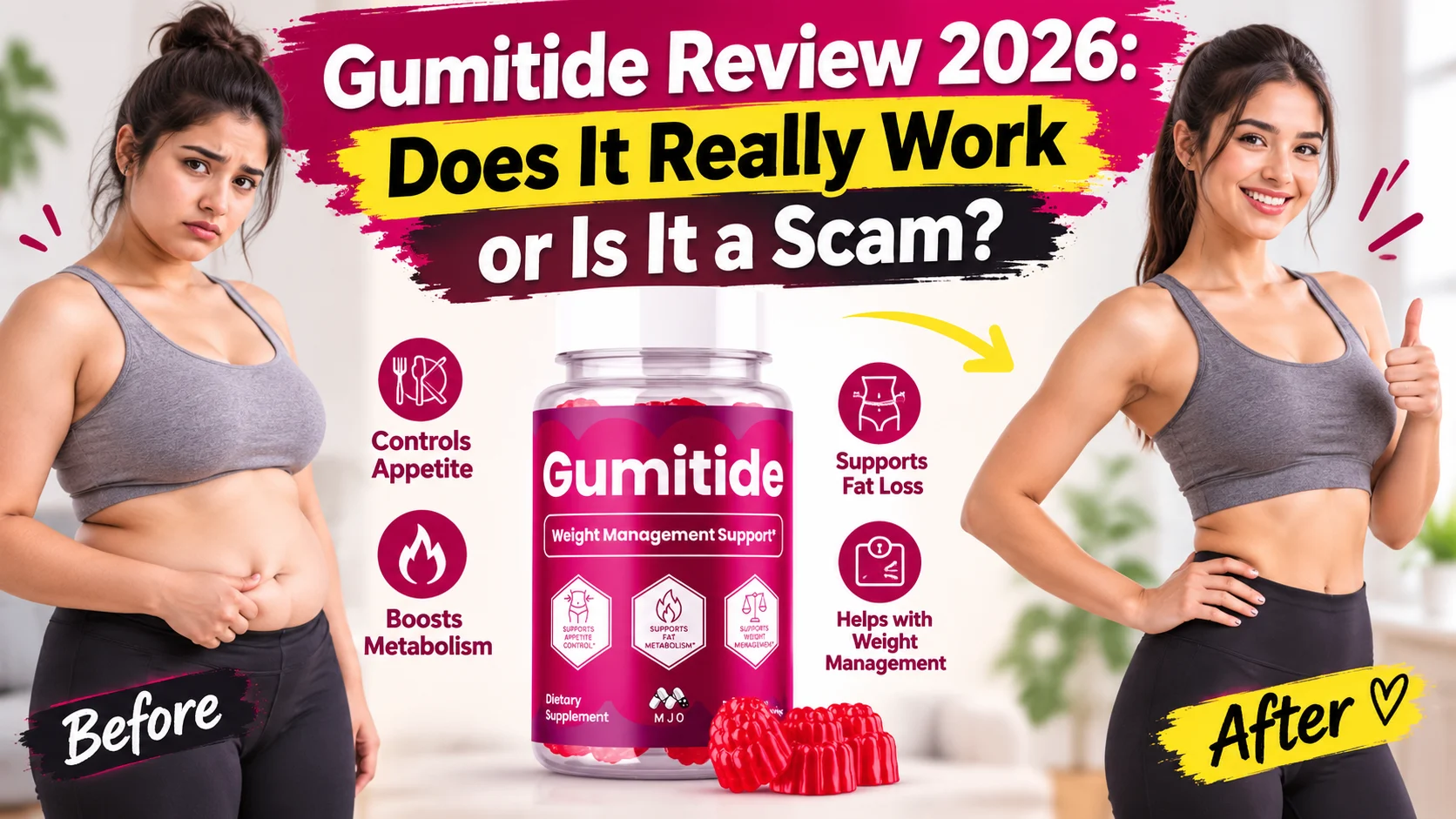
If you are considering a weight-management supplement, you have probably wondered whether Gumitide can genuinely help with your goals or whether its advertised benefits are overstated. With so many products promising improved metabolism, appetite control, and easier weight management, understanding the science behind a supplement is essential before spending your money.
In this Gumitide Review 2026, we examine its advertised purpose, available ingredient information, scientific evidence, potential risks, customer-review limitations, pricing considerations, and buyer-safety precautions. We also explain what scientific evidence would be needed to establish whether the product delivers meaningful results.
Rather than relying on promotional claims alone, this review uses evidence-based principles and information from established health authorities, including the National Institutes of Health (NIH), the National Center for Complementary and Integrative Health (NCCIH), the U.S. Food and Drug Administration (FDA), and the National Institute of Diabetes and Digestive and Kidney Diseases (NIDDK).
Quick Answer: Does Gumitide Really Work?
Gumitide is marketed online as a dietary supplement for weight-management support, but its formulation is not described consistently across all websites using the product name. Some pages advertise apple cider vinegar (ACV) and beta-hydroxybutyrate (BHB) gummies, while others describe probiotic or multi-ingredient formulas. There is insufficient verified, product-specific clinical evidence available in this review to establish that Gumitide produces significant or lasting weight loss. Before buying, verify the exact Supplement Facts label, investigate the seller’s claims, and review the safety and refund information.
Preliminary verdict: Gumitide’s effectiveness remains uncertain. Consumers should distinguish ingredient research from clinical proof that the finished product works.
What Is Gumitide?
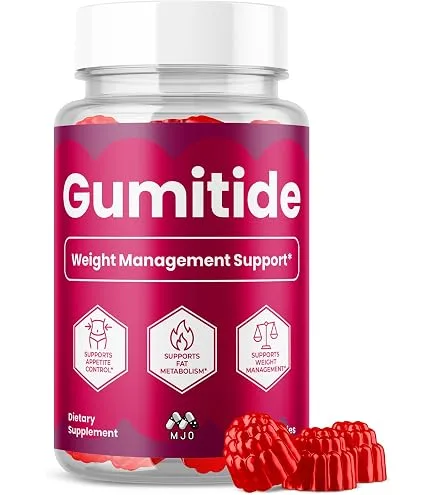
Gumitide is a product name used by online sellers marketing dietary supplements for weight management and related wellness goals. Depending on the website, it may be presented as a gummy supplement or a capsule-based formula.
Some online product descriptions emphasize apple cider vinegar and exogenous BHB ketone salts. Others describe combinations of probiotics, prebiotic fibers, botanical extracts, vitamins, or minerals.
These differences are important because a scientific assessment depends on the actual ingredients and their quantities. Information about one formulation cannot automatically be applied to another product using the same name.
Before purchasing Gumitide, check the physical bottle’s Supplement Facts panel, the manufacturer’s identity, the serving size, and the precise formula advertised by the seller.
Gumitide at a Glance
- Product category: Dietary supplement marketed for weight-management or wellness support.
- Available formats: Online descriptions include gummies and capsules; verify the specific product.
- Advertised benefits: May include appetite support, metabolism-related benefits, or digestive wellness, depending on the formula.
- Scientific status: The effectiveness of the finished product has not been established by the evidence verified for this review.
- FDA status: Do not interpret an FDA-registered manufacturing facility as FDA approval of the product.
- Buying recommendation: Verify the formulation, safety information, seller credentials, and complete purchase terms before ordering.
How Does Gumitide Claim to Work?
Gumitide’s proposed mechanism depends on the ingredients in the version being sold. Some formulations are promoted around appetite management and metabolic support, but these claims need to be evaluated individually.
For example, if your bottle lists apple cider vinegar and BHB, the scientific considerations differ from those for a capsule containing probiotics and prebiotic fibers.
The following sections explain what research on commonly advertised ingredients can—and cannot—tell us.
Gumitide Ingredients Review: What Does Science Say?
1. Apple Cider Vinegar (ACV)
Apple cider vinegar contains acetic acid and has been studied for possible effects on post-meal glucose responses, appetite, and body weight.
Some small human studies have investigated vinegar consumption in relation to weight-management outcomes. However, the existence of these studies does not prove that an ACV gummy produces clinically meaningful weight loss.
Several questions remain important:
- How much ACV or acetic acid does one serving contain?
- Is the amount comparable to the quantities used in human research?
- Were the studies adequately controlled and long enough to assess meaningful outcomes?
- Has the finished Gumitide formula been tested separately?
Scientific interpretation: Evidence concerning vinegar is not equivalent to proof that Gumitide works. The exact formulation and serving size must be known before drawing conclusions.
2. Beta-Hydroxybutyrate (BHB) Ketone Salts
Beta-hydroxybutyrate is a ketone body that the body can use as an energy source. Exogenous ketone supplements provide ketones from outside the body.
However, providing the body with ketones does not automatically demonstrate increased burning of stored body fat or sustained weight loss.
A useful distinction is that a measurable change in blood ketone levels is a different outcome from a reduction in body fat. A credible weight-loss claim needs evidence demonstrating the outcome being advertised.
Scientific interpretation: The presence of BHB in a supplement is not, by itself, evidence that the product causes significant weight loss.
3. Probiotics and Prebiotic Fibers
Some online pages associated with Gumitide describe probiotics and prebiotic fibers rather than an ACV-and-BHB gummy formula.
Probiotics are live microorganisms, while prebiotic fibers can serve as substrates for certain beneficial microorganisms in the gut. Their effects depend on the specific strains, fiber types, doses, and health outcomes being studied.
Evidence concerning one probiotic strain cannot automatically be applied to another strain or a multi-ingredient supplement.
If your version of Gumitide contains these ingredients, check whether the label identifies the probiotic strains, colony-forming units (CFU), fiber quantities, and recommended serving.
Scientific interpretation: General research on the gut microbiome does not establish that a particular Gumitide formula improves metabolism or produces meaningful weight loss.
4. Other Botanical Extracts, Vitamins, and Minerals
Some product descriptions mention ingredients such as green tea extract, chromium, cinnamon, or other botanical compounds. These ingredients should be discussed as part of the formula only when their presence is confirmed on the actual label.
The NIH Office of Dietary Supplements explains that evidence for weight-loss supplement ingredients varies considerably. Research on individual compounds may be limited, inconsistent, or insufficient to establish a clinically important effect.
A product containing several researched ingredients is not automatically effective. Their doses, combinations, safety, and effects on real-world outcomes still need to be evaluated.
Important: Do not assume that every ingredient mentioned on an online Gumitide page appears in every bottle.
What Scientific Evidence Is Missing for Gumitide?
This is one of the most important sections of the review. A supplement’s advertised benefits should be evaluated against the quality of the evidence supporting them.
The following information would help determine whether Gumitide is effective.
1. Published Clinical Trials on the Finished Product
The strongest relevant evidence would include well-designed human clinical trials using the exact Gumitide formulation being sold.
Ideally, researchers would compare the product with a placebo, use an appropriate study duration, define outcomes in advance, and publish the results in a peer-reviewed scientific journal.
Research on a different brand, an isolated ingredient, or an animal model cannot establish the effectiveness of Gumitide itself.
2. Transparent Ingredient Quantities
A complete Supplement Facts panel should identify the ingredients and their quantities where required.
If a product uses a proprietary blend without disclosing the amount of each component, it becomes more difficult to assess whether its ingredients are present in quantities comparable to those studied in research.
The total weight of a blend does not reveal how much of each active ingredient a serving contains.
3. Meaningful Weight-Loss Outcomes
A study measuring short-term changes in metabolism or blood ketones does not necessarily demonstrate a meaningful reduction in body weight.
Relevant clinical research would ideally evaluate outcomes such as:
- Changes in body weight over a predefined period.
- Changes in waist circumference or body composition, where appropriate.
- Differences between the supplement and a control group.
- Whether any benefits persist after the study ends.
- Adverse events and treatment discontinuations.
These measurements help distinguish a biological effect from a clinically meaningful benefit.
4. Adequate Safety Data
The absence of reported side effects on a marketing page does not establish that a supplement is safe for everyone.
Useful safety evidence would include information about the exact formula, dose, duration of use, potential medication interactions, and adverse events reported during clinical studies.
Longer-term safety may remain uncertain if research is limited to short studies.
5. Independent Product-Quality Testing
Reliable, product-specific laboratory documentation can help establish whether the product contains the declared ingredients and meets relevant quality standards.
However, a certificate of analysis or purity test does not prove that the supplement causes weight loss. Quality testing and clinical effectiveness are separate questions.
Evidence-based conclusion: Until reliable, product-specific evidence is verified, claims that Gumitide reliably burns fat, controls appetite, or produces lasting weight loss should be treated as unproven.
For general background, see the NIH Office of Dietary Supplements’ Weight Loss Supplements Fact Sheet and the NCCIH guidance on supplements marketed for weight loss.
Does Gumitide Really Work for Weight Loss?
The most accurate answer is that its effectiveness has not been established by the evidence verified for this review.
This conclusion does not mean that Gumitide is necessarily ineffective. It means there is not enough verified evidence to confidently attribute meaningful weight-loss outcomes to the finished product.
When assessing a weight-management supplement, separate three different questions:
- Does the ingredient have a plausible biological effect? Laboratory research may help explain how an ingredient interacts with the body.
- Has the ingredient demonstrated benefits in human studies? Human trials can help establish whether the ingredient produces a measurable effect at a particular dose.
- Has the actual product demonstrated the advertised result? Product-specific research is needed to assess the complete formulation.
These questions are related but not interchangeable.
A supplement may contain a biologically active ingredient without producing a meaningful change in body weight. Likewise, testimonials about individual experiences cannot establish what results other consumers should expect.
What About Before-and-After Photos?
Before-and-after photographs can be persuasive, but they are not sufficient scientific evidence.
Photographs may differ because of lighting, camera angles, posture, clothing, image editing, or changes in diet and activity unrelated to the supplement.
More reliable evidence comes from controlled studies using predefined measurements, appropriate comparison groups, and transparent reporting of results.
Consumers should be cautious of claims promising dramatic weight loss within a few days or weeks without credible supporting research.
Is Gumitide a Scam or Legit?
It would be premature to label Gumitide a scam or declare it a proven weight-loss supplement without reliable evidence about the specific product and seller.
A professional website, customer testimonials, a refund guarantee, or a manufacturing-quality badge does not independently establish that a supplement works.
Instead, evaluate the following:
Product transparency: Does the seller provide a complete and consistent ingredient label?
Scientific substantiation: Can the seller provide credible research supporting the specific benefits advertised?
Business information: Are the seller’s identity and customer-service details verifiable?
Purchase terms: Are shipping charges, package prices, recurring-payment conditions, and refund rules clearly disclosed?
Safety claims: Does the seller avoid promising guaranteed results or presenting the supplement as a replacement for medical treatment?
The FDA regulates dietary supplements, but it does not approve dietary supplements for effectiveness before they are marketed in the same way that it approves prescription drugs.
An FDA-registered facility is not the same as an FDA-approved product, and registration alone does not prove that a supplement works.
See the FDA’s official explanation of dietary supplements.
Verdict on legitimacy: Judge Gumitide on verifiable product information, substantiated claims, safety, and seller transparency—not on advertising alone.
Potential Benefits of Gumitide: Realistic Expectations
The benefits that can reasonably be attributed to Gumitide depend on the confirmed formulation and available research.
Convenient Supplement Format
If the product is a gummy or capsule, its format may make it convenient for some consumers to incorporate into a daily routine.
Convenience is a practical advantage, not evidence of weight-loss effectiveness.
Possible Ingredient-Specific Effects
Some ingredients used in dietary supplements have been studied for particular physiological effects. However, research findings depend on the ingredient, formulation, dose, population, and outcome measured.
Do not assume that an ingredient’s possible effect automatically translates into meaningful weight loss from Gumitide.
Potential Role in a Broader Wellness Routine
A supplement may be considered as one component of a wider wellness plan, provided its safety and suitability have been assessed.
It should not replace a balanced eating pattern, appropriate physical activity, adequate sleep, or medical advice where needed.
The NIDDK’s guide to choosing a safe and successful weight-loss program emphasizes realistic goals, healthy eating, physical activity, and ongoing support.
Gumitide Side Effects and Safety Considerations
Potential side effects depend on the actual formulation, serving size, individual health circumstances, and medications being used.
For example, concentrated ingredients may have different effects from ordinary food quantities. Some dietary supplements can also interact with medicines or contain ingredients that are not adequately disclosed.
Before using Gumitide:
- Read the complete Supplement Facts panel and all warnings.
- Check the recommended serving and avoid exceeding it.
- Consult a qualified healthcare professional if you take medication or have a medical condition.
- Seek professional advice before use if you are pregnant or breastfeeding.
- Stop using the product and seek appropriate medical advice if concerning symptoms occur.
Be particularly cautious of claims that a supplement is completely safe simply because it is described as natural.
The NCCIH warns that some weight-loss products have been found to contain hidden drug ingredients and that exaggerated testimonials should not be treated as objective evidence.
Read its consumer guidance on weight-loss supplements.
Gumitide Price, Packages, and Refund Policy
Online Gumitide listings may display different package sizes, discounts, and refund periods. These offers should be verified directly with the seller handling your order.
Before paying, confirm:
- The current price per bottle and total package cost.
- Shipping fees, taxes, and any additional charges.
- Whether the order is one-time or includes automatic renewal.
- The deadline and conditions for requesting a refund.
- Whether return shipping or other requirements apply.
- The business responsible for processing refunds.
Save the order confirmation, product description, and purchase terms for your records.
A money-back guarantee may reduce certain purchase risks if its terms are clear and honored, but it does not establish clinical effectiveness.
Gumitide Pros and Cons
Pros
- May be available in a convenient daily supplement format.
- Some versions identify ingredients that can be researched individually.
- May appeal to consumers comparing weight-management products.
- A clearly documented refund policy may offer a defined purchasing remedy.
Cons
- Online product descriptions do not consistently identify the same formulation.
- The finished product’s weight-loss effectiveness remains uncertain.
- Proprietary blends may make individual ingredient doses difficult to evaluate.
- Safety and medication-interaction risks depend on the actual formula.
- Marketing testimonials do not replace controlled clinical research.
- Pricing and refund conditions must be checked with the relevant seller.
Practical Gumitide Buyer-Safety Checklist
Before buying Gumitide, use this checklist to evaluate the product and the seller.
1. Verify the Product Label
- Read the complete Supplement Facts panel.
- Confirm the quantity of each active ingredient per serving, where disclosed.
- Check serving instructions, allergens, added sugars, and other ingredients.
- Make sure the label matches the product described on the website.
2. Check the Seller’s Credibility
- Verify the business name and contact details.
- Look for clear customer-support information.
- Check manufacturer details and available product-quality documentation.
- Be cautious of unsupported promises of guaranteed or instant weight loss.
3. Evaluate the Scientific Evidence
- Look for published human clinical trials on the exact Gumitide formula.
- Check whether studies measure meaningful weight-loss outcomes.
- Distinguish independent research from promotional claims and testimonials.
- Verify claims about FDA status and third-party testing.
4. Review Safety Information
- Read all product warnings and directions.
- Consult a healthcare professional about possible medication interactions.
- Seek professional advice before use if pregnant, breastfeeding, or managing a medical condition.
- Never replace prescribed medication with a dietary supplement without medical guidance.
5. Confirm the Total Cost
- Check the price per bottle and total package price.
- Review shipping charges and applicable taxes.
- Confirm whether recurring payments apply.
- Read the refund policy, including deadlines and exclusions.
- Save your order confirmation and a copy of the terms.
6. Recognize Warning Signs
Be cautious if the seller:
- Promises dramatic results without credible evidence.
- Uses before-and-after photographs as its primary proof.
- Hides ingredient quantities or important payment terms.
- Uses misleading countdowns or unexplained discounts to pressure buyers.
- Claims that an FDA-registered facility means the finished product is FDA-approved.
Buyer-safety recommendation: If the formulation, seller, safety information, or purchase terms cannot be verified, consider postponing the purchase.
Evidence-Based Weight Management: What Does Research Recommend?
Weight management is influenced by several factors, including food intake, physical activity, sleep, medications, and individual health circumstances.
The NIDDK recommends evaluating weight-loss programs based on realistic goals, a sustainable eating plan, physical activity, and support for maintaining progress.
For many adults, a practical starting point is to:
- Choose a balanced eating pattern that fits individual nutritional needs.
- Build regular physical activity around personal ability and health.
- Maintain a consistent sleep routine.
- Track progress using appropriate measures rather than relying only on daily scale changes.
- Discuss persistent weight concerns and suitable treatment options with a qualified healthcare professional.
For some people, prescription treatments or specialist support may be appropriate. These decisions should be made with a healthcare professional rather than based on supplement advertising.
No supplement should be presented as a guaranteed shortcut to lasting weight loss.
Frequently Asked Questions About Gumitide
1. What is Gumitide used for?
Gumitide is marketed online as a dietary supplement for weight management or related wellness goals. Its intended benefits depend on the specific formulation being sold.
2. Does Gumitide really work?
Its effectiveness has not been established by the product-specific evidence verified for this review. Research on individual ingredients cannot independently prove that the finished product produces significant weight loss.
3. Is Gumitide a scam or legit?
Available information is insufficient to make a definitive judgment about every product or seller using the Gumitide name. Verify the actual formula, seller information, evidence, and purchase conditions before buying.
4. What are the ingredients in Gumitide?
Online listings describe different formulas, including ACV-and-BHB gummies and products promoted around probiotics, prebiotic fibers, or other ingredients. Check the exact bottle label instead of assuming all listings refer to an identical product.
5. Does Gumitide burn stored body fat?
A claim that a product increases fat burning needs appropriate evidence. The presence of BHB, vinegar, or another ingredient does not by itself demonstrate that Gumitide causes meaningful reductions in stored body fat.
6. Are there scientific studies on Gumitide?
This review has not verified sufficient published clinical evidence on the exact finished Gumitide formulation to establish its weight-loss effectiveness. Consumers should request product-specific studies rather than relying only on general ingredient research.
7. Is Gumitide FDA-approved?
Dietary supplements are not FDA-approved for effectiveness before marketing in the same way as prescription drugs. An FDA-registered facility does not mean the product itself has been FDA-approved.
8. Does Gumitide have side effects?
Potential risks depend on the exact ingredients, quantities, and individual circumstances. Read the label and consult a qualified healthcare professional if you take medication or have a medical condition.
9. How much does Gumitide cost?
Prices and package offers may differ across online listings. Confirm the total price, shipping, taxes, and recurring-payment terms on the website where you intend to order.
10. Does Gumitide offer a money-back guarantee?
Some listings advertise refund guarantees, but the period and conditions should be confirmed with the actual seller. Review the written policy before purchasing.
11. Is Gumitide worth buying in 2026?
That depends on whether the specific product has a transparent label, credible safety information, substantiated claims, reasonable pricing, and clear purchase terms. If these details cannot be verified, waiting may be the more prudent choice.
Final Verdict: Should You Buy Gumitide in 2026?
Gumitide is marketed for weight-management support, but its online descriptions are inconsistent and its finished-product effectiveness remains uncertain based on the evidence verified for this review.
Scientific research on individual ingredients can help explain potential biological effects, but it cannot substitute for well-designed clinical trials on the exact product. Likewise, customer testimonials, marketing badges, and refund guarantees cannot establish that a supplement produces lasting weight loss.
Before purchasing, verify the Supplement Facts panel, investigate the evidence supporting the advertised benefits, review potential safety concerns, and confirm the complete cost and refund conditions.
Final assessment: Insufficient verified product-specific evidence to confidently recommend Gumitide for weight loss.
This is not a declaration that the product is a scam or that it cannot have any effect. It is a reminder that consumers deserve reliable evidence before treating marketing claims as established results.
A transparent product label, credible research, realistic expectations, and evidence-based weight-management habits are better foundations for a purchasing decision than promises of rapid transformation.
Scientific References and Further Reading
- National Institutes of Health, Office of Dietary Supplements. Dietary Supplements for Weight Loss: Fact Sheet for Consumers. Background on evidence, ingredients, and safety considerations for weight-loss supplements.
- National Center for Complementary and Integrative Health. 6 Things to Know About Dietary Supplements Marketed for Weight Loss. Guidance on exaggerated claims, testimonials, and potential safety issues.
- U.S. Food and Drug Administration. Questions and Answers on Dietary Supplements. Explains the regulatory framework and responsibilities associated with dietary supplements.
- National Institute of Diabetes and Digestive and Kidney Diseases. Choosing a Safe and Successful Weight-Loss Program. Practical guidance on realistic goals and sustainable weight management.
These references provide general scientific and regulatory context. They do not constitute clinical evidence that Gumitide itself is effective.
Medical Disclaimer
This article is for educational and informational purposes only and does not constitute medical advice, diagnosis, or treatment. Gumitide is discussed as a dietary supplement, not as an established treatment for obesity or any medical condition. Consult a qualified healthcare professional before starting a supplement, particularly if you take medication, have an underlying health condition, are pregnant, or are breastfeeding.
Affiliate Disclosure
This article may contain affiliate links. If a reader purchases through a qualifying link, the publisher may earn a commission at no additional cost to the reader. Any commercial relationship should be disclosed clearly and should not influence the accuracy of scientific claims or the assessment presented in this review.


