
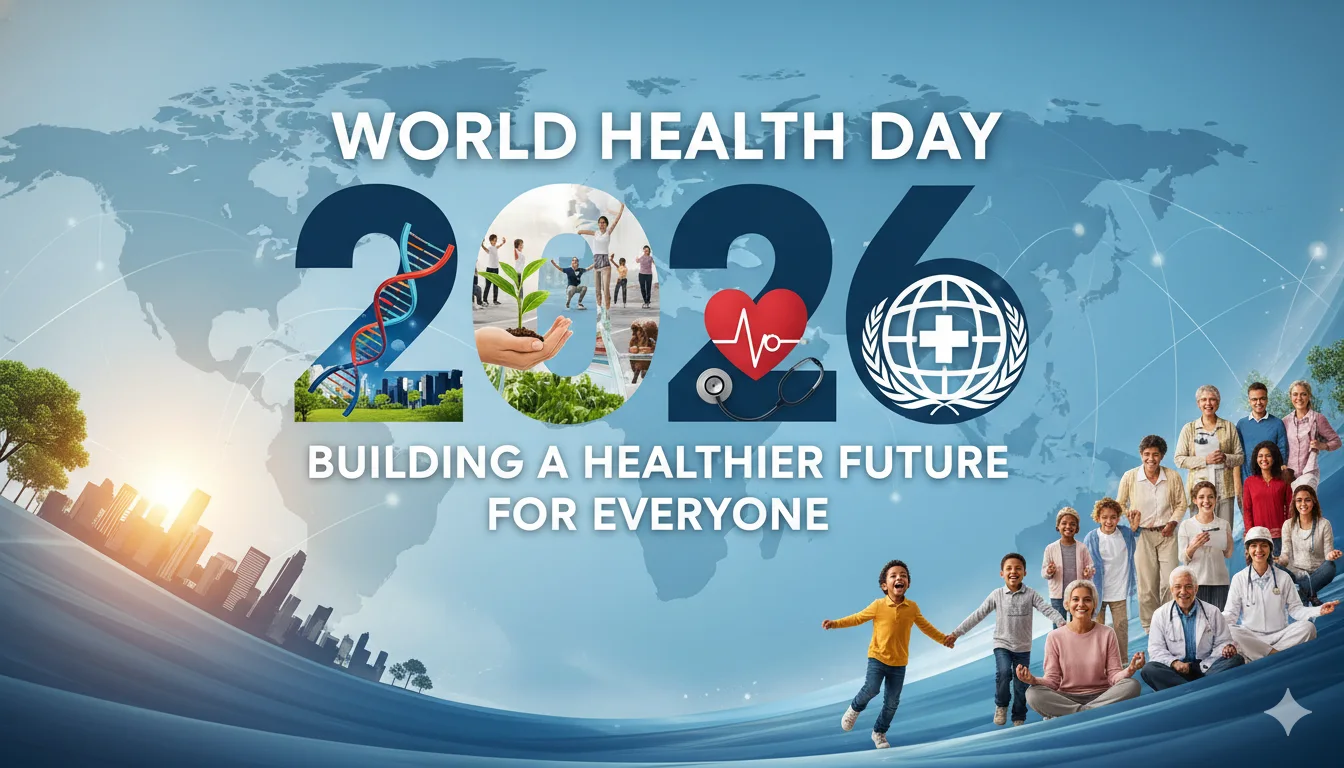
World Health Day is on April 7. It commemorates the day that the World Health Organization was founded. In 2026, the main goal is to pay for everyone’s health care. It’s clear that everyone should be able to access the health care they need without having to worry about how much it will cost. A lot of families still have difficulties with high prices and few services, which makes this issue even more essential now.
The History and Evolution of World Health Day
World Health Day is one of the oldest and most significant international health observances. Its origins date back to the First World Health Assembly in 1948, where member nations proposed the creation of a day dedicated to global health awareness. The journey toward World Health Day began in the aftermath of World War II.
- 1945 – Representatives from Brazil and China submit a proposal to create a global health organisation.
- 1948 – The WHO officially came into force on April 7, marking the start of the World Health Organization.
- 1950 – First World Health Day was celebrated with the theme of “ Know your Health Services.”
The Evolution
In this long period of time, World Health Day has seen numerous changes in people’s thinking a well as in the health sector. Initially, it was started as a common means of making people aware of health issues and illnesses. And it has become a powerful platform that shapes health policies, supports fundraising for diseases like HIV/AIDS and polio, and promotes the idea of “Health for All.
Key Milestones Over Decades
- 1980s: The main objective was to provide adequate immunization and the idea of “Health for All.”
- 2000s: Emphasis shifted from health for all to international objectives, particularly eradicating extreme poverty while continuing to improve the health status of the world’s population through MDGs (Millennium Development Goals).
- 2020s: The key area of focus in terms of resources has shifted towards preparing for a future pandemic as well as increasing public awareness of mental health issues.
The Theme for 2026: Building a Healthier Future
The theme for World Health Day 2026 is “Create a Better Health Future for All,” and it recognizes that there is a widening health inequality gap between rich and poor nations. Many people around the globe still do not have access to even basic medical facilities. They lack knowledge about essential medicines, do not understand the importance of clean water, and do not receive adequate nutrition.
Even when people have this knowledge, they often lack access to qualified healthcare providers who enable them to lead a healthy life. In this era of technological advancement, millions of people remain far removed from modern medical technology and treatment.
This year’s health day theme gives attention to the importance of working towards creating a health equity for all individuals, without thinking about their socioeconomic or geographical situation, and making sure that every has right to be healthy and no one can be denied that.
Main Focus in 2026
- Equal Health Rights: Ensuring that your zip code or income level doesn’t determine your life expectancy.
- Universal Health Coverage (UHC): Moving toward a world where everyone can access the services they need without falling into financial ruin.
- Climate-Resilient Health Systems: Preparing our hospitals and clinics to handle the health impacts of global warming and extreme weather.
- Mental Health Integration: Treating mental well-being as a cornerstone of physical health rather than an afterthought.
The Role of the World Health Organization
The World Health Organization (WHO) is the main hub for global health, guiding efforts to make health care better for everyone. On World Health Day, WHO helps raise awareness, supports health policies, and encourages action on major health issues.
In 2026, the WHO is targeting achieving its Triple Billion Targets:
- 1 billion more people with access to health care.
- 1 billion people protected from health emergencies.
- 1 billion more people are enjoying better health and well-being.
By highlighting these global issues, World Health Day inspires countries and communities to come together and work toward creating a better and healthier world.
Impact of World Health Day 2026
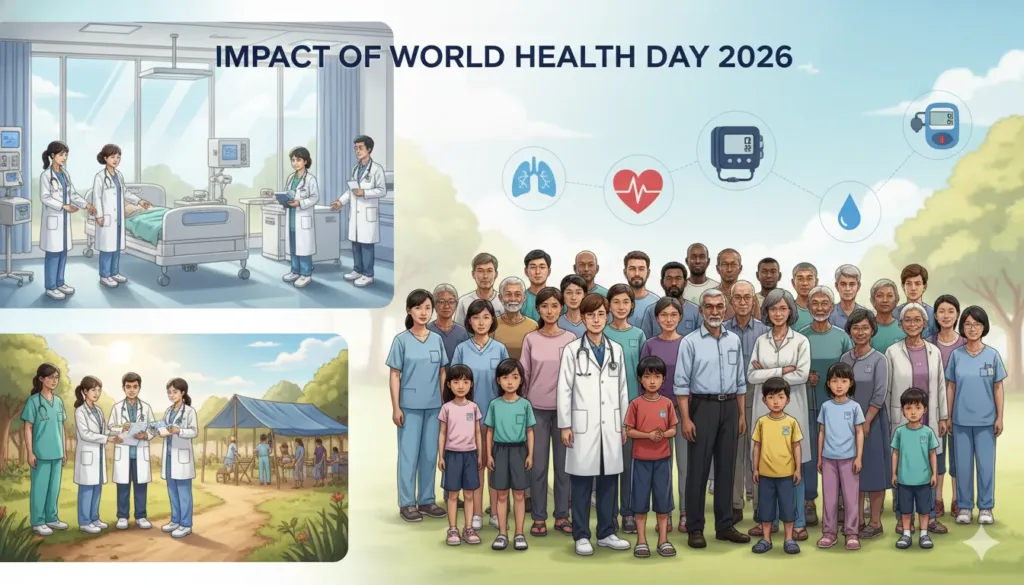
There are numerous situations occurring simultaneously right now, including economic turmoil, war, and the destruction of natural resources. All of these issues will have a tremendous impact on people’s health worldwide.
1. Closing the Gap on Health Inequity
Inequity in the health sector is very unfair and, at the same time, affects both society and the economy. In 2026, the World Health Organization will focus its efforts on identifying and addressing the social determinants of health, because the normal conditions around a person, such as where they live, work, or grow up, affect their overall well-being.
- Better Education: A good education helps in increasing health literacy among individuals and helps them live longer lives.
- Green Environment: A green environment improves air quality and reduces the risk of respiratory and cardiovascular diseases.
- Healthy Nutrition: Food plays an important role in health, making food security a primary issue in developing nations.
2. The Rise of Non-Communicable Diseases (NCDs)
Infectious diseases like COVID-19 got everyone’s attention, but NCDs like diabetes, heart disease, and cancer are still the main reasons people die around the world.
- Statistics: NCDs are responsible for 74% of all deaths worldwide.
- 2026 Goal: To shift the focus toward preventive care, early screening, and lifestyle interventions.
Global Health Challenges in 2026
In order to transform the future into one that is “healthier,” we need to find solutions to a number of issues that have grown increasingly significant in the middle of the 2020s.
1. The Mental Health Wellness
As we move toward greater technological advancement, more people are experiencing stress, loneliness, and rising anxiety levels, which have reached record highs in today’s world.
In 2026, World Health Day focuses on the ‘Decade of Mental Health’ and promotes actions to improve mental well-being, such as
- Wellness programs at work
- Reducing stigma around mental health
- Easier access to therapy in poorer areas
2. Antimicrobial Resistance (AMR)
AMR, often referred to as the “silent pandemic,” occurs when bacteria or viruses no longer react to antibiotics or antiviral drugs. Without taking appropriate action on a global scale, basic surgery and minor infections may once again become life-threatening.
3. Digital Health and AI
Artificial intelligence’s impact on healthcare will continue to grow exponentially and develop rapidly over the next several years. Advances in artificial intelligence increase the pace of diagnosing illnesses, but will only be available to a limited number of people due to the digital divide.
As we continue to develop technology that benefits the entire population, the World Health Organisation also recommends that health technologies be developed for the benefit of all, not just the wealthy.
Global Health Real Progress
A great number of nations have made significant advancements by implementing healthcare models that are tailored to their own people.
Thailand
Thailand has established a Universal Coverage Program that provides inpatient and outpatient services for many citizens and considerably decreases the cost associated with access to medical care.
Rawanda
Rwanda has created a community-based health network through which it employs community health workers to deliver services such as vaccinations and maternal care and manage chronic illnesses.
United kingdom
The United Kingdom’s National Health Service provides all residents with access to healthcare based on medical need, rather than ability to pay.
Japan
Japan’s public healthcare system provides extensive coverage, while at the same time maintaining a positive standard of care through a regulatory process controlling expenses.
Canada
Canada provides publicly funded hospital care and physician services to its citizens, which eliminates financial barriers to accessing essential medical care.
Brazil
Brazil concentrates on providing access to basic healthcare through programs focused on preventative medicine for those at risk of being underserved by current approaches.
Germany
Germany has developed a healthcare delivery model based on private insurance and shared responsibility for patients; therefore, citizens who access healthcare do not face the burden of the full cost directly, since expenses are distributed over a wide base.
South Korea
South Korea has developed an innovative dual model for healthcare delivery through the use of national insurance coverage combined with technology-based tools to enhance the efficiency and access of these services.
Costa Rica
Costa Rica has also performed well in terms of preventative services, investing significantly in these areas, and achieving impressive long-term health outcomes with considerable life expectancy.
Universal Health Coverage & Global Goals
Universal health coverage directly supports the United Nations Sustainable Development Goals (SDGs):
- SDG 3.8: Good Health and Well-Being – focuses on ensuring that everyone has access to high-quality healthcare without having to worry about paying for it.
- SDG 1: No Poverty – having health coverage keeps people from becoming impoverished as a result of medical expenses.
- SDG 5: Gender Equality – guarantees equal access to healthcare for women and girls.
- SDG 10: Reduced Inequalities – seeks to close the inequalities in healthcare access between men and women, urban and rural areas, and the rich and the poor.
How to Celebrate Health Day With Your Community?
World Health Day starts at the community level. Here’s how you can bring the 2026 theme to your local neighborhood:
Organizations and Workplaces
1. The “Paid Health Day”: Surprise your employees with a day off for a medical checkup or time to rest their minds.
2. Create Wellness Challenges: A Step Count competition and/or Nutrition Workshops featuring traditional foods from your local region (i.e., millet, greens).
3. Perform an Infrastructure Audit: Ensure that your office provides employees with clean air through proper ventilation and an ergonomic workspace to help reduce the potential for developing a chronic disease (NCD).
Schools and Universities
1. Health Literacy Seminars: Teach students the fundamentals of health and wellness while also providing information on how to recognize and counteract the spread of false medical information online, as well.
2. Mental Health “Safe Spaces”: Create peer support groups that offer solace and assistance in dealing with growing levels of stress and anxiety among students.
Individuals
1. Prevention First: Get your yearly health checkups, like blood pressure, blood sugar, and cancer tests.
2. Speak Up: Use social media to ask for better health services in your community.
Looking Toward 2030
World Health Day 2026 is an important date for the United Nations’ third goal for sustainable development: good health and well-being.
The goal is to cut the number of deaths from NCDs that happen too soon by one-third by 2030.
The truth is that we are only changing at about half the rate we need to.
The Push for 2026: The “Building a Healthier Future” theme is meant to speed up this development by emphasizing Health Security, which is the ability of a country to find and respond to an outbreak before it spreads to other countries.
A Look Back: World Health Day Themes (2016-2025)
| Year | Themes | Awareness Topic |
| 2025 | Healthy beginnings, hopeful futures | Urged action to prevent maternal and newborn deaths and prioritize women’s health. |
| 2024 | My health, my right | Focused on the right to access healthcare, clean water, safe air, and good nutrition. |
| 2023 | Health For All | Marked WHO’s 75th anniversary and reinforced universal health access and resilience. |
| 2022 | Our planet, our health | Linked human health to environmental sustainability and climate action. |
| 2021 | Building a fairer, healthier world | The main highlight was health inequities exposed by the pandemic, which called for systemic reforms. |
| 2020 | Support Nurses and Midwives | Continued focus will remain on equitable accessibility to health care via Universal Health Coverage. |
| 2019 | Universal health coverage: everyone, everywhere | Focus will remain on equitable accessibility to health care via Universal Health Coverage. |
| 2018 | Universal health coverage: everyone, everywhere | Empowering everyone to have access to quality and reasonably priced health care services. |
| 2017 | Depression: Let’s talk | Encouraged open dialogue regarding mental health and decreased stigma associated with it. |
| 2016 | Beat Diabetes | continuing to put emphasis on the prevention of diabetes, promoting healthy living, and early detection. |
Conclusion
World Health Day 2026 sends a powerful message that access to quality healthcare should not be seen as a privilege; it is an inherent right. We can only have better health, stronger economies, and fairer societies when there is a concerted effort by all levels of society to make sure everyone has access to quality healthcare, regardless of their financial means.
World Health Day will provide the impetus for significant change to achieve quality health care for all through increasing awareness, advocating for change, and taking continuous steps forward.
Faq’s
1. When is World Health Day celebrated?
April 7 is celebrated as World Health Day every year, also honouring the founding day of the WHO in 1948.
2. What is the theme of World Health Day in 2026?
A Global Campaign for Universal Health Coverage” will be the theme of World Health Day in 2026. It will focus on providing better, stronger, cheaper, and equal access to medical facilities to everyone, regardless of their gender or financial status.
3. Who is the organiser of World Health Day?
World Health Day is organized by the World Health Organization (WHO), which sets the annual theme and leads global campaigns to raise awareness about important health issues.
4. What services fall under universal health coverage?
UHC represents all services required to ensure everyone has equal access to quality, timely and comprehensive care throughout their lives, regardless of their ability to pay; these services range from immunisations and maternity care to outpatient treatment of common illnesses, mental health support, and free access to medicine.”
5. What role does the community healthworker play?
Community health workers play a very important role in promoting health at the ground level by giving information about healthy behaviours, providing basic healthcare services, connecting individuals with clinics, and offering guidance in the prevention and management of illness in their communities.
6. How can individuals support World Health Day?
A person may support World Health Day through participation in awareness campaigns, posting information and health tips on social media, and being involved in local health programs.
Author Bio
Dr. Michael R. Thompson is a public health professional specializing in global health systems, health equity, and disease prevention. His work emphasizes evidence-based policy, universal health coverage, and strengthening health systems to improve population health outcomes. He contributes to international health awareness initiatives and public education aligned with World Health Organization frameworks.